Paradigm Shifts: Agile HR Practices and Skills-Based Organisations
To close the 2023 Top Employers Inspire event, I sat down with my colleague Quinton van Es, Director of Research & Insights for Top Employers Institute, to discuss two closely linked topics –the fundamental shifts in HR practices and the rise in skills-based organisations. These ideas are reaching a tipping point in business practices and creating paradigm shifts.
At Top Employers Institute, we certify organisations based on best practices, which requires us to look ahead at developing industry trends and consider those that are proven successful. Agile HR practices and skills-based organisations are becoming more mainstream when there are many disruptions and uncertainties. From a business perspective, now more than ever, organisations need to be resilient, adaptive, and human-centric. We discussed how these two practices are enabling organisations to do just that.
From the basic tenets of each to the more significant industry implications to our personal experiences with each principle, our discussion covered a lot of ground. In this article, I’ll summarise the highlights of our conversation. You can watch our discussion in full at the end of the article.
What Are Agile HR Practices?
Working agile has long been established as a best practice for IT where rapid innovation was a necessity. Gradually, the ability to quickly adapt has become a strategic imperative for organisations, causing agile practices to spill over into other areas and functions. In HR, operations are moving away from a rules- and planning-based approach toward a simpler model based on feedback.
Organisations can struggle with agile HR operations because many things, like payroll, feel fixed–there is no trial and error. However, the application is more of a big-picture consideration. Quinton explained, “When it comes to working agile, we are used to seeing these principles applied to projects. In the context of operating models, a lot of organisations are more agile than they realise because they already have a continuous feedback loop in place.” The essence of this approach is about regularly receiving and responding to feedback rather than specific tasks.
There are considerable variations in how organisations apply agile principles to their HR operations. Quinton gave examples, “some organisations focus on the mindset and values. Other organisations are taking a more methodological approach and just implement scrum.” Each approach has its pros and cons. There is no one solution, which is part of what makes this paradigm shift so interesting.
Skills-based Organisations
Historically, jobs were the dominating structure for work. Job descriptions and titles defined who did what and how their work was managed and evaluated. This approach is falling out of favour because it hinders many organisational objectives, including growth, innovation, agility, and the ability to offer employees a positive work culture.
“A job-based approach is very linear and predictive but it’s also a reductive view of work and the individual. In contrast, skills-based organisations zoom in on specific skills and the whole person to consider how an employee’s talents may best be applied. It’s a more human-centric approach,” Quinton said to highlight why this paradigm shift is happening. Another reason it’s gaining popularity is that it offers a great deal of flexibility and adaptability.
As jobs shift from being the primary construct for work to being one of many factors, organisations must adapt their HR practices. HR writes job descriptions, sets compensation, and manages performance reviews–all tasks based on defined jobs. Skills-based organisations thoroughly shake up this model, reimagining employee management, which is partly why agile HR practices and skills-based organisations are often closely linked.
Benefits of Shifting
Working agile means iterations happen quickly–things are done slightly better each time. Employees do not have to wait long to see their feedback in action. Additionally, employees get used to adapting and a certain level of ambiguity. This model fosters a culture of continuous improvement and creates better engagement.
A human-centric skills-based approach supports employee well-being. It considers the whole individual, not just their education and experience. As a result, organisations can tap into larger talent pools, and current employees have a greater sense of mobility. “A famous example here is Google,” explained Quinton, “They acknowledged that they made a mistake by just relying on credentials because performance dropped. They figured out that they needed to consider motivation and individual skills more than specific credentials.”
Advice for Getting Starting
Starting small always helps ease the transition–it creates less of a shock to the system. “Why not put someone from IT that’s used to working agile on the HR project team and see what comes from that,” Quinton suggested.
It is also helpful to identify your value proposition. A clear understanding of your business case for making these changes will justify the required resources. A valuable next step could be a readiness assessment. This process will let you see if your organisation is ready to move into that domain and identify potential challenges.
From my experience during transitions, the art of letting go is essential for leadership. As you guide your organisation through significant operational changes, accepting uncertainty is a requirement. If you don’t, progress is seriously inhibited.
I invite you to watch our complete discussion to hear more examples of how organisations that are Certified Top Employers put these principles into action. The applications are quite varied and continuously evolving, making agile HR operations and a skills-based approach to work exciting trends to follow.
Key Takeaways | World of Work Trends 2024
Top Employers Institute’s World of Work Trends 2024 analyses the latest trends in people strategies and practices from leading organisations globally. The report, which came out recently, is available to download now. The report showed the five most significant global workplace trends in 2024. Those trends are:
- Empower through AI
- The Future Defined with Purpose
- Dialogue for Transformation
- Evolution of Wellbeing Effectiveness
- Broaden the Horizon of DEI
The release of our annual World of Work Trends 2024 was followed by an online live briefing on the 7th of December 2023, with Quinten van Es and Emily Cook delving deeper into the trends. In their discussion, they touched on real-life examples of the trends and broke down the tactics organisations will need to take in 2024 to succeed.
If you missed out on the session, you can watch it now by filling in the form on the side of the page.
Make sure to unlock the core HR trends affecting organisations across the globe. Watch the session now.
Amgen FlexSpace: Taking Flexible Work to the Next Level
Amgen’s cutting-edge flexible work model offers innovative ways organisations can modernise their approach to remote work.
During the pandemic, many organisations learned out of necessity that remote work can be highly effective. Even after offices were able to re-open, remote work widely remained an option because it was so popular with employees. Amgen Spain & Portugal, a Certified Top Employer, had already learned this lesson well, having adopted a remote work approach in 2004, long before it was mainstream. During the pandemic, they began to offer employees even more flexibility. Sandra Vicente, HR Director for the organisation, spoke with me about their best practices during the 2023 Top Employers Inspire event. Their ideas and fresh perspectives will inspire companies looking to meet the needs of a remote workforce better.
Making the Transition
Amgen Spain & Portugal was able to swiftly adapt to a 100% remote workforce when the pandemic struck because of three factors.
- Because the organisation had offered flexible work arrangements for fifteen years, managers and teams had already honed their remote work skills and were well-prepared to continue working from home. The transition from a partial to completely remote dynamic was not difficult for the company.
- Amgen had recently provided employees with a stipend to create a functional home workspace, including screens and ergonomic chairs. As a result, virtually everyone was already equipped with a suitable home office setup by the time the pandemic hit.
- The organisation had a robust culture of trust because of their long history with remote work. This trust was critical in facilitating a smooth transition to fully remote work and the company’s confidence in everyone’s ability to thrive in that model.
Download Now: World of Work Trends 2024
What Makes Amgen’s Approach Unique?
In 2021, Amgen refined its approach to flexible work by establishing FlexSpace – a novel way of working that combines the traditional practice of face-to-face office meetings with remote work. Unlike a more conventional approach to hybrid work, where companies allocate specific days for remote work and office attendance, FlexSpace empowers employees to make that choice for themselves. “The main driver of that decision is the purpose of their activity,” Sandra explained.
Practically, this means that employees have the ability to select which work environment best aligns with their daily responsibilities. For instance, employees might opt for remote work when tackling tasks requiring intense focus, such as preparing presentations, budgets, or brand plans. Conversely, activities like strategic meetings, brainstorming sessions, or welcoming a new team member thrive on face-to-face interactions. This modern flex work model offers employees even more flexibility and autonomy in their work life.
Read Now: The Era of Personalisation: Customising the Employee Experience at SAP India
Rethinking Office Space
As part of the FlexSpace initiative, the organisation thoughtfully designed a new open-concept office space to cater to a diverse work styles and objectives. Workstations were not assigned to specific employees. Instead, the variety of stations remained available to anyone in the office. This way, employees have an adaptable environment for whatever needs might arise.
Transitioning to an open-concept office space necessitated a mindset shift. The first step was for employees to understand the dynamic nature of this type of open space. Throughout the day, people have the freedom to reconfigure their surroundings. If someone needs a whiteboard for a brainstorming session or if working alone at a desk for a couple of hours is required, dedicated spaces that cater to those needs are available. Regardless of the task, adapting to the constant background noise of conversation in an open-concept office is essential, and employees always work from home if they need a reprieve from the frequent office activity.
Read More: Personalisation in 2023: How the Employee Experience Will Be Impacted by Increasing Personalisation at Work across Asia-Pacific
Strategies for Success
Over the years, Sandra shared that they have identified three key factors for a successful flexible work environment:
- Asynchronous work,
- Intentional socialisation, and
- Maintaining a strong company culture.
Asynchronous work is a natural extension of a remote work model. Just as employees do not need to be in the same place to get work done, they often also do not have to work at the same time to get things done effectively. Using collaborative tools like Microsoft Teams helps make this asynchronous approach function.
Working at different times, however, means that colleagues will likely have fewer direct interactions with each other. This dynamic means employees need to be intentional about socialising with each other. Sandra elaborated, “When you are in the office every day, socialising happens organically. You chat with people when you get a cup of coffee or when you see each other in the hallway. So, now when people come into the office for some reason, we encourage them to take into account the importance of socialising and set aside time for that.”
The importance placed on socialising is part of the company’s culture. “Company culture needs to be a lived experience,” Sandra explained, “Our turnover is very low, only 3% in ten years, so most employees know the culture very well and embrace it.” In performance management discussions, employees frequently cite the positive culture and flexible work approach as pivotal factors influencing their choice to remain with the company. The extremely high retention and employee satisfaction rate Amgen Spain & Portugal has achieved undoubtedly has numerous positive ripple effects across their operations.
World of Work Trends 2024
Top Employers Institute’s World of Work Trends 2024 analyses the latest trends in people strategies and practices from leading organisations globally. In the report, our analysis showed five significant trends affecting workplaces in 2024. Those trends are:
- Empower through AI
- The Future Defined with Purpose
- Dialogue for Transformation
- Evolution of Wellbeing Effectiveness
- Broaden the Horizon of DEI
Read more about each trend in our article below or get in-depth insights by completing the form on the left and downloading the report for free.
The speed of innovation in AI has opened doors to a revolution in how we work. The shifting cultural landscape has enabled leaders and employees to drive meaningful societal impact. And the growing awareness of different identities and wellbeing needs has made inclusion non-negotiable. The organisations that will be most successful in this new world of work capture these opportunities purposely, thoughtfully, and ethically.
The sweeping global financial, technological, and political changes that have been happening worldwide will bring attention to people’s complexities and unique value. The year 2024 will see people firmly recentred at the heart of the workplace – and the five key trends of the coming year reflect the growing realisation that whilst AI will support and optimise, the real competitive advantage is found in the creativity, passion, and partnership between employees.
Trend 1: Empower through AI
The release of ChatGPT in November 2022 prompted a wave of excitement about the potential of generative AI and considerable concerns about its impact on employment. As we enter 2024, the conversation will become more grounded. Organisations will look to implement more ethical stewardship of their potential in the year ahead and start with a clear vision for human-AI synergies.
Many organisations are still in the exploratory stages with AI, and in 2024, the discussion will shift from what you can do with AI to what you should do with AI. An ethical framework for AI adoption will, therefore, become central to HR Digital strategies – and we see this happening in three ways:
- Organisations take a responsible approach to how data is used to track employee behaviour or sentiment. HR leaders must prioritise AI’s ethical, explainable, and transparent roll-out.
- HR will see how technology can be used and deployed around the employee experience. When poorly implemented, AI could cause employees to lose a sense of meaning in their work.
- HR will look to see how AI can support, rather than challenge, the interaction between humans. Humans want to work with humans. And whilst AI offers HR innovative new routes to tracking and personalising offerings, face-to-face contact will become a greater imperative.
How will organisations begin to do this? The answer starts with leaders, the subject of our next trend. You can find more details on this trend by downloading the full report now.
Trend 2: The Future Defined with Purpose
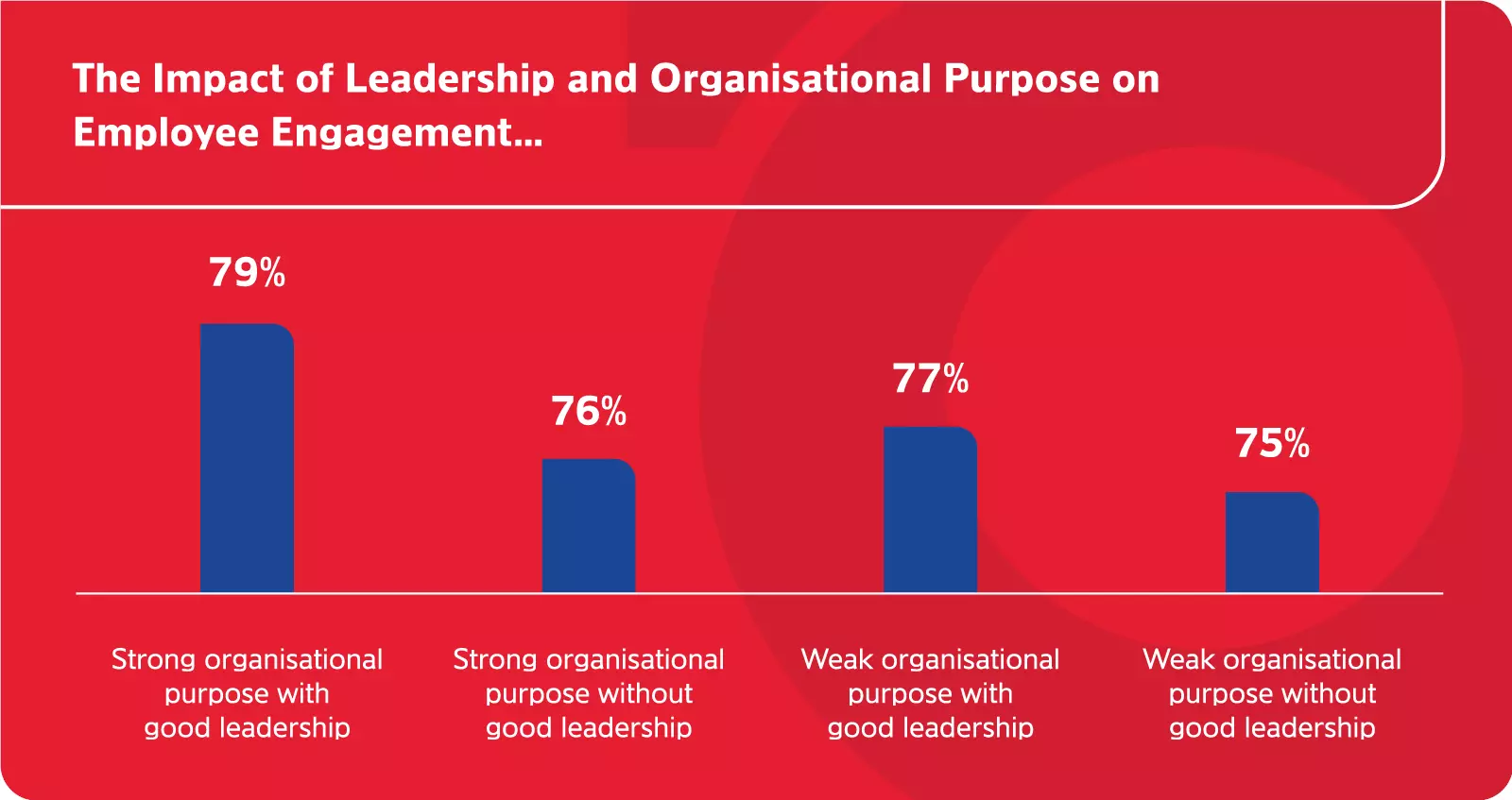
Last year, in the World of Work Trends Report 2023, we predicted the growing importance of a “lived” purpose – one that comes straight from the heart of all those who work. This sense of purpose will remain a constant in their everyday decisions. More recent research conducted by Top Employers Institute shows that organisations will only see the benefits of a solid organisational purpose if they have the right leaders to bring it to life.
Purpose-driven leadership is critical to success. So, what do employees want from their leaders in 2024?
- On big-picture issues, they want leaders to be situated in the real world, speaking about real-world problems, just as their employees would. They should think beyond immediate business concerns to offer more to their employees.
- Empathy is also at the heart of purpose-driven leadership. Leaders will need this trait as much as their business acumen in the coming year.
Empathy requires a genuine two-way dialogue. Leaders must listen more – employees expect an authentic voice in important decisions.
Organisational purpose is an evolving and collaborative process that demands the commitment of every employee. That leads us to our third trend. You can find all the details about this trend and more in the complete report. Download it now!
Trend 3: Dialogue for Transformation
Employees who feel genuinely listened to by the organisation are more likely to be engaged, and organisations orchestrating meaningful employee dialogues are reaping the benefits. Our latest Top Employers data shows that almost every HR practice encouraging employee involvement in strategic decisions helps to drive business success metrics.
A Dialogue for Transformation has two elements:
- On an individual level, employees need to see their input applied practically in business decisions – those who feel empowered to influence how their work gets done experience far higher performance levels and job satisfaction.
- Beyond the individual, collective intelligence describes the alchemy that happens when diverse perspectives meet collaboratively. It represents the sum of individual intelligence and the additional innovation sparked through their combination.
Empowerment plus collective intelligence has helped to drive new ideas for organisations, often above and beyond the scope of regular day-to-day business.
Moving the needle on what matters will demand ever closer and more constant conversation with employees. Transformational dialogue will be foundational for the last two trends. Download the full report to find out more.
Trend 4: Evolution of Wellbeing Effectiveness
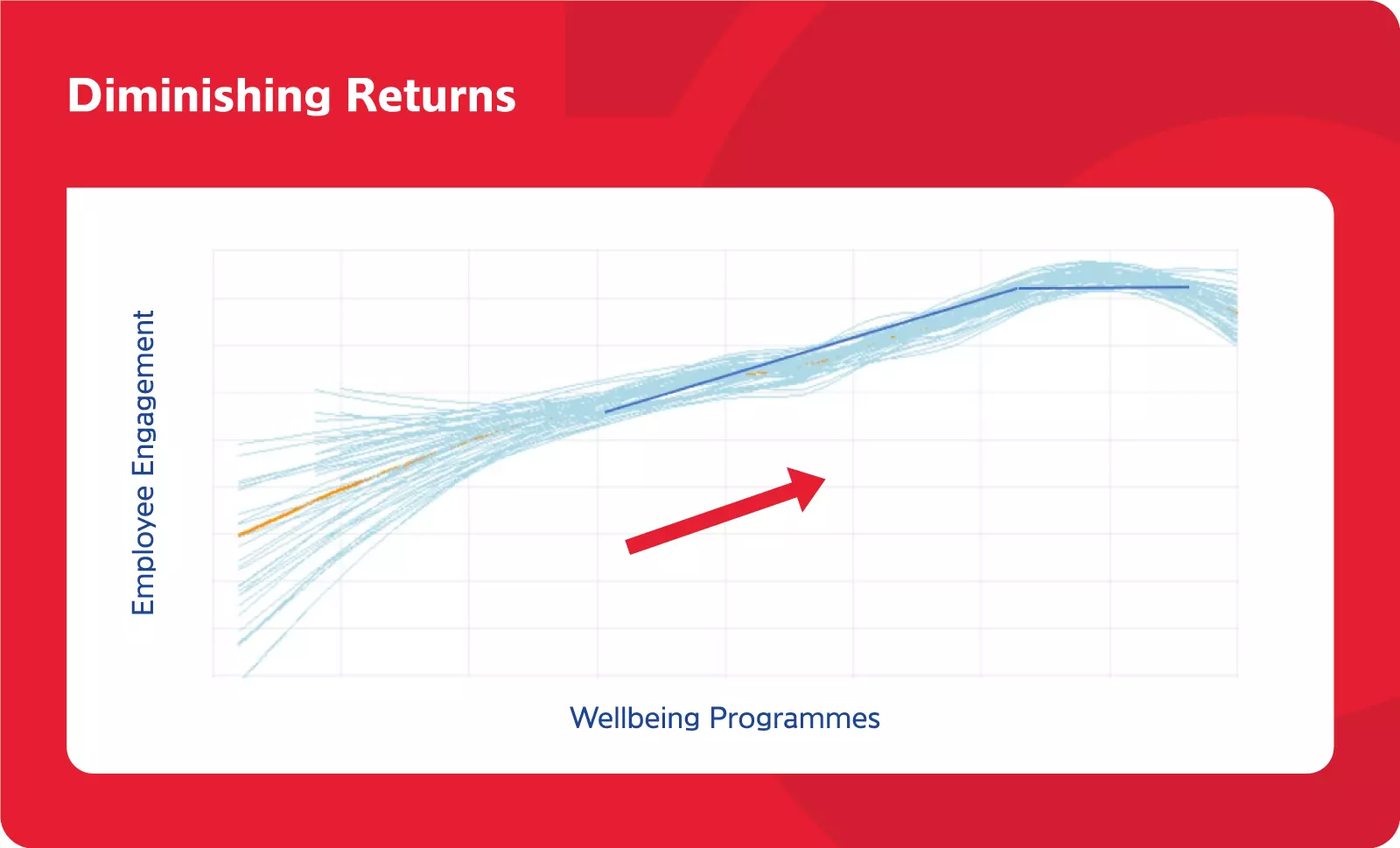
Many organisations struggle to balance their HR budgets while still trying to enhance employee wellbeing. In 2024, therefore, wellbeing will be about getting the most suitable offerings, not the most. Research carried out by Top Employers Institute last year demonstrated that additional wellbeing programmes provided little or no additional benefit to employees beyond a saturation point.
Most Top Employers actively promote their wellbeing programmes through organisation-wide strategy, assessment and metrics.
- Organisation-wide total wellbeing strategy. Nearly four in five (79%) organisations have a coherent overarching approach to all dimensions of wellbeing (up four percentage points since our last survey).
- Wellbeing programme assessment. Nearly three in four (72%) organisations regularly conduct an ’employee wellbeing needs assessment’ to identify employee needs, interests, likes and dislikes and adjust their offerings where appropriate (up five percentage points).
- Wellbeing metrics. We have also seen a significant increase in the use of metrics, with over two-thirds of our Top Employers consistently using them (68%, up eight percentage points), along with the accountability of over half (54%) of leaders to meet wellbeing targets (up seven percentage points).
With this, there may be specific wellbeing challenges for new demographics, which takes us to our final trend.
Trend 5: Broaden the Horizon of DEI
In the last year, diversity, equity, and inclusion (DEI) have also come under budgetary pressure, so organisations are looking for these initiatives to impact their workforce positively. In 2024, the tight talent market will grow as employers become more open to “non-traditional” candidates.
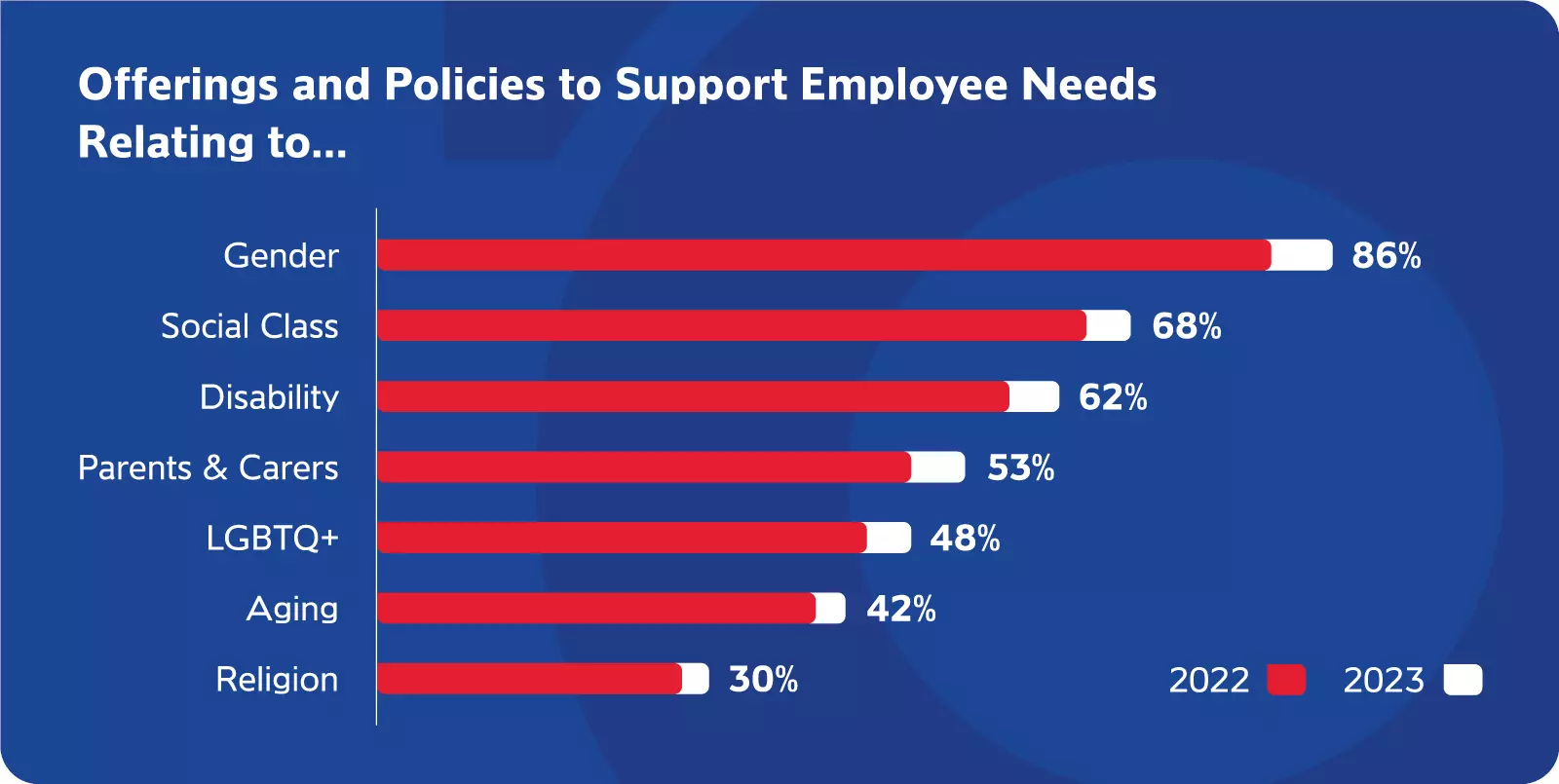
We think DEI approaches will change in three ways:
- The consideration of diversity will expand far beyond demographic segmentation. Whilst groupings, such as gender and race, will continue to be areas of focus, 2024 will see a shift towards a more nuanced approach to DEI. For example, expect the importance of neurodivergent talent (and its link to higher levels of creativity and innovation) to grow.
- DEI analytics and the metrics used will become more sophisticated. Not all demographics are straightforward to capture. However, we have learned from progress in gender representation that data is critical to improvement.
- The “majority” will be actively included in DEI strategies at some point in their career journey, with different experiences increasingly acknowledged. A more holistic inclusion strategy will likely be adopted to complement the ongoing targeted initiatives for under-represented groups.
Download a copy of The World of Work 2024 by filling out the form now.
How Generative AI is Impacting Personalised Learning and Development
How HR Teams are Embracing Technology to Change their Approach to Career Development and Learning Programmes
Over the past few years, Human Resources professionals have begun to embrace several technological tools to assist in both short and long-term objectives at work. While Artificial Intelligence (AI) has yet to be integrated into many HR plans, this has been the year for HR professionals to learn more about generative AI’s capabilities and the effects it could have in the near future.
As seen already at the end of 2023, the integration of generative artificial intelligence could begin to reshape HR learning programmes by offering a dynamic and personalised approach to employee development.
In this article, we will be looking at what effects AI may have on HR, with a particular focus on how it may affect learning and development programmes.
Additionally, we will explore the potential benefits and challenges for HR professionals seeking to create a future-ready workforce.
What is Generative AI?
Generative AI is a subset of artificial intelligence that, unlike other AI systems, can autonomously create content, including texts, audio, code, images, text, simulations, and video.
In Human Resources, generative AI revolutionises processes by offering personalised solutions, streamlining tasks, and enhancing the overall employee experience. We explored some ways that AI is changing HR in a previous article that you can read now for more general context on the new relationship between AI and HR.
Personalised Learning and Development in 2024
In the annual World of Work Trends Report 2024, one of the significant trends we identified was that there would be a shift in how HR professionals understood learning and career development programmes. That change would be a move towards a more personalised approach that would give employees more of an active and empowered role in advancing their careers, often through the use of digital and personal resources so that they can develop the competencies and skills needed for the future.
To make the employee experience of attaining new skills more individualised, many organisations are developing easily accessible and on-demand micro-learning tools to allow employees the opportunity to learn ‘just in time’ when needed while it can also be integrated into their other everyday tasks.
Generative AI could empower HR learning programs to move closer to the personalised learning approaches we noted in the World of Work Trends Report.
This tailored approach ensures that employees receive the most relevant and effective training, enhancing their skill development and overall job performance.
How Generative AI Tools Could Impact Learning and Development Programmes
- Improving Personalised Learning Paths: AI in talent acquisition can be impressively useful,Generative AI algorithms can analyse individual employee insights, including learning preferences, strengths, and areas for improvement, to generate personalised learning paths. That work empowers HR learning programmes to move beyond one-size-fits-all approaches and move closer to the more individual training programmes that HR leaders hope to get.
- AI-Powered Virtual Mentors and Coaches: Generative AI is already giving rise to virtual mentors and coaches that could provide real-time guidance and support to employees. These AI-driven mentors can answer questions, offer insights, and provide personalised feedback, creating a virtual learning environment that complements traditional mentoring programs. This approach ensures that employees have access to guidance whenever needed, fostering a culture of continuous improvement.
- Improving Adaptive Learning Modules: Traditional training modules often follow a fixed structure, regardless of an individual employee’s learning speed and style. Generative AI can introduce adaptive learning modules that evolve based on an employee’s progress. By continuously assessing a learner’s comprehension and adjusting the difficulty level accordingly, HR professionals can optimise the learning experience and improve knowledge retention.
- Gamification for Enhanced Engagement: Gamification has proven an effective strategy for boosting employees’ engagement in learning programs. Generative AI can take gamification to the next level by creating personalised game scenarios based on individual employee profiles. By integrating elements of competition, rewards, and social interaction, AI-driven gamification makes learning more enjoyable and motivates employees to participate actively in their development.
Challenges with Implementing Generative AI in Learning and Development Programmes
Generative AI in HR learning programs holds immense promise, but HR professionals must navigate potential challenges and ethical considerations. These include:
- Ensuring data privacy.
- Addressing algorithmic biases in learning recommendations.
- Employee trust and adoption.
- And maintaining a balance between automation and the human touch in the learning experience.
Ensuring Data Privacy
One of the most challenging aspects of implementing generative AI tools into an organisation’s strategy is the aspect of data privacy, especially as organisations are still relatively early in their adoption of AI tools.
As AI programmes rely heavily on collecting and analysing vast amounts of employee data to personalise learning experiences, HR professionals must establish robust data protection measures. HR leaders should ensure that they comply with data protection regulations by obtaining informed consent and adopting encryption protocols. These are essential steps to mitigate the risk of unauthorised access or misuse of sensitive employee and organisation information.
Mitigating Algorithmic Biases
It should be common knowledge that generative AI systems are not entirely unbiased. In fact, they are only as unbiased as the data they are trained on. HR professionals need to be vigilant about potential algorithmic biases in learning recommendations.
If the training data used to develop AI models contains biases, the algorithms may perpetuate or even exacerbate existing inequalities. Regular audits of algorithms, diverse and representative training datasets, and continuous monitoring for bias are crucial to ensure fair and equitable learning opportunities for all employees.
Employee Trust and Adoption
Introducing generative AI into HR learning programs may raise employee concerns about job security, privacy, or the perceived objectivity of AI-driven decisions. HR professionals must proactively address these concerns through transparent communication and educational initiatives.
Building trust in AI technologies requires demonstrating their value, emphasising their role as tools for empowerment rather than surveillance, and involving employees in the process to alleviate apprehensions and foster a positive reception.
Balancing Automation and Human Interaction
While the automation capabilities of generative AI can significantly enhance the efficiency of HR learning programs, it is imperative to strike a balance with human interaction. Employees still value the human touch in learning experiences, and specific aspects of development, such as mentorship and interpersonal skills, may be better served through direct human engagement.
HR teams should carefully design AI-driven learning initiatives to complement, rather than replace, the essential human element in the learning journey.
Final Thoughts: Became an employer of choice to embrace HR AI trends before your competition
Generative AI in HR represents a significant leap forward in redefining the employee experience. Organisations can harness AI’s power to streamline processes, enhance employee engagement, and contribute to their overall success.
They must do this by being aware of the ethical practices and staying attuned to the evolving landscape.
Organisations can begin to navigate this transformative journey in the hopes of creating and maintaining workplaces that thrive in the digital age. By joining Top Employers Instite you will access a library of HR AI best practise and anticipate all its trends. Get in touch for free today, become an employer of choice!
Best Practice | Addressing Staff Issues through Employee Experience Managers with Kaufland
Starting in 2018, certified Top Employer Kaufland began operating a network of employee experience managers across sites in Europe. These are trained HR liaison officers who work to address employee welfare issues and solve challenges that might be putting a drag on business or individual performance. In our latest best practice focus, we are focusing on what brought in these managers and how they’re changing the employee experience for Kaufland workers.
This is just a snapshot of Kaufland’s innovative best practice; you can find the entire practice on our HR Best Practices database, which is exclusively available to Top Employers. Get inspiration and insight into the approach, challenges and learnings experienced by certified Top Employers. Access it now via the Top Employers Programme if you are certified, or learn more about it here!
Why the practice was needed:
It is challenging to keep an eye on employee engagement when an organisation like Kaufland has many employees scattered across many locations. For this reason, Kaufland introduced ‘employee experience managers’ (a Vertrauensperson, in German): a neutral, trustworthy, and independent liaison for all employees.
How the practice was implemented:
The primary objectives behind Kaufland’s practice of employee experience managers are:
- Anchoring of the corporate principles and leadership approach.
- Early detection of (potential) disputes.
- To better understand the atmosphere/mood among frontline employees.
- To provide support to employees in difficult situations.
In the European locations where Kaufland’s employee experience managers are active, every employee can freely contact a dedicated employee experience manager and access contact details for other employee experience managers via a page on the company intranet, should they prefer to speak to someone specific. Each employee experience manager acts as a confidante for receiving confidential feedback. Employees may remain anonymous if they wish to report a sensitive issue.
Employee experience manager responsibilities:
The main tasks of each employee experience manager at Kaufland are to:
- Attend stores daily: talk with employees about their jobs, work-related problems, the store environment, etc.
- Use employee feedback to identify work environment issues or business issues that could be improved.
- Assist employees in handling issues with co-workers or to tackle personal problems having an impact on their work.
- Improve employees’ perception of the company.
The typical employee experience manager:
- has an HR background,
- is skilled in psychology, mentoring and communication.
Kaufland offers special training, for instance, a mediation training course to support the work of the employee experience managers.
Results
Each employee experience manager has a target number of conversations to be held each month (approx. 300). The rationale behind this (as opposed to a target number of employees to speak with) is that sometimes, one employee may require several conversations to be had until their issue is resolved.
As a result of the work of the employee experience managers, Kaufland has improved many of its operational and work-related issues based on employee feedback.