Use this dropdown to select your preferred language.
How employee engagement benefits your people, purpose, and business
The top challenges of HR leaders form an endless list. Employee engagement is indeed between the top positions.
How employee engagement benefits your people, purpose, and business
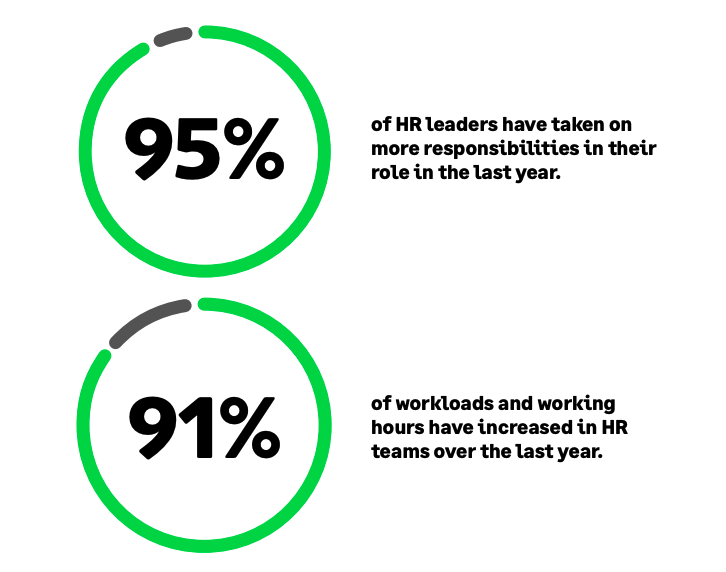
95% of HR leaders say their responsibilities are widening*. But what if there were a people strategy silver bullet?
A business and people focus that could improve the attraction and retention and skilling of top talents, and boost profits and performance for the business.
All the while improving the employee experience, as well as a customer experience, that could adapt and transform as the market and business landscape change around it.
The fix-all? Employee engagement.
In fact, pressure on HR leaders can be alleviated by knowing the latest employee engagement trends and how to make an employee engagement strategy.
In today’s article you’ll learn:
● A definition of employee engagement as well as what employee engagement benefits are
● The key parts of making a people strategy with employee engagement at its center
● Why an employee engagement survey is critical
What is employee engagement?
Employee engagement can be difficult to define. But the key pieces parts of the definition are below:
● Employee engagement is a psychological state, relating how employees connect to their teams, the work, and the business and its goals.
● It will contain elements of how an employee connects to the organizational culture and the employee experience.
● It is viewable or measurable by how engrossed in the work, how much energy and how dedicated an employee is (which can be quantified).
This is useful for giving a three-dimensional starting point for employers who want to consider all the important factors, understand the reasoning behind the thinking, and how to define it for their own organization.
But of course, this will require an understanding of how this fits into a specific organization — before using this definition to help build a strategy to obtain employee engagement benefits.
What are employee engagement benefits?
Defining what employee engagement is, indeed, is only the starting point. Critically important is understanding how employee engagement benefits the organization.
HR chiefs are increasingly landed with C-Suite agenda items that are regularly positioned as the business’s most critical issues. The urgency of these requests is ratcheted up on an uncertain business landscape. It’s a lot for HR leaders to deal with.
Why? HR leaders know too well that leveraging the benefits of an employee engagement programme can help them align with the business, understand how it informs HR practice, and communicate effectively to get all-important leadership buy-in.
Then, when the benefits are understood, it’s about realizing employee engagement isn’t a once-and-done initiative. Rather the employee engagement strategy will need to be wrapped, for the long term, into the people strategy, measured, and continuously adapted to people and business needs.
So what are employee engagement benefits?
1. Boosts organizational performance
Engaged employees result in an uptick in performance for the organization. Research shows that employee-centric HR approaches have positive impacts on team performance, company morale, and well-being.
This boosts profit margins, productivity customer loyalty, and the overall business as well as having futureproofing benefits. Great for hard-to-predict times.
2. Better individual performance
Organizational performance can hardly be boosted by a focus on employee engagement if this focus doesn’t boost individual productivity and efforts.
Gallup has found that there is a huge difference between employee behaviors and performance at companies with low engagement and high engagement.
At the organizations with the highest engagement levels — i.e. those firms working to get employee engagement benefits — employees were less absent, more likely to be safe, and more often turned out quality work.
3. Improved talent management
Engaging employees enough to stick around is critical to boosting individual and organizational performance. Deeply important for a world where deep expertise and company knowledge can be a competitive edge.
4. Building an employee engagement infinite loop
One of the best benefits of engagement? It can be self-perpetuating and reinforcing.
If an organization is implementing an action-led engagement strategy (clearly defined, rolled out, continuously adapted, and measured to be improved) then not only do engaged workers likely create better organizational outcomes but those improved outcomes then boost engagement in workers. What’s not to like?
5. Trust in leaders
In changeable times, trust is critical to reaching organizational goals. Getting employee engagement right can ensure leaders get support for future plans — even when those include difficult transformation projects.
How does this work? Engaged employees believe that leaders show integrity and are focused on future-proofing the business.
Engagement helps employees feel their voice is being heard by the leadership and that their ideas are taken into account in future strategic movements.
How to build anemployee engagement strategy
So, surely the million-dollar question for HR leaders is: how can my organizations get all these employee engagement benefits? It requires a multi-part people strategy that speaks to engagement fundamentals and takes into account current trends.
Below are five key steps in building an effective employee engagement strategy.
1. Get leadership buy-in
Success in HR programs hinges on leadership buy-in. It can mean people leaders showing the C-suite clear ROI, and tangible benefits, using storytelling and data.
Luckily, when it comes to employee engagement, executives are already bought in. Over nine in 10 believe that engagement improves, teams work better and employees have longer tenure and improve bonds with colleagues if they are engaged.
This doesn’t mean HR shouldn’t communicate the benefits, though.
2. The leadership boost
Getting buy-in from business leaders for employee engagement strategy benefits the engagement action plan itself.
Key enablers of employee engagement are the C-suite leadership, who control the strategic narrative and set goals, as well as team leaders who operationalize the day-to-day efforts here and can feedback on what’s working, giving employees a voice.
This might start with a strategic umbrella goal (such as boosting employee motivation) which can be narrowed into clear, measurable actions (measuring commitment, surveying employees to see if they understand goals, and building programs to boost motivation).
This not only helps create clarity of action but can help HR measure efforts and continuously improve, tweak, and adapt the employee engagement strategy.
4. Holistic, strategic engagement
Having clear focus areas and actions for engagement doesn’t mean neglecting how engagement fits into the broader HR strategy. Whether it’s a focus on workplace culture, the benefits package, L&D offering, or management techniques, HR should be asking: how does this engage employees?
It means HR should always be focussing, through all of its remit, on how employees are motivated, and how they connect to teams and the organization.
From HR, this can be boosted by encouraging business leaders to take center stage, using clear comms, and focussing on critical points of engagement hotspots (recruitment, performance management, annual reviews).
5. Measuring for success
Without measurement, there can be no way forward. It’s only from employee insights that HR can ensure they are making headway on the employee engagement agenda.
However, measuring engagement effectively can be difficult. Organizations might not only the engagement-related program itself (a new well-being initiative or bonus scheme) but also the intended business outcomes (such as a profit margin, sales volume, or health metrics).
HR also needs to systematically gather and interpret data through employee engagement surveys and by using the right tools and HR analytics approaches. Measurement will have to be continuous, too.
It’s about getting as much data as possible to understand what drives people as the operating environment transforms around them.
How to make sure employee engagement efforts boost HR strategic performance
Indeed, assessing the employee engagement strategy can be a shorthand for understanding HR performance itself.
These employee insights can help HR ask:
● Are employee engagement efforts aligned to, and steering, the business strategy?
● Does employee engagement strategy positively shape the working environment, talent attraction, and development?
● Does the organization engage employees on how they want their well-being to be taken care of, their voice to be listened to, and what they consider fair reward?
● Does your HR strategy unite employees with the business purpose, values, ethics, inclusion, and integrity?
Even if HR can come up with clear answers here, they might not know how this data compares to the wider competitor and sector landscape, especially as all these parts are continuously transforming as the business keeps up with the fast pace of change.
This is where Top Employers can help.
Employee engagement survey: understanding the benefits of Top Employers Institute Certification Program
This article has explored how to define employee engagement, what employee engagement benefits look like, and what an employee engagement strategy might be.
But knowing how to assess your own organization’s employee engagement strategy can be difficult. This is where the Top Employers Institute can help.
The Top Employers Certification is a trusted assessment and brand that recognizes the organizations that have the highest standards across people practices. Catalent, PepsiCo, Takeda, and Volkswagen are but a few of the Top Employers certified and racing ahead.
How did they do it? Through a Best Practises employee engagement survey, Top Employers Institute helps organizations understand how they perform in areas ranging from employee engagement to HR-business alignment.
All questions and outcomes are tailored to company size, structure, and location.
Indeed, what the Top Employers employee engagement survey assesses is HR performance and consistency across six key domains:
Steer
Business Strategy
People Strategy
Leadership
Shape
Organization & Change
Digital HR
Work Environment
Attract
Employer Branding
Talent Acquisition
Onboarding
Develop
Performance
Career
Learning
Engage
Wellbeing
Employee Listening
Rewards & Recognition
Unite
Purpose & Values
Ethics & Integrity
Diversity, Equity & Inclusion
The survey reflects cutting-edge and future-oriented best practices: so your organization can rest safe in the knowledge that your employee engagement efforts are assessed to the best contemporary standards with unbiased validation, data-backed insights, and personalized to your business.
To start on the path of improving your employee engagement practice, the certification journey can be started today.
Developing an Effective People Strategy: A Roadmap for HR Leaders and Company Executives
In an era of rapid change and fierce competition, organizations can no longer afford to view their people as simply a resource to manage. Today, companies must recognize the strategic value of their workforce as a core driver of business success.
A well-defined people strategy helps organizations build a strong culture, attract top talent, and drive performance in alignment with overall business objectives.
In this post, we will explore what people strategy is, how to develop it, and how it differs from HR strategy. We will also look at examples from leading companies that have successfully implemented People Strategies and discuss how the Top Employer Institute program can help your organization elevate its People Strategy and become an Employer of Choice.
What is a People Strategy?
A people strategy is a comprehensive plan that ensures an organization’s workforce is aligned with its business goals and priorities. At its core, it’s designed to create a high-performance culture, where the right people are in the right roles, equipped with the necessary skills, and motivated to contribute to the company’s long-term success.
A people strategy takes into account broader organizational needs and focuses on nurturing a sustainable talent pipeline that will drive future success.
It aims to create a high-performing culture, foster employee engagement, drive leadership development, and ensure the workforce is equipped to meet future challenges.
People strategy today: what does it mean for HR leaders?
Today, leading organisations across the globe are forced to transform rapidly – and continuously – in order to remain purposeful, relevant and stay ahead of competition. This in turn means that the very definition of people strategy is itself evolving at pace. The role of HR leaders is changing too, and the number of challenges they are asked to solve is increasing.
As you need to focus on your people, it’s key to gather employee insights: by understanding needs, motivations, and preferences of your workforce you better shape policies that improve the employee experience. And, consequently, contribute to higher levels of engagement and retention.
People Strategy vs. HR Strategy: What’s the Difference?
HR strategy and people strategy are often used interchangeably, although they represent different approaches to managing human capital within an organization.
While, as we have seen above, a people strategy is more holistic an HR Strategy focuses on the tactical aspects of managing employees.
It deals with the functional tasks related to human resources, such as recruitment, compensation and benefits, performance management, compliance, and training.
How to develop a people strategy: key steps
Developing a successful people strategy requires careful planning, collaboration, and a deep understanding of both business needs and employee aspirations.
Here’s a step-by-step guide on how to develop a People Strategy that delivers value to both the workforce and the organization:
1. Understand Your Business Goals
The first step in developing a People Strategy is to clearly understand the long-term goals of the organization. Whether you’re expanding into new markets, launching a new product line, or striving to improve operational efficiency, your people strategy should align with these goals.
For example, sur research shows that 97% Top Employers demonstrate the importance of aligning their people strategy with their business strategy. Yet it is worth noting that only 77% of Top Employers translate their people strategy into key HR metrics and related targets.
2. Analyze Current Workforce Capabilities
Assess the current skill sets, experience, and potential of your workforce. This will help identify any gaps between the existing talent pool and the skills required to achieve the company’s strategic objectives. By conducting talent audits, employee surveys like stay interviews), and performance assessments you will effectively understand what your workforce can offer and where development is needed.
And how can we not mention artificial intelligence? With AI tools for talent acquisition, organizations can streamline the process of identifying, assessing, and recruiting candidates with the right skills. AI can enhance the recruitment process, helping companies attract the best talent faster and more efficiently while minimizing bias.
3. Create a Talent Acquisition Plan
The foundation of any people strategy is indeed attracting the right talent. This involves not only recruiting for current roles but also planning for future needs. Companies like Amazon have made headlines for their innovative talent acquisition strategies, including programs aimed at hiring from underrepresented groups and offering upskilling opportunities for current employees to fill high-demand roles.
In today’s war for talent, organizations must differentiate themselves to attract and retain top candidates. Leveraging ai for talent acquisitioncan significantly enhance this process, allowing HR teams to focus on the most promising candidates and streamline hiring.
4. Develop Leadership and Talent Management Programs
Leaders and high-level managers are not excluded by your workforce. In fact, strong leadership development and succession planning initiatives are a key component of your strategy. Investing in leadership training ensures that the organization is prepared for future challenges. Companies like IBM are known for their leadership development programs, which include mentorship, continuous learning, and hands-on leadership opportunities for emerging talent.
In addition, organizations must continuously gather employee insights to better understand how employees view leadership, what skills they want to develop, and how they perceive the company’s future. This helps tailor leadership development efforts to actual needs and ensures leadership programs are effective and impactful.
5. Foster a Culture of Engagement and Well-Being
Employee engagement and well-being are at the heart of a successful People Strategy. This involves creating an environment where employees feel valued, connected, and motivated to contribute. For example, Salesforce has made a name for itself with its “Ohana” culture, which emphasizes inclusivity, community, and well-being. Initiatives like flexible work arrangements, wellness programs, and employee resource groups are key aspects of such a strategy.
Digital employee experience platforms are increasingly used by companies to enhance employee engagement. These platforms enable real-time feedback, streamline communication, and offer personalized resources for learning and development. By investing in the digital employee experience, companies can improve overall engagement and foster a more inclusive, connected, and productive work environment.
6. Measure Success and Adjust
A strategy can never be successful without the “measure and adjust” work. Therefore, you need to regularly assess the effectiveness of your strategy through employee feedback, performance metrics, and business outcomes. This allows you to make adjustments as needed and ensure continuous improvement. Many companies use tools like the Gallup Engagement Survey or employee Net Promoter Scores (eNPS) to gather valuable insights and track employee satisfaction.
Real-World Examples of Companies with Exceptional People Strategies
Some of the world’s leading companies are great examples of how a well-crafted people strategy can drive success. As we have quickly mentioned some of these examples above, it’s now time to take a closer look at a few:
Google: Google’s people strategy is built on innovation, diversity and inclusion, and employee empowerment. The company offers extensive professional development opportunities, flexible working arrangements, and a culture that encourages creativity and collaboration. By focusing on employee well-being and continuous learning, Google ensures that its talent stays motivated and engaged.
Salesforce: Salesforce places a strong emphasis on its Ohana culture, where employees are viewed as part of a family. Through initiatives like well-being programs, paid volunteer time, and inclusivity initiatives, Salesforce creates a workplace where employees feel valued, supported, and connected.
Amazon: Amazon’s approach to People Strategy is centered on agility and growth. Through its comprehensive upskilling programs and focus on employee development, Amazon has been able to remain competitive while fostering a culture of continuous improvement and innovation.
Become an Employer of Choice with Top Employer Institute and elevate your people strategy
As we reach the end of our discussion, it’s clear that having a well-crafted people strategy is crucial for organizations looking to thrive in today’s competitive landscape.
A strong People Strategy not only addresses the war for talent but also drives engagement, retention, and long-term business success. By aligning your workforce with business goals and continuously evolving your approach to talent management, your company can stay ahead in an ever-changing world.
Through the Top Employer Institute program, companies can elevate their people strategy, enhance their employer brand, and attract the best talent in the market.
By participating in this program, you gain access to a wealth of resources, best practices, and insights that will help you create a more engaged, motivated, and productive workforce.
Whether you’re looking to improve the employee experience, enhance talent acquisition through AI, or develop leadership capabilities, the Top Employer Institute can help you build a people strategy that aligns with your business goals.
Ai for talent acquisition strategy: application, tools and benefits
Ai for talent acquisition is game-changer. AI-powered recruiting tools are helping companies find and hire the best talent faster, more efficiently, and with greater accuracy.
While artificial intelligence and machine learning may still be new for many people, more and more organisations are investing in these powerful tools to stay ahead of the market.
In today’s article, we will explore how AI can help find candidates in your talent acquisition strategy. It can speed up the hiring process, improve candidate quality, and help your company win the talent war.
What are the applications of AI in talent recruitment?
AI is transforming the talent acquisition process. The talent market is more competitive than ever, organisations are finding it more challenging to get the best candidates for the role.
The challenges in recruiting talent come from many factors: the pandemic has had lasting effects, as the quite quitting, younger workers are entering the job market and there are also significant global changes in hiring laws.
Despite these challenges, the recruitment industry has only recently moved away from established ways of working, as artificial intelligence (AI) and machine learning (ML) have entered the game.
So, what are currently the applications of AI in the talent recruitment? Here are the five primary sectors where AI recruitment tools can enhance precision and efficiency in hiring the ideal candidate:
Candidate Sourcing
HR teams can utilise AI tools to search through online job boards, professional networking sites, and social media platforms to identify potential candidates based on specified criteria. These tools can assess candidates’ online profiles and professional backgrounds to identify potential candidates.
Resume Screening and Candidate Matching:
AI-powered applicant tracking systems (ATS) and talent acquisition software (TAS) can analyse resumes and job descriptions to identify relevant skills, experiences, and qualifications. By leveraging natural language processing algorithms, ATS platforms match candidates to job requirements, enabling recruiters to focus on the most suitable applicants.
Candidate Assessment and Screening
From cognitive assessments to evaluate candidates’ competencies and overall job fit: these assessments give the recruiter objective insights helping them identify top performers more effectively.
Predictive Analytics
AI analytics can analyse historical recruitment data and performance metrics to identify patterns, trends, and predictors of successful hires. By leveraging predictive analytics, a hiring manager can potentially forecast talent needs, optimise sourcing strategies, and make data-driven decisions to improve hiring outcomes.
Reporting
AI tools can generate reports about candidates for internal senior leadership and legal teams. Those reports can analyse the success of recruiting campaigns to a broader team, streamlining the talent acquisition process.
5 AI tools you can use in your recruitment strategy
The market of machine learning softwater for talent acquisition is getting bigger and bigger. We selected for your the top 5 Ai tool you can use to boost your recruitment strategy
1. Textio
Textio helps you improve the quality of your job listings by giving you insights into tone and word choice.For hiring professionals, this means it can help you choose words that connect with specific age groups and demographics. Additionally, it improves with usage, so the more you depend on it, the more enhanced the results become.
2. Fetcher
This tool integrates AI technology and recruitment specialists to identify top-notch candidates for your company. Use Fetcher to handle and construct a pipeline using AI automation, and subsequently gather information on candidate habits and demographic details.
3. Paradox.ai
Paradox.ai provides several conversational instruments, yet their recruitment CRM eases the administrative burden for hiring professionals.Their AI solution can autonomously arrange interviews and answer inquiries from applicants. With a significant reduction of 82% in hiring time and an impressive 99% candidate satisfaction score, it’s evident that Paradox.ai is on the right track.
4. iCIMS
With a wide array of features, ranging from a career suite to job advertisement management to a CRM, the platform is offers full-scale support for recruitment and hiring teams.
It includes an analytics dashboard, applicant tracking, email and messaging functions, and a video suite that enables you to customize and humanize your recruitment process.
5. HireVue
HireVue is an AI tool for interviewing and assessing candidates. It has a video interview feature, as well as a rich library of AI assessments that allow recruiters to evaluate candidates comprehensively — looking for potential in addition to experience.
AI in the Talent Acquisition: what are the benefits?
There are numerous advantages for a company that chooses to incorporate AI-powered tools into its talent acquisition process, spanning various aspects.. After the first phase of recruiting, you can use machine learning algorithms. These can help improve your employee experience at various stages.
Expedite Hiring Process
Using AI tools for recruitment can expedite the recruitment process, shortening time-to-fill positions and ensuring that critical roles are filled promptly, minimising productivity losses and revenue impact.
Data-Driven Decision Making
HR analytics can benefit drastically by machine learning softwares. hiring managers can obtain valuable employee insights, get to know recruitment trends and forecast future talent needs.
Competitive Advantage:
By embracing AI in the recruiting process, organisations can gain a competitive edge in attracting and retaining top talent, stay ahead of competitors, and position themselves as innovative employers in the marketplace.
Enhanced Candidate Quality:
AI-driven algorithms can identify candidates whose qualifications match job requirements, leading to higher-quality candidate pools and improved hiring outcomes.
The Challenges of AI Tools in the Recruitment Process
Implementing AI in talent acquisition may not be that smooth and easy, as the technology is still relatively new. When it comes to We have already written about the challenges of digital employee experience, but in the recruitment realm real challenges are others and they mainly concern data privacy and ethical considerations.
Let’s dive into them, starting with this most recent one:
Ethical Considerations concerning the use of AI recruitment tools
Not only Hr and sustainability, AI raises ethical dilemmas related to using candidate data, algorithmic decision-making, and the potential impact on employment opportunities and socio-economic disparities. Organisations must navigate ethical considerations, uphold principles of fairness and integrity, and prioritise ethical AI practices to build trust and credibility in their recruitment processes.
Future of talent Acquisition may overreliance on Technology:
The future of talent acquisition seems to risk an overreliance on technology. Hiring managers and recruitment teams must balance technological innovation and human-centred decision-making to achieve optimal recruitment outcomes.
AI softwares may exacerbate Candidate biases:
Despite efforts to mitigate bias, AI tool for talent acquisition may inadvertently perpetuate or even exacerbate biases in the data used for training the models. This machine learning softwares may discriminate against certain demographic groups without careful monitoring and intervention, leading to fairness concerns and potential legal repercussions.
AI recruitments platforms may not comply yet with Data Privacy and Security regulations
AI recruitment platforms rely on vast amounts of candidate data, raising concerns about privacy and security. Organisations must ensure compliance with data protection regulations, implement robust security measures, and establish transparent data handling practices to safeguard candidate information from unauthorised access or misuse.
Future of talent acquisition: AI and employer of choice certification
AI tools can significantly improve the efficiency of hiring managers in the recruitment process by providing them with the ability to make more informed decisions. This can ultimately contribute to the success and competitiveness of an organization in the talent market.
However, organisations need to balance the benefits of AI with ethical considerations, transparency, and human-centred principles to ensure fair, inclusive, and responsible recruitment practices.
Yet, the future of talent acquisition does not only belong to AI tools and machine learning software. In fact, you organization can attract, retain and develop top talent thanks to our employer of choice certification!
Click on the link above and get in touch today!
Digital Employee Experience: why you need it in your talent strategy today
The digital employee experience (DEX) is the experience employees have with the digital tools and platforms provided by their organisation. Although it extends beyond IT, it strongly involves HR clusters and reflects on your company culture.
As such, we are taking this opportunity to explore the topic in more depth, exploring what it is, why it’s important to employees as well as for employers, and how these can design and measure a digital employee experience.
What is the digital employee experience?
The digital employee experience is a subset of the overall employee experience that encompasses all the digital touchpoints an employee interacts with at work, be these apps and software or the devices they are equipped with (like a phone, laptop, etc.).
However, DEX goes far beyond IT, involving crucial aspects of HR and workplace culture to play a crucial role in the overall business success.
Individuals are used to relying on smooth technology in their personal lives and anticipate the same degree of digital simplicity in their work environment.
If workers find it challenging to retrieve information or accomplish daily duties with the given tools, it can adversely affect their relationship with your organisation.
Why organisations struggle to manage their digital employee experience
Managing and creating the best digital employee experience is fundamental to every organisation. This is where your talent strategy plays a pivotal part in the overall business success. The importance of DEX keeps increasing into the 21st century, with most companies struggling to keep up with the latest trends.
In 2024, 82.9% of Top Employers globally have a vision for the role of digital HR in the overall employee experience. This digital experience is not just a tool but a flexible solution that caters to all employees, whether they are in the office full-time or hybrid.
IT departments aim to enhance the overall employee experience. However, they’re perpetually trying to keep pace with swift digital evolution and intricate office technology. The advent of hybrid work and employees using various devices and settings further complicates IT’s task of managing the digital workspace.
This is where the Top Employers Institute can help: our extensive research into the world of work can provide organisations with best practices on DEX and the latest trends.
If you want to learn more, check out the link at the bottom of the page and get in touch for free today!
6 benefits of implementing a strong DEX into your talent strategy
Creating, managing and measuring your digital employee experience is necessary to drive business success. Before diving into the steps and best practices, let’s find out how your organisation can benefit by implementing a strong digital employee experience into a talent strategy:
making your company more attractive to potential candidates because of your strong digital experience. Showcasing your commitment to cutting-edge technology and a seamless digital environment can differentiate your organisation and your competitors.
Increase employee retention rates:
Gartner’s Digital Worker Experience Survey found that “Workers [are] satisfied with applications indicate that they are twice as inclined to stay in their current organisation.” This stresses the importance of creating a seamless digital experience as it affects the rate at which employees feel they can stay in their current organisation.
Increase organisational agility:
The ability to reach and engage their people in real-time allows organisations to act and mobilise them quickly and pivot rapidly. This quick reaction time makes organisations more agile and reactive to the world.
A unified digital employee experience connects every person to their organisation, making it easier to survey employees and collaboratively develop a shared sense of purpose. That shared purpose can ultimately help organisations achieve their business goals.
Improved employee productivity:
Digitalisation efforts in employee experience can automate tedious and monotonous business processes, which often leave employees feeling demotivated. Reducing these tasks can make employees more productive by proactively giving them the tools and applications they need to succeed when needed.
Enhanced security:
Digital security is a major priority for organisations, and it can be enhanced when a company prioritises its digital employee experience. Many possible security breaches happen through digital means, and when the right tools and applications are in place, it is easier for organisations to manage security vulnerabilities.
How to create a digital employee experience in 5 steps
The digital employee experience encompasses all the tools, platforms, and technologies employees use to perform their jobs, communicate, and collaborate. Therefore, HR teams and organisations must carefully decide how to create this experience.
The steps that organisations need to take are:
Step 1: Assess current technology
Conduct a technology audit to understand the current tools and platforms.
Gather feedback from employees about their digital experience.
Step 2: Define objectives
Establish clear goals for what you want to achieve with your DEX.
Align these goals with your overall HR and business strategy.
Step 3: Select the right tools
Choose platforms and tools that integrate well with each other.
Ensure the tools are user-friendly and meet your organisation’s specific needs.
Step 4: Implement and train
Roll out new tools and platforms in phases to manage the transition smoothly.
Provide comprehensive training to ensure employees can use the new technology effectively.
Step 5: Monitor and optimise
Continuously gather feedback and monitor the usage of digital tools.
Use data analytics to identify areas for improvement and optimise the digital experience.
It should be known that creating a digital employee experience is not a one-time project but an ongoing process.
How to measure the digital employee experience
Measuring the digital employee experience can provide HR teams with valuable employee insights into productivity, engagement and employee satisfaction.
Organisations can measure their DEX by:
Implementing real-time feedback tools:
Real-time feedback tools, such as pulse surveys and chatbots, allow HR and IT teams to capture employees’ sentiments and issues as they arise. These tools can be integrated into digital platforms to provide immediate opportunities for employees to voice their experiences and frustrations.
Utilising analytics and usage data:
Digital tools and platforms often have built-in analytics that track usage patterns and behaviours. HR can use these analytics, and IT teams can leverage this data to gain insights into how employees interact with these tools.
Using employee surveys and feedback:
One of the most direct ways to gauge the digital employee experience is through regular surveys and feedback mechanisms. Tailored questionnaires, like stay interviews, can help HR and IT teams capture employees’ perceptions with their digital tools.
Become a recognised employer of choice and enhance your digital employee experience
A comprehensive digital employee experience is no longer a luxury but necessary in modern business and people strategies. Organisations will attract and retain top talent by investing in their digital environment and aligning HR and IT needs.
By investing in the right digital tools and platforms, HR and IT can work together to create an environment that attracts top talent, enhances engagement and retention, boosts productivity, supports remote work, and drives innovation. Embracing a digital-first approach aligns with the expectations of today’s workforce and positions your organisation for sustained success in the future.
The Top Employers Certification Programme recognises excellent people practices across several HR topics, including engagement, that help organisations grow as employers of choice.
These practices are often improved by identifying important insights for an organisation to determine where to make impactful changes in their business.
Prioritising Skilling and Upskilling Young People on World Youth Skills Day
If you have been asking yourself “what is a people strategy?” and “how can develop a successful one?”, this article is indeed for you.
Our current work landscape is changing more than ever with technological advancements, labour market shifts and more – the world of work has never been a more complex place to enter.
A recent study by McKinsey showed that 90% of employers will require significantly different skill sets in 2030 than before. And while young people are more able to access information from across the internet and the world, and many companies are doubling down on enhancing their digital employee experience, the skills gap has never been wider.
World Youth Skills Day was initiated by the United Nations in 2014 when they saw a growing need to support young people to be prepared for a world of work as they grow into a changing employment landscape.
By doing this work, enlightened organisations will be able to positively impact the youth of today and the youth that are still to come.
In this article, we will explore what organisations can do to support young people as they prepare to enter the world of work? And how can they show their commitment to skilling the youth of the future, and what are Top Employers doing?
World Youth Skills Day and Positive Impact
One of the trends we identified in the World of Work Trends Report 2023 was that organisations were finally making a clear commitment to ‘positive impact’ as it became the -new North Star for everything that enlightened businesses to do in 2023.
In our the report we broke down this trend into three parts:
A “a ‘lived” purpose works best when it comes straight from the heart of all those who work there – and remains a constant in their everyday decisions.
Secondly, the purpose of any organisation can only ever be as good as the views it allows itself to hear. So enlightened attitudes to diversity and inclusion are not only imperative for the positive impact and momentum they create in all organisations.
Finally, sustainability is critical in how an organisation ensures its continuity through a positive broader impact and in how it behaves as a good employer.
On World Youth Skills Day, we can see how this trend aligns with the importance of businesses in skilling today’s youth, especially as the barrier to entry for work only gets more difficult for young people.
The UN encourages us to unite in recognising the potential of young people as catalysts for change by committing to providing them with the skills needed to build a sustainable and prosperous future for all as we celebrate this World Youth Skills Day and for organisations, it is vital to understand the role that they can play in creating this future.
How Organisations Can Work to Skill Young People
While many organisations have begun committing themselves to creating a better world, many still need to learn precisely what they can do to have the positive impact they would like. Still, large and small businesses have the unique opportunity to contribute to improving the workspace for young people. Some of the ways that they can do that include:
Establishing training programmes, like boot camps or in-school programmes.
Partnering with charities and other organisations that are committed to educating young people.
Forming Coaching, training and mentor programmes aimed at young people who have yet to enter the workforce.
Establishing apprenticeship programmes.
Funding scholarships at universities and schools.
Create project-based learning opportunities and programmes for young people.
UST’s Partnership with Tech She Can
During Top Employers Inspire 2023, UST recently shared details of their partnership with Tech She Can.
Tech She Can is a charity committed to changing the ratio of women in technology; they do this by providing free resources to help inspire young women to study technology subjects and inevitably choose a career in a technology field. While they focus on young women, they also work with all kinds of young people to feel inspired to choose a tech career.
They do this by connecting them to relatable role models working in the jobs they may consider for themselves.
Certified Top Employer, UST, has partnered with Tech She Can as they want to play a role in having more representation for young women in tech.
During UST’s session in Top Employers Inspire, Seena Mohan noted that ‘It is important to inspire women and girls to get into tech careers so they can become equals in creating and developing new technology businesses to shape our future.’
Final Thoughts
On this year’s World Youth Skills Day, we encourage businesses to commit proactively to skilling the youth of today and the young who will follow them.
They need to do this by addressing their challenges and supporting or creating programmes and initiatives that seek to upskill young people for the changing world of work.
Whether through their own initiative or if organisations need to leave a positive impact on the world beyond their offices’ walls.
Businesses prioritising improving the world will see wins for themselves and their community.
We can shape a better future together and create a future that doesn’t leave anyone behind.
Thriving in a Virtual Workplace: How TransUnion GCC Africa Supports and Engages Employees
TransUnion GCC Africa has transformed its recruitment and employee experience programmes to be hosted entirely online in their ongoing commitment to providing a fully remote work environment.
Shivani Ramsaroop, HR Manager for the company, presented some of their best practices for training, providing upskilling opportunities, and financial benefits during the 2023 Top Employers Inspire event.
As the moderator, I was encouraged to hear that these initiatives equip employees for remote work and prioritise their essential wellbeing. Some of the highlights from the presentation follow to serve as a guide for other companies aspiring to have a 100% fully remote workforce and the full presentation is available here.
Creating a Personalised Work Experience
Transitioning to a completely remote work environment was a logical step in catering to the diverse needs of their workforce. “With multi-generational talent in the workplace, we can no longer take a one size fits all approach. In the world of HR, talent holds the power. Therefore reinventing our employee experience will always be relevant and top of mind,” Shivani explained. Achieving a seamless transition required a comprehensive approach.
To evaluate their progress with creating a personalised work experience, listening and learning metrics are at the forefront of TransUnion GCC Africa’s talent attraction and management process. The organisation regularly conducts engagement surveys and convenes focus groups, complemented by impact and success measurements.
Additionally, they have a dedicated business process re-engineering team that works collaboratively across various company functions. The team’s focus is twofold: first, to map out the customer journey, ensuring a seamless experience. Second, they fine-tune the sourcing experience, eliminating waste.
Talent Acquisition & Performance Management
Various virtual tools are used during the talent acquisition process, which helps prepare potential hires for their new, fully virtual environment. Some of the tools used by the HR team at Transunion include:
AI-enabled digital video screenings,
Online skills tests,
Assessment speed interviews, and
Online psychometric assessments to test candidate aptitude for a virtual environment.
Once someone is hired, a heavy emphasis is placed on the onboarding process. Shivani described why the company made that decision, “Our talent acquisition and HR teams invest a lot of time with our associates up front to help them understand what working in a virtual environment really means.” In addition to working with the HR team, new employees complete virtual onboarding sessions, which offer the considerable advantage of self-paced learning.
A package of equipment is also delivered to the employee’s house including a laptop, accessories, and a secure router. The IT team then guides that individual through the setup process.
TransUnion GCC Africa prioritises personalisation in their performance management approach by fostering open one-on-one conversations. Associates are encouraged to voice what matters most to them, benefiting from a continuous feedback loop, one-on-one coaching sessions, and tailored training plans. Shivani mentioned one notable trend, “We’ve seen a rise in requests from our associates to move to another province either temporarily or permanently.
We also approve requests to work internationally, on a temporary basis, to allow associates to spend time with their families. All of this is possible because we operate on a premise of trust and measure outputs.”
Learning & Development
Four pillars guide the company’s learning and development initiatives:
Sponsored education,
External training,
Internal training, and
Leadership programmes.
The organisation takes pride in covering 100% of the costs for degrees and diplomas that align with the needs and aspirations of their associates. To foster a culture of continuous learning and curiosity, Six Sigma training is a mandatory part of the development initiatives.
This training program teaches quality management techniques and problem-solving skills. Having all employees complete the program ensures a consistent approach is applied to quality control issues and general day-to-day troubleshooting when employees encounter challenges while working remotely.
Because the company prioritises the wellbeing of its workforce, a dedicated career coach is available to any associates seeking individual coaching, career guidance, and mentoring. Furthermore, employees have access to financial education tools and the ability to access earned but unpaid income in an emergency before the payroll cycle.
Preventing burnout is critical in a fully remote workplace. To address this issue, all employees have access to a wellness guru, rejuvenating yoga sessions, relaxing guided meditation programmes and are granted two wellness days a year in addition to their annual leave allotment.
Employee Engagement
The last key area of the employee journey Shivani addressed was around how to maintain high levels of engagement among a fully remote workforce. Their philosophy, she explained, is to “create moments that matter both online and in-person for our associates.”
An employee-led committee spearheads initiatives to ensure that activities are appealing and engaging. They create initiatives that are not work-related and resonate on a personal level, such as volunteering at soup kitchens or with youth development programmes.
The overarching aim is to provide a platform that fosters a sense of enjoyment, social connection, and collaboration. Through a personalised (employee-centric) approach to the work environment and outreach activities, TransUnion GCC Africa is dedicated to helping their employees lead fulfilling lives, on and off the clock.
Would you like to join Top Employers Institute Certification program and make your organization an employer of choice? Get in touch today!