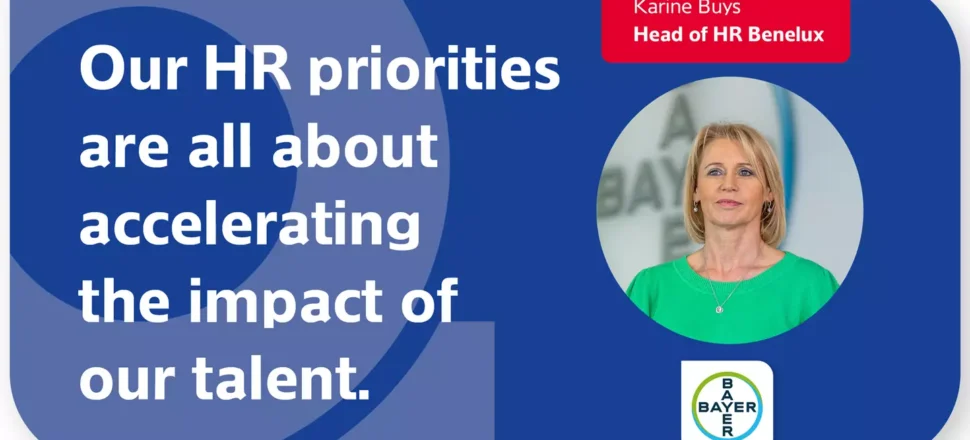
Our HR priorities are all about accelerating the impact of our talent.
What are your key HR priorities for 2023 and why?
Our HR priorities revolve around maximizing the potential of our talent and fostering a culture of high performance by focusing on:
- Driving our cultural transformation through a leader development & culture program “Engage – Shape – Perform”
- Empowering and supporting all our people to take ownership of their careers, enabling them to reach their full potential
- Shaping a caring environment, in which wellbeing & employee experience at scale is key
- Implementing future ways of working (digital – data analytics – virtual assistant & automation)
- Embedding Diversity, Equity and inclusion further into everything we do
Which trends do you think will be central in the world of HR in 2023 and beyond?
Important trends in HR that we are taking into account in our strategies are the:
- Move from intuition & bias to evidence based working through data analytics
- Switch from job based to skill based working
- Hybrid working and new office concepts
- Focus on selfcare – more focus on preventive action over curative
How has being a Top Employer helped your employer brand?
The Top Employer certification helps to benchmark our company against other top employers and provides useful insights into areas we can still develop or innovate further. It is of course also an important employer branding tool, which can differentiate us from competitors. Many candidates are very well aware of it, and as the labour market is candidate driven, it is really supportive for our brand and for attracting the right candidates.
The Transformative Power of Applied Artificial Intelligence
How it is Impacting Decision Making in the Workplace
The world of work is constantly being moulded by new technologies and changing demands from employees and employers. Artificial Intelligence is one of the latest and possibly, most impactful technologies shifting the global landscape.
As AI systems become increasingly more common in production lines, offices, prediction models and workplace decisions, it is critical to explore how adopting AI will impact economic activity and professional lives.
Defining Artificial Intelligence
You no longer need to be a data scientist to engage with complex data. The term applied AI is everywhere, and it can be easy to forget what it encompasses with all the new rhetoric we’re encountering.
As such, this article should define the term used throughout the piece. Applied AI involves all the activities that underlie AI’s operationalisation from experimentation to production, including enabling computers and computer-controlled robots to execute tasks. What is most interesting for business leaders and employees is how AI will be used at work and the impact on human labour and human workers.
Artificial Intelligence in the Workplace
A recent global survey by McKinsey found that more than half of the respondents were beginning to implement AI in at least one of their business units. In that same study, nearly two-thirds of respondents expected their organisations to increase investments in AI over the next few years.
Applied AI is a powerful tool for organisations to improve their business practices. One of the more apparent areas for businesses to begin integrating AI in the workplace is using it to aid decision-making.
Applied Artificial Intelligence for Decision Making
Organisations have largely left the decision-making to the judgement of management judgement. However, in recent years, organisations have been increasingly interested in implementing data to aid decision-making.
Still, AI allows leaders and decision-makers to reimagine how they manage processes, how to use AI for talent acquisition, and organisational structures, but how is it reshaping how organisations operate?
Five Ways that Applied Artificial Intelligence is Reshaping Decision Making
Enhanced Data Analysis:
- One of the primary ways applied AI transforms decision-making is by enhancing an organisation’s data analysis capabilities. With the ever-growing data available to businesses, traditional data processing and analysis methods have become inadequate. In an earlier HR analytics article this year, we examined how organisations impacted employee experiences. Still, as we have seen, the development of AI redefine what business can do with the large amounts of data they have.
- With human assistance, applied AI algorithms and artificial intelligence tools can swiftly analyse vast amounts of data, extracting valuable patterns, key business metrics, trends, and correlations that would be difficult or time-consuming for humans to identify. It also removes some of the natural human biases and human errors found during analyses. It empowers decision-makers with comprehensive and accurate insights, enabling them to make informed choices backed by data-driven evidence.
Automation and Efficiency
- Decision-making often involves repetitive tasks that consume valuable time and resources. Applied AI offers automation capabilities that streamline these processes, freeing human resources for more strategic and creative endeavours as complex data becomes easier to understand. AI-powered systems can handle routine tasks precisely and quickly, from data and information security to data collection and analysis to generate reports and recommendations.
- AI’s big data insights improve overall efficiency and reduce the margin for human error, ensuring more reliable and consistent decision-making. It also allows human intelligence to support making decisions more efficiently as AI takes on the more mundane tasks.
Predictive Analysis
- Applied AI empowers decision-makers with predictive analytics, enabling them to anticipate future outcomes and make proactive decisions. By leveraging historical data and machine learning algorithms, businesses can predict employee and customer behaviour, market trends, and potential risks. This capability allows organisations to stay ahead of the curve, adapt to changing circumstances, and capitalise on emerging opportunities. Predictive analytics supported by applied AI brings a competitive advantage by reducing uncertainty and enabling agile decision-making.
Risk Management and Compliance
- Applied AI is also making significant strides in risk management and compliance. By analysing substantial amounts of data and identifying patterns, AI systems can flag potential risks, anomalies, or compliance violations. This proactive approach mitigates risks and ensures that organisations adhere to regulations and ethical standards. AI-powered tools can continuously monitor and assess data, providing decision-makers with real-time insights and alerts to support risk mitigation strategies.
Personalised Decision Support
- Every decision-maker has unique preferences, biases, and decision-making styles. Applied AI can provide personalised decision support by understanding individual patterns and adapting to specific needs. AI-powered systems can learn from previous decisions and tailor recommendations to align with the decision-makers objectives and constraints. This level of personalisation empowers individuals to make decisions that align with their strategic vision while considering a broader range of relevant factors.
Considerations Organisations Need to Make as they Implement Artificial intelligence in the Workplace
Artificial intelligence in the workplace can provide big data insights for organisations. In contrast, the integration of artificial intelligence in decision-making processes has the potential to revolutionise how organisations operate and achieve their business objectives. Applied AI offers powerful tools and capabilities to enhance efficiency, improve accuracy, and unlock valuable insights. However, as organisations embrace this transformative technology, it is crucial to consider certain factors to ensure successful implementation and maximise the benefits.
These considerations include, but are not limited to:
Clearly Define Objectives
- Before integrating applied AI into decision-making processes, organisations must clearly define their objectives, and this involves identifying the specific challenges or areas where AI can provide the most value. Whether optimising supply chain operations, improving customer experience, or enhancing risk management, organisations must align AI initiatives with their strategic goals. Defining clear objectives will enable focused implementation and ensure that AI solutions address the most critical decision-making needs.
Ethical and Legal Considerations
- AI applications raise important ethical and legal considerations that organisations must carefully address. Decision-makers must ensure that the data used for training AI tools and AI technologies are obtained ethically and that privacy rights and data protection regulations are respected. Additionally, organisations must consider the potential biases and unintended consequences that AI algorithms might introduce into decision-making processes. Regular monitoring and evaluation of AI systems can help identify and mitigate biases or discriminatory outcomes, ensuring fairness and transparency in decision-making.
Human and Artificial Intelligence Collaboration
- Applied AI is not meant to replace human decision-makers but augment their capabilities. Organisations should establish a framework for effective human-AI collaboration to leverage both strengths. It is essential to foster an organisational culture that encourages employees to embrace AI as a valuable tool and provides the necessary training to understand and work alongside AI systems. Clear communication channels and well-defined roles between humans and AI will enable seamless collaboration and ensure that AI-driven insights are effectively integrated into decision-making.
Continuous Monitoring and Evaluation
- Integrating applied AI in decision-making is an ongoing process that requires continuous monitoring and evaluation. Organisations should establish mechanisms to assess the performance and effectiveness of AI systems regularly. This involves monitoring key metrics, evaluating the impact of AI-driven decisions, and gathering user feedback. Continuous improvement and adaptation based on real-world feedback will help refine AI models and generative AI tools to enhance decision-making outcomes and uncover opportunities for further optimisation.
Scalability and Flexibility
- Organisations should consider the scalability and flexibility of AI solutions when incorporating them into decision-making processes. As the needs of the business evolve, the applied AI infrastructure should be able to adapt and accommodate new requirements. One example may involve selecting AI technologies that can easily integrate with existing systems or investing in scalable cloud-based solutions.
Final Thoughts
Applied artificial intelligence is revolutionising decision-making in the workplace by augmenting human capabilities, enhancing data analysis, enabling predictive analytics, streamlining processes, and offering personalised support. In addition, artificial intelligence in the workplace can be used to turn complex data into something that a larger group of people can understand.
The implementation of artificial intelligence does not mean the elimination of human workers, human intelligence, or human creativity. On the contrary, if used correctly, artificial intelligence should provide valuable insights, minimise repetitive tasks, assist in an employee’s personal development and, with evidence-based reasoning uncovered, make work more efficient. As a result, organisations that carefully embrace AI tools have the opportunity to create a new modern workforce without making employees fearful of machine learning causing job losses.
Balancing AI and Human Expertise in HR: Insights from SABIC India and Top Employers Institute
Artificial Intelli
gence (AI) is rapidly growing in various industries, including HR. While AI technology offers numerous benefits, such as increased efficiency and reduced bias, it raises concerns about the lack of personal touch. In a recent LinkedIn Live event, Preet Boparai, Head of HR for India, at SABIC and Billy Elliott, Regional Director for APAC at Top Employers Institute, discussed the emerging use of AI in HR and the importance of maintaining a balance between AI and human expertise. The webinar explored examples of how AI has proven beneficial and the potential downsides of relying solely on technology.
The session also provided insights into how SABIC India leverages AI while retaining the human element in HR operations. Here are some key learnings from the session:
Read ahead to get a snapshot of some of the session’s highlights; fill in the form to get the recording of the webinar to watch whenever you have a moment.
Balancing the Benefits and Concerns of AI in Human Resources: The Need for Human Oversight and Intervention
Using AI tools in HR has proven successful in saving time and effort. For example, AI tools have proven successful in recruitment by saving time and effort for recruiters and offering personalised feedback to candidates. These tools employ natural language processing and facial analysis technology to evaluate the fit of candidates for job positions. However, a critical issue with AI tools in recruitment is the potential for bias and discrimination. In a notable case, a recruitment tool demonstrated a preference for male candidates over female candidates. Therefore, it is necessary to have human oversight and intervention to ensure that algorithms are not giving biased results.
SABIC Shows How AI Tools Can Help HR in Employee Engagement and Retention
SABIC, a global leader in diversified chemicals, has harnessed the power of AI to enhance employee engagement and retention. Here are some ways they’ve implemented it:
- Development of a chatbot for digital employee experience: SABIC developed an advanced chatbot called Amber, which has proved invaluable during the pandemic. It acted as a seamless two-way communication tool, promoting connection and dialogue by regularly seeking feedback from SABIC employees about their experiences working in an evolving, flexible environment. The chatbot is used to identify disengaged employees and those who are at risk of leaving. By proactively identifying these employees, SABIC has been able to retain them, thereby reducing its attrition rate. However, SABIC also emphasised the importance of informing employees about the tool and ensuring that conversations between employees and HR are confidential.
- Gathering insights from employees: SABIC has also used AI tools to gather employee feedback during the COVID-19 pandemic. This feedback was used to launch SABIC Care, a flexible employee health benefits plan.
- Personalised learning journeys: SABIC also uses Percipio, a platform that offers a range of courses and content for employees to upskill and reskill themselves. This platform uses AI to personalise the learning experience and improve the efficiency and effectiveness of the learning process.
Balancing AI and Human Intelligence
While AI tools can provide valuable insights and baseline information, SABIC emphasised the importance of involving human intelligence in decision-making. The solutions SABIC created were well thought through and catered to the entire organisation. SABIC also recognised that AI tools are not infallible and that there may be instances where the predictions made by these tools need to be corrected. Therefore, the company has created a feedback loop where human intelligence can correct and improve the accuracy of AI tools.
Fostering Collaboration Between AI and Humans in the Workplace: HR’s Vital Role
In today’s fast-paced, technologically driven world, it’s easy to get caught up in the idea that machines and algorithms can do everything better than humans. However, as we rely increasingly on artificial intelligence (AI) in the workplace, it’s essential to remember the value of the human touch. Recent studies have shown that many employees negatively perceive their HR departments. Some don’t even know who their HR representative is, while others don’t trust that any action will be taken if they report a concern, such as harassment or discrimination. With the increasing use of digital tools, this gap between HR and employees could widen further.
However, the solution isn’t to eliminate AI and go back to the days of paper forms and in-person meetings. Instead, HR departments need to remember that technology should be used to enhance and support human interaction, not replace it entirely. The key is to maintain honest and meaningful conversations with employees.
This means closing the loop and letting employees know what actions are being taken in response to their concerns, even if the news isn’t always positive. No amount of technological advancement or process improvement can replace regular communication and connection between HR and employees.
Ultimately, the best approach is to view AI and humans as a united team working together to empower the future of the workplace.
It’s up to us to take responsibility for making positive changes and not depend solely on technology to solve all our problems.
Key Takeaways: Embedding Systemic Inclusion with Tata Consultancy Services
Virtual Fireside Chat with Preeti D’Mello, Tata Consultancy Services, and Adrian Seligman, Top Employers Institute.
There is no diversity without inclusion.
Inclusion is now an integral part of any organisation’s diversity offerings. Leading organisations, like certified Top Employer Tata Consultancy Services, are integrating it into their overall business strategy. Creating an inclusive workplace culture differs from simply creating a diverse company culture. An inclusive work culture allows employees to feel included irrespective of who they are or how they identify themselves.
In this webinar, Preeti D’Mello, Global Head of Diversity, Equity & Inclusion & LeaD Academy at TCS, and Adrian Seligman, Executive Board Member at Top Employers Institute, spoke about how to adopt a holistic and systematic view of diversity, inclusion, equity and belonging to create, nurture and sustain an inclusive culture.
Throughout the session, they touched on how organisations, and their HR leaders, can build their capacity for emotional intelligence, embodied self-awareness, compassion and sensitivity. While also touching on how individuals can demonstrate personal impact and accountability through good actions for themselves and others.
Read ahead to get a snapshot of some of the session’s highlights; fill in the form to get the recording of the webinar to watch whenever you have a moment.
TCS is a large multinational organisation with around 600 000 employees; Adrian and Preeti began their conversation about inclusion by exploring how TCS sees its employees as individuals. Following that, Preeti expanded on the question by sharing some best practices from TCS:
- While the company is large, TCS manage to keep their everyday operating teams small. It allows them to operate similarly to a country with states, counties and townships. In simpler terms, they manage to organise their large employee numbers into smaller groups to keep it manageable. It also allows each group to interact within and outside of their group.
- At TCS, they also maintain a company culture of open communication where feedback is not only encouraged but also helps to facilitate collaboration. They provide space for teams to voice their opinions openly without fear. While this is difficult, they ensure their company structure supports this culture.
- They also know that they must keep evolving to maintain their inclusive culture.
Inclusion at Scale with HCL – Read Now
How TCS’s DE&I strategy fits into their talent attraction strategy.
- When hiring and advertising open positions, they ensure clear messaging around the diverse identity groups they have in their organisations. TCS also partner with organisations that promote certain identity groups to ensure that they get the best candidates and a diverse range of candidates.
- They use word of mouth to help find new employees as they value the opinions of their current employees and want to find new employees who will be a neat cultural fit in the organisation. They also look at the internal dynamics of their current employees to help inform recent hiring decisions.
- At TCS, they make sure that their DE&I strategy is communicated internally and externally so that you are aware of the organisation’s strategic objectives, whether you are new or old to the company.
How TCS help, their leaders succeed in creating a culture of belonging across the organisation.
- There is a mandate for inclusion and belonging that is now a mandate for business results. They did this when they understood that there was a clear relationship between doing the right thing and improved business results. It first began to gain momentum in the United States and then became a worldwide phenomenon.
- They ensure that their organisation has a precise value alignment with those who work in and outside the company. It is a part of their big message that while business is about products and solutions, it is also about the quality of people a business works with.
- To engage with their leaders, TCS started by showing them some of the positives of working within an inclusive organisation.
- They encourage open and honest conversations with their leaders and employees to share the positives of working in a diverse and inclusive environment.
- They foster learning about conscious and unconscious bias throughout the organisation.
The fundamental shift in their culture has come from the organisation realising that they will need to step outside of themselves and critically look at what they are doing and how they can improve that. It’s about making small steps every day to improve their culture.
Learn more about how TCS makes their DE&I strategy work by watching the full Virtual Fireside Chat now. Fill in the form now and get your link to the session.
Best Practice | Count Me In: Diversity & Inclusion at Mitie
Mitie’s Count Me In learning and development programme is aimed at challenging the way colleagues think about diversity and inclusion, while stimulating healthy conversation. The programme was developed based on feedback from Mitie colleagues regarding their experiences with inclusion.
This is just a snapshot of Mitie’s innovative best practice; you can find the full practice on our HR Best Practices database that is exclusively available to Top Employers. Get inspiration and insight into the approach, challenges and learnings experienced by certified Top Employers. Access it now or learn more about it here!
Why was the practice needed?
When certified Top Employer, Mitie Group, created a new Head of Diversity and Inclusion they saw an opportunity to step beyond traditional unconscious bias training for a more mindful approach to issues around D&I. After receiving employee feedback that showed a need for the organisation to focus more on the needs of women in the workplace, race and ethnicity, disability, sexuality, and age-diversity. These were all issues that fall under the umbrella term of diversity and inclusion.
In 2021, against the backdrop of the company’s recent merger with Interserve, the pandemic and the Black Lives Matter movement, Mitie’s Count Me In programme was able to deeply connect their people to each other. The aim of the programme was to not only understand their own company culture but also the culture of their employees and the challenges that are brought with different cultures. The programme also wanted to try and represent all these different cultures and people in their company story.
How HCL Achieves Inclusion at a Global Scale
How was the practice implemented?
Mitie wanted to challenge the way that their people think with their Count Me In programme by encouraging them to have authentic and open conversations. Most importantly, Mitie wanted to create an environment where every employee felt able to bring their authentic and whole self to work. To meet these goals, they designed the programme as a journey of growth that would happen over four phases:
- Count on Me: starting point in which employees look at their own strengths and biases.
- Count on Us: this phase focuses on team culture and provides the opportunity for teams to create an environment of trust and empathy in which colleagues feel safe to speak up.
- Count on Mitie: as part of an inclusive organisation all employees feel a sense of belonging.
- Count on the Future: the Count Me In initiative continues to support and encourage an inclusive culture as well as to ensure that ED&I strategies remain in focus going forward.
Across the programme, Count Me In covered the following topics:
- Assumptions and bias
- Strengths and superpowers
- What is and isn’t ok to say
- Banter
- Inclusive conversations
- Conscious Inclusion
- Building relationships
- Allyship
- D&I basics
- Speaking up
- Inclusive leadership behaviours
The first two phases of the programme encouraged employees to reflect on their own understanding of diversity and inclusion while developing new awareness around it. While doing this they also worked on creating an environment that was safe for everyone to speak up in. The programme was not designed to be stagnant. Instead Mitie carefully constructed the training to be continuously developed over time with new training developed on further feedback from employees at the organisation.
When the programme progressed the focus shifted from internal reflection to ensuring that the organisation had a culture of psychological safety that allowed them to speak up and speak out.
The programme was not only limited to non-executive employees, but rather it extended into leadership levels with reverse mentoring and training to help manage escalations. Throughout the programme employees were helped to identify people that they could reach out to for various types of help. Management needed to be prepared for conversations that required the highest level of care and consideration.
While this was happening, the Executive Leadership and Group Leadership teams pledged their commitment to the overarching objective of the programme, which was to create an environment of inclusion throughout the organisation where each person feels comfortable in being themselves at work. In all of the leadership meetings at Mitie D&I is a standing topic with quantifiable metrics for follow-up and measurement across the company.
To learn more about how they implemented the programme you can find this practice on our HR Best Practice database. Access it now or learn more about how to become part of a global network of employers of choice!
Results of implementing Count Me In.
The programme’s first activity was an online self-assessment was completed by over 6 000 people at Mitie. It was followed by ‘Let me tell you a story…’ during which over 4 000 participants listened to a story being told before they were asked to answer questions designed to illuminate biased assumptions about the characters.
After the programme was implemented across Mitie they found:
- Over 24 000 employees have engaged with some or all the learning activity.
- Average NPS across all activities is 99%.
- Over 17 000 inclusivity commitments have been made by employees at all levels.
There were also several strategic benefits revealed by the programme:
- The number of colleagues registered in Mitie’s diversity networks grew fivefold.
- Mitie continued to report their Gender Pay Gap and they voluntarily published their Ethnicity Pay Gap report.
- This initiative helped Mitie to become number 10 in the top 50 Inclusive Employers in the UK.
- Mitie has improved gender and racially diverse representation in senior leadership roles, 21% of Women and 8% of Racially Diverse.
To get more details about how Mitie made their Count Me In programme work find this practice on our HR Best Practice database. Access it now or learn more about it here!
Recruit, Retain and Return – ‘3Rs’ for International Women’s Day
International Women’s day, celebrated on 8th March, shows us how far organisations have come in advancing the cause of women in the workplace, but it also demonstrates how far there is to go. This year’s campaign theme is #EmbraceEquity – and for good reason. Equality at work is no longer enough: different women are starting from different places, so true inclusion and belonging requires equitable action.
With this in mind, it’s encouraging that the UK’s Top Employers have made great strides over the last year. Over four in five (81%) of certified UK Top Employers now have dedicated programmes to empower women, an increase of 12% on the previous year.
The key for these businesses has not only been to advance opportunities for women facing their many different barriers to progress, but to do so in a way that spans the employee life cycle. This means from the moment they are recruited, to the actions taken to retain them and in ways to enable their return at key moments in their careers.
Recruit
Empowerment of women begins with the hiring process. Numerous studies identify unconscious bias at specific touch points throughout the recruitment and candidate journey, starting with technology. This bias doesn’t only affect women, but when it comes to gender it has been recognised and acted upon. Many changes are being implemented to ensure female top talent isn’t being missed in the recruitment process. For example, certified UK Top Employer East Midlands Railway, amongst others, is using “anonymous” recruitment techniques within the recruitment process to remove any possibility of unconscious bias among hiring managers.
Retain
Women can thrive through sponsorship networks. UK Top Employer Group M recently introduced its first Sponsorship programme which brought senior leaders together with underrepresented high performing talent from minority ethnic backgrounds. These leaders acted as sponsors, helping the participants to move through to promotion and Senior Leadership. The first cohort completed their 18-month programme in 2022. Women made up half those being sponsored, with 57% winning promotion. A further 10% moved into a new role or gained greater responsibility whilst also building contacts, skills, confidence, and a career path towards promotion.
Later this year, the business will launch its second Sponsorship programme, focussing on a wider group of underrepresented talent, specifically targeting areas of improvement identified from its gender pay gap analysis. Complementing this will be a Women in Leadership programme and a Mentorship programme, creating equitable ways forward for women at every level of their career.
Return
The challenges for helping women return to work are particularly acute in businesses relying on STEM (Science, Technology, Engineering, and Mathematics) skills. UK Top Employer Virtusa has implemented its Disha programme; a successful initiative that welcomes women back to business after career breaks.
Disha is a training capsule that includes a blend of technical and soft skills, in the form of workshops led by leadership and industry leaders. After a week-long training period, participants are invited to present their solutions to a hypothetical business problem, to assess their knowledge and cultural fit. Participants of the workshop are then given the opportunity to interview for open roles at Virtusa. In January 2023, Virtusa completed its fourth edition of this programme, held for the first time at Virtusa UK, and the organisation is looking to extend the initiative to other regions.
These 3Rs from these and many other UK Top Employers give business organisations a strategic way forward in the drive to #EmbraceEquity for women at every stage of the employee lifecycle.
If you would like to find out more about how your organisation can become a Top Employer click here.