Navigating a Dynamic Workforce
Top Employers Institute’s Navigating a Dynamic Workforce analyses the latest trends in the changing nature of the workforce and how employers can navigate and adapt to a dynamic workforce while maintaining employee engagement and success.
In the report, our analysis offers organisations a look at how they can unlock business success by leveraging and empowering their contracted, non-traditional talent with four recommendations. Those recommendations are:
- Include contingent workers: Successful organisations value and respect every contributor, including contingent workers. They should be included in opportunities that normal employees would experience, such as access to various HR processes, practices, and deliverables.
- Support employees with directing their own career evolution: Organisations should empower employees to chart their career paths and provide resources for self-directed learning. This can be done through online self-service resources, interactive career portals, internal digital career marketplaces, and mentoring/coaching for career development.
- Provide resources that promote self-directed learning to all employees: The speed at which skills and skill demands are evolving requires ongoing reskilling. Organisations should offer online training programs, personalised learning portals, and micro-learning content integrated into everyday activities and facilitate opportunities for employees to learn from one another through online learning communities.
- Facilitate a smooth transition into and out of the organisation for all employees: With a dynamic workforce, onboarding and offboarding become important ways to leave a lasting impression on employees. Organisations should optimise the onboarding experience and implement meaningful offboarding practices, including a fit-for-purpose offboarding experience and gathering feedback from departing employees.
You can read more about each recommendation and gain a better understanding of the trends affecting the world of work by completing the form on the left and downloading the analysis for free.
World of Work Trends 2024
Top Employers Institute’s World of Work Trends 2024 analyses the latest trends in people strategies and practices from leading organisations globally. In the report, our analysis showed five significant trends affecting workplaces in 2024. Those trends are:
- Empower through AI
- The Future Defined with Purpose
- Dialogue for Transformation
- Evolution of Wellbeing Effectiveness
- Broaden the Horizon of DEI
Read more about each trend in our article below or get in-depth insights by completing the form on the left and downloading the report for free.
The speed of innovation in AI has opened doors to a revolution in how we work. The shifting cultural landscape has enabled leaders and employees to drive meaningful societal impact. And the growing awareness of different identities and wellbeing needs has made inclusion non-negotiable. The organisations that will be most successful in this new world of work capture these opportunities purposely, thoughtfully, and ethically.
The sweeping global financial, technological, and political changes that have been happening worldwide will bring attention to people’s complexities and unique value. The year 2024 will see people firmly recentred at the heart of the workplace – and the five key trends of the coming year reflect the growing realisation that whilst AI will support and optimise, the real competitive advantage is found in the creativity, passion, and partnership between employees.
Trend 1: Empower through AI
The release of ChatGPT in November 2022 prompted a wave of excitement about the potential of generative AI and considerable concerns about its impact on employment. As we enter 2024, the conversation will become more grounded. Organisations will look to implement more ethical stewardship of their potential in the year ahead and start with a clear vision for human-AI synergies.
Many organisations are still in the exploratory stages with AI, and in 2024, the discussion will shift from what you can do with AI to what you should do with AI. An ethical framework for AI adoption will, therefore, become central to HR Digital strategies – and we see this happening in three ways:
- Organisations take a responsible approach to how data is used to track employee behaviour or sentiment. HR leaders must prioritise AI’s ethical, explainable, and transparent roll-out.
- HR will see how technology can be used and deployed around the employee experience. When poorly implemented, AI could cause employees to lose a sense of meaning in their work.
- HR will look to see how AI can support, rather than challenge, the interaction between humans. Humans want to work with humans. And whilst AI offers HR innovative new routes to tracking and personalising offerings, face-to-face contact will become a greater imperative.
How will organisations begin to do this? The answer starts with leaders, the subject of our next trend. You can find more details on this trend by downloading the full report now.
Trend 2: The Future Defined with Purpose
Last year, in the World of Work Trends Report 2023, we predicted the growing importance of a “lived” purpose – one that comes straight from the heart of all those who work. This sense of purpose will remain a constant in their everyday decisions. More recent research conducted by Top Employers Institute shows that organisations will only see the benefits of a solid organisational purpose if they have the right leaders to bring it to life.
Purpose-driven leadership is critical to success. So, what do employees want from their leaders in 2024?
- On big-picture issues, they want leaders to be situated in the real world, speaking about real-world problems, just as their employees would. They should think beyond immediate business concerns to offer more to their employees.
- Empathy is also at the heart of purpose-driven leadership. Leaders will need this trait as much as their business acumen in the coming year.
Empathy requires a genuine two-way dialogue. Leaders must listen more – employees expect an authentic voice in important decisions.
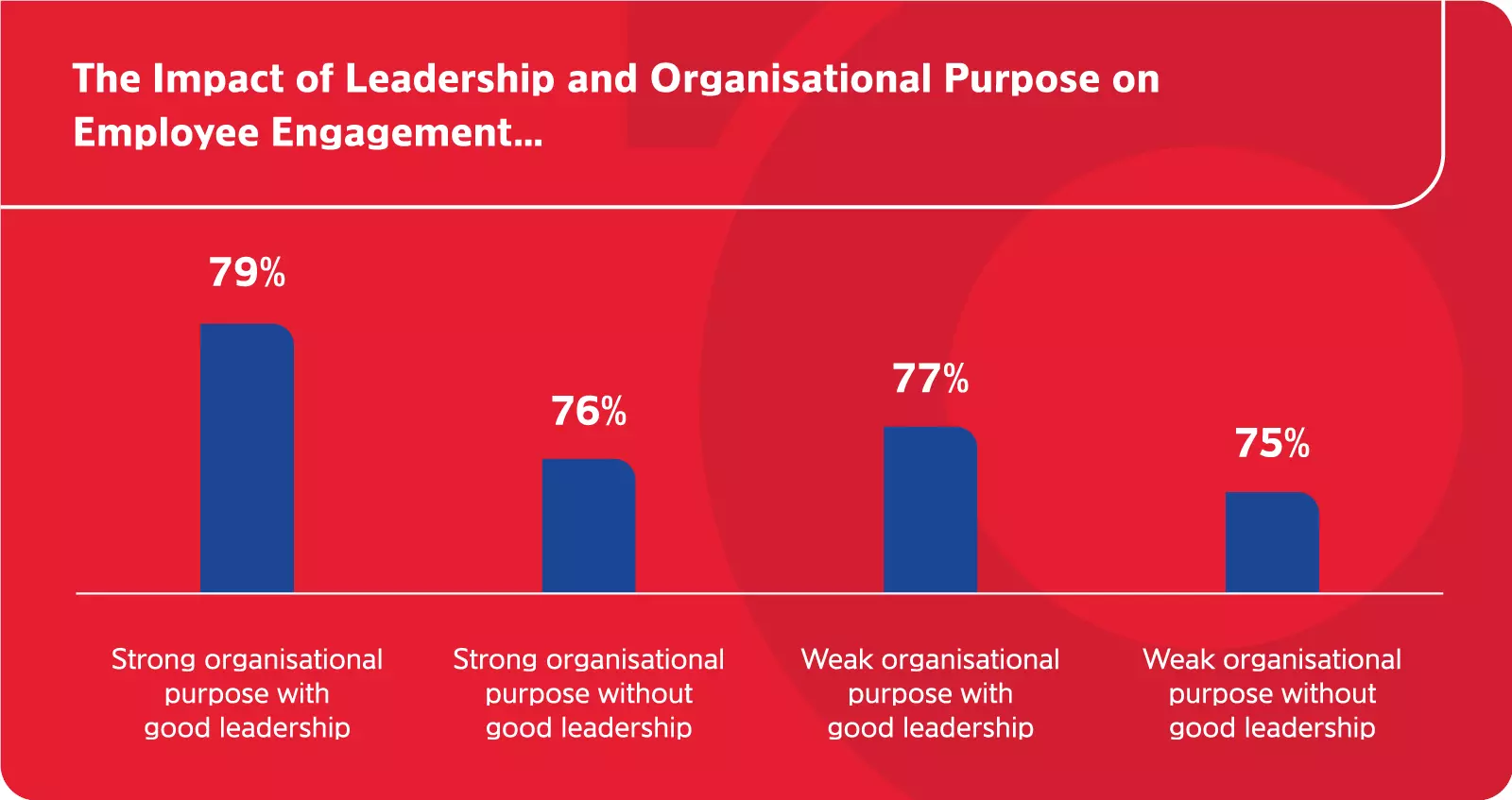
Organisational purpose is an evolving and collaborative process that demands the commitment of every employee. That leads us to our third trend. You can find all the details about this trend and more in the complete report. Download it now!
Trend 3: Dialogue for Transformation
Employees who feel genuinely listened to by the organisation are more likely to be engaged, and organisations orchestrating meaningful employee dialogues are reaping the benefits. Our latest Top Employers data shows that almost every HR practice encouraging employee involvement in strategic decisions helps to drive business success metrics.
A Dialogue for Transformation has two elements:
- On an individual level, employees need to see their input applied practically in business decisions – those who feel empowered to influence how their work gets done experience far higher performance levels and job satisfaction.
- Beyond the individual, collective intelligence describes the alchemy that happens when diverse perspectives meet collaboratively. It represents the sum of individual intelligence and the additional innovation sparked through their combination.
Empowerment plus collective intelligence has helped to drive new ideas for organisations, often above and beyond the scope of regular day-to-day business.
Moving the needle on what matters will demand ever closer and more constant conversation with employees. Transformational dialogue will be foundational for the last two trends. Download the full report to find out more.
Trend 4: Evolution of Wellbeing Effectiveness
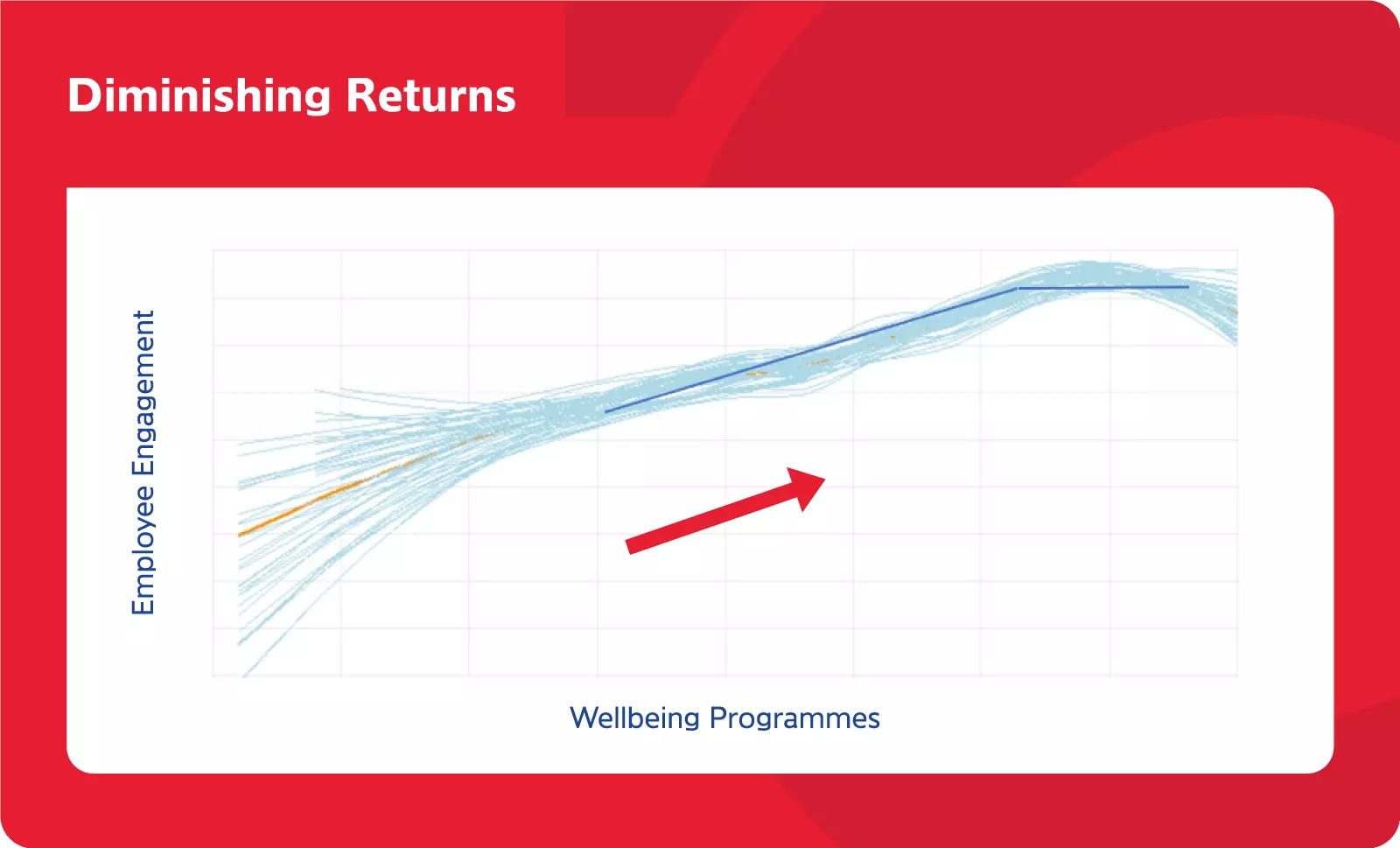
Many organisations struggle to balance their HR budgets while still trying to enhance employee wellbeing. In 2024, therefore, wellbeing will be about getting the most suitable offerings, not the most. Research carried out by Top Employers Institute last year demonstrated that additional wellbeing programmes provided little or no additional benefit to employees beyond a saturation point.
Most Top Employers actively promote their wellbeing programmes through organisation-wide strategy, assessment and metrics.
- Organisation-wide total wellbeing strategy. Nearly four in five (79%) organisations have a coherent overarching approach to all dimensions of wellbeing (up four percentage points since our last survey).
- Wellbeing programme assessment. Nearly three in four (72%) organisations regularly conduct an ‘employee wellbeing needs assessment’ to identify employee needs, interests, likes and dislikes and adjust their offerings where appropriate (up five percentage points).
- Wellbeing metrics. We have also seen a significant increase in the use of metrics, with over two-thirds of our Top Employers consistently using them (68%, up eight percentage points), along with the accountability of over half (54%) of leaders to meet wellbeing targets (up seven percentage points).
With this, there may be specific wellbeing challenges for new demographics, which takes us to our final trend.
Trend 5: Broaden the Horizon of DEI
In the last year, diversity, equity, and inclusion (DEI) have also come under budgetary pressure, so organisations are looking for these initiatives to impact their workforce positively. In 2024, the tight talent market will grow as employers become more open to “non-traditional” candidates.
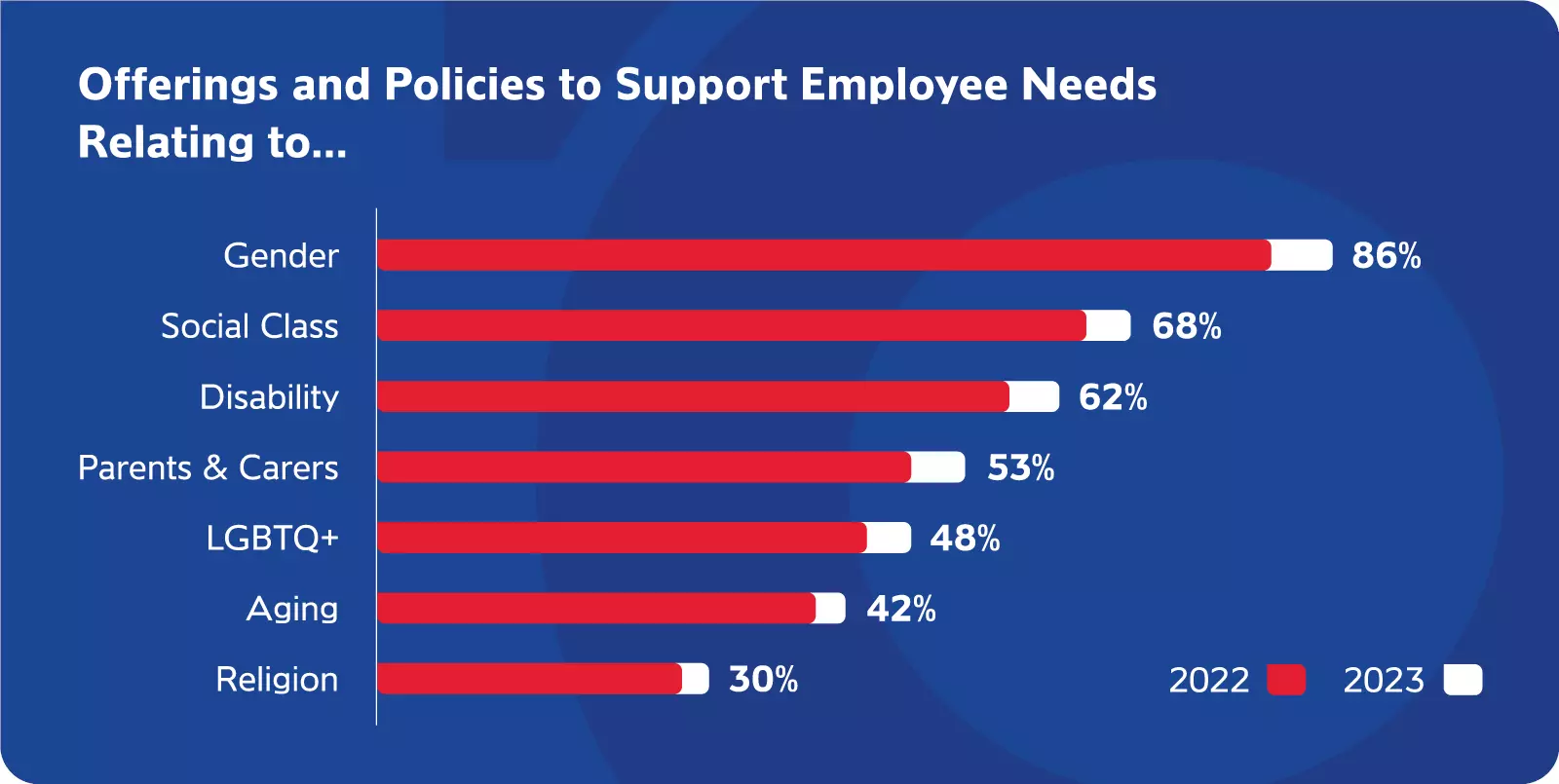
We think DEI approaches will change in three ways:
- The consideration of diversity will expand far beyond demographic segmentation. Whilst groupings, such as gender and race, will continue to be areas of focus, 2024 will see a shift towards a more nuanced approach to DEI. For example, expect the importance of neurodivergent talent (and its link to higher levels of creativity and innovation) to grow.
- DEI analytics and the metrics used will become more sophisticated. Not all demographics are straightforward to capture. However, we have learned from progress in gender representation that data is critical to improvement.
- The “majority” will be actively included in DEI strategies at some point in their career journey, with different experiences increasingly acknowledged. A more holistic inclusion strategy will likely be adopted to complement the ongoing targeted initiatives for under-represented groups.
Download a copy of The World of Work 2024 by filling out the form now.
The Benefits of Crafting an Employee-Led Employer Branding Strategy
People want to work for organisations that are known to be good employers. While it may sound obvious, many companies still neglect their employer brand to focus on other parts of their business strategy. Employer branding might not be the most exciting topic around the office, but it is one of the most underrated parts of an organisation’s strategy.
It helps attract new employees as well as retain existing talent. As organisations begin to invest in building an effective and genuine employer brand, they need to ensure they involve their employees in the employer value proposition.
There is not one way for organisations to create an inspiring employer brand, but in 2023, we see a change in how companies build their brand. For many, what used to be the responsibility of a small group of people is now becoming an organisation-wide effort, with employees becoming critical players in building an authentic and robust employer brand.
What is Employer Branding?
Employer branding is an organisation’s strategy to showcase their company culture and reputation. Employer branding, while a marketing effort, is designed to appeal not to customers but to prospective employees. While job seekers are the primary audience, the appeal of a strong employer brand is also a key part of influencing existing employees’ perception of their employer.
An organisation’s employer branding strategy is essential to maintaining a company’s reputation, and a strong employer brand will help generate engagement within the workforce by connecting employees with their organisation’s mission. That mission must be genuine and authentic. It is not enough for organisations to say that they have a set of values. They must make sure that all the employees in their organisation feel it.
An organisation’s employer brand represents your organisation’s reputation as an employer. It may not be tangible, but it is an asset that needs attention as it influences candidates and current employees.
Why is Employer Branding Important?
A strong employer brand is necessary for every organisation’s strategy, especially in a more demanding talent market. While the concept of employer branding is not new, it is still sometimes forgotten by companies, as other parts of their business take a more significant part of their strategy goals. Still, as the talent market has become more fluid, innovative organisations invest heavily in their employer brand. Some of the reasons why it is still essential include its role in:
Attracting Top Talent
- The best people want to work for an organisation that reflects their values, and it has never been more difficult for organisations to get to these individuals. Organisations that can reach these potential employees are doing so because they have a strong employer branding strategy that appeals to potential candidates. This recruitment effort is also helped by current employees sharing their positive experiences at the company, enhancing its reputation.
Improving Employee Engagement and Retention
- Just as people want to start working at a company that aligns with their values and culture, they also want to continue working at an organisation that is reflective of themselves. A well-designed employer brand fosters this connection between employees and their organisation. Employees who are proud to work at an organisation are more likely to feel a genuine connection with their company and are more likely to be engaged, which is linked to higher retention.
Gaining a Competitive Edge
- Many organisations offer similar services and products. Differentiating your organisation from the competition can be challenging – and this is where your employer branding strategy can help you gain a competitive edge. When your employer branding strategy highlights the exceptional qualities of your team and organisation, it helps set you apart from the competition.
Building Credibility with Customers
- Customers, like potential employees, want to engage with organisations that align with values that are important to them, and that they can trust. When values align, people are more likely to trust them, and while it’s not the sole deciding factor for potential clients, it is one which organisations should be mindful of, particularly in a competitive market.
Enhancing Organisation Culture
- When an organisation actively shares the unique aspects of its workplace culture, including its values and mission, it attracts individuals who align with these values. This makes them better placed to create a more cohesive and productive work environment.
How does the Employer Value Proposition Fit in?
The Employee Value Proposition (EVP) is critical to crafting a successful employer branding strategy. The EVP is the unique set of offerings and experiences an organisation provides its employees in exchange for their skills, contributions, and commitment. Organisations that effectively integrate the EVP into their employer branding strategy use it to form the foundation for their brand image and reputation.
Read More: Case Study: Talent, Borders and Benchmarks – The Dana Way
Why are Organisations Involving Employees in Creating a Strong Employer Brand?
Creating an effective employer branding strategy is essential for organisations, and in 2023, this creation effort will no longer be limited to HR and marketing efforts. As companies realise that including employees in the process of creating a strong employer brand is not only good practice; it is a strategic imperative. Some of the reasons why organisations include their employees in this process are:
- Authenticity: Employees are the living embodiment of an organisation’s culture and values. Their genuine experiences and perspectives provide authenticity to your employer brand. Candidates and potential clients are more likely to trust employees’ words over scripted marketing messages.
- Improved Feedback: Employee involvement in branding creates a feedback loop that allows organisations to continually refine and enhance their employer brand strategy. Employees can provide insights into what’s working and what needs adjustment, ensuring the employer brand is authentic and accurate.
- Inclusive Culture: Involving employees in branding fosters a sense of inclusion and ownership. It reinforces that the organisation values diversity of thought and perspectives, which can contribute to a more inclusive workplace culture.
- Long-term Sustainability: An employer brand created alongside employees tends to be more resilient and adaptable. It can evolve to meet changing needs and expectations, ensuring its sustainability.
Final Thoughts
A strong employer brand is becoming increasingly crucial for organisations wanting to succeed in the talent market while getting the best out of their current employees. A well-planned and executed employer branding strategy comes when an authentic company story is integrated into all aspects of the business. Employees must be involved in the process to help create this strategy, and when it is done transparently, it has several benefits for the organisation.
Organisations that invest in their employee brand create a more appealing workplace and set the stage for long-term success in a dynamic and ever-changing work landscape.
Positive Impact – The New North Star for Enlightened Organisations
By; Juliëtte van Rees, Marketing Assistant Benelux & Nordics, Top Employers Institute
PURPOSE is inspiring, and it’s a sentiment that’s fast starting to resonate in offices around the world. What’s clear is that the world of work is changing, and one of the changes affecting organisations and their people, centres around purpose and impact. And while purpose as such isn’t a new concept, it’s becoming a defining part of many organisations.
In the 2023 company landscape, there’s a growing emphasis on the importance of purpose. It’s a guiding principle that gives direction and meaning to an organisation’s activities, and it’s becoming increasingly important for companies to define their purpose to progress and succeed today’s competitive marketplace.
Our research with certified Top Employers for the World of Work Trends Report 2023 emphasised a growing number of organisations making a clear commitment to create a purpose statement that not only explains why the organisation exists, but also how it positively impacts the world.
Purpose goes beyond profit-making and encompasses the desire to make a positive impact on society and the world. Our Duch Top Employers scored 73% in 2023 for successfully incorporating purpose into their HR practices – clear evidence that they recognise the significance of aligning their values and actions to maintain a positive impact.
Perhaps even more interesting for organisations to consider as they embrace the challenge of prioritising their company purpose internally and externally, is how employees themselves embrace this purpose. They want to ensure that the why (the purpose) of the organisation is aligned with their own individual beliefs.
How Purpose Informs (Positive) Impact
Organisations with a clear purpose can differentiate themselves from their competitors and attract and retain talent, as well as create a positive impact in the world. Purpose and positive impact are interconnected, as a strong purpose can provide the driving force behind an organisation’s efforts to create positive change.
In 2023, 91% of Top Employers around the world have defined their purpose, and 81% integrate their purpose into their HR practices – statistics which prove Top Employers commitment to this. In addition, they are actively encouraging their employees to reflect on their own sense of purpose and combine it with the company’s purpose.
Employees have high expectations for purpose-driven organisations and are attracted to organisations that align with their values and offer opportunities for personal and professional growth. Companies that prioritise purpose are more likely to attract and retain top talent, leading to a more engaged and committed workforce.
Customers and investors also increasingly favour purpose-driven organisations. They want to support businesses that align with their own values and contribute to a sustainable future. Companies with a clear purpose have a competitive advantage in the marketplace, as they can differentiate themselves and create emotional connections with customers.
The Benefits of Purpose
What are the key benefits of a defined purpose for an organisation?
Attraction and retention of talent.
- Employees seeking new opportunities and those satisfied with their positions want to see themselves reflected in their workplace. When an organisation has a clear and compelling purpose, it can attract and retain top talent that shares those values. A strong purpose can also help to create a sense of belonging and engagement among employees, leading to greater job satisfaction and lower turnover.
Create a positive impact.
- A clear purpose can help an organisation create a positive impact on the world. We can see this positive impact in organisations which align activities with a higher purpose. Purpose driven companies can inspire and empower their employees, customers, and partners to make a difference, creating a virtuous cycle of impact and success.
Drive growth and innovation.
- When an organisation has a strong purpose, it can provide a clear sense of direction and focus for innovation and growth. By aligning all activities with the organisation’s purpose, companies can identify new opportunities and develop products and services that better serve their customers. Purpose-driven companies also tend to be more agile and adaptable, and able to pivot if needed when market conditions change. This is a fundamental quality for organisations as they navigate uncertainty in the world of work.
Differentiate from competitors.
- In a crowded marketplace, it can be difficult for a company to stand out, and this is where having a clear purpose can make all the difference. When customers and partners see that an organisation is committed to a higher purpose, it creates a powerful and emotional connection that sets it apart from competitors.
Cultivates a culture of responsibility.
- An organisation that has a clear and defined purpose is more likely committed to acting in a responsible manner. This can include actions such as reducing environmental impact, treating its employees fairly, and contributing to local community. Purpose can help to foster a culture of responsibility within the organisation, ensuring it is focused on making a positive impact across all activities.
Enhanced Organisational Resilience.
- A clear and lived purpose can contribute to organisational resilience, particularly in times of adversity or uncertainty. When an organisation has a well-defined purpose, it serves as a guiding light during challenging times, providing a sense of stability and direction. Employees are more likely to rally together and navigate obstacles with a shared sense of purpose, ensuring the organisation stays focused on its long-term goals. Purpose-driven organisations tend to demonstrate greater agility and adaptability, making them better equipped to navigate change and seize new opportunities.
Build trust and loyalty.
- A clear purpose can help to build trust and loyalty with employees, partners, and other stakeholders. When an organisation is transparent about its values and goals, it can create a sense of authenticity and credibility that fosters trust. Purpose-driven companies are also more likely to engage in socially responsible practices, which can further build trust and loyalty both internally and externally.
Fostering a Shared Sense of Purpose in an Organisation
A strong purpose can attract and retain talent, differentiate them from competitors, drive innovation and growth, build trust and loyalty, and create a positive impact. But this is only possible if there is a shared sense of genuine purpose between employees and the organisation they work for.
A shared purpose is a common goal or mission that is shared by all members of an organisation, from top-level executive leaders to entry-level employees. According to research by McKinsey, people who said they were living their purpose in the workplace had five times higher levels of well-being than those who weren’t. They were also four times more likely to show higher engagement. This same research states that 70% of employees say work defines their sense of purpose.
To foster a shared sense of purpose in an organisation, it’s essential to translate the company’s values into actionable behaviours. When values are effectively integrated into the daily actions and decisions of employees, it strengthens alignment and creates a shared understanding of purpose. Top Employers in Belgium demonstrate a strong commitment to fostering a shared sense of purpose, with 98% of values translated into behaviours.
To achieve this, it helps to share purpose success stories – something which Belgium Top Employers excel at. By showcasing success stories, companies can effectively communicate the tangible impact of their purpose, inspiring and engaging employees at all levels. These stories serve as powerful examples of how the organisation’s purpose has made a difference in the lives of customers, communities, and other stakeholders.
The Importance of Shared Purpose, and Key Pillars to Success
Key is engaging employees in the purpose journey and story. Decision makers within organisations can do this by helping workers recognise what’s meaningful to them and encouraging them to connect that to the company’s purpose. This can be through workshops, team meetings, and learning sessions. There are several ways organisations can rally their employees to become an active part of constructing the purpose of an organisation.
- Aligning leadership around your company’s goals. Purpose begins at the top, but it doesn’t stop there. Organisations need to actively involve leaders in the complete process, especially as they begin to engage and draw in other workers.
- Embed purpose in your people’s everyday work experience. To create a shared sense of purpose, it needs to be embodied across employee’s daily experiences, not only in celebratory or exceptional cases.
- Committing to a long-term strategy around purpose. It can be tempting for organisations to create a purpose and hope that it stays relevant, but this is rarely the case. An initial rollout, while important, is only one part of a long-term strategy organisations will need to leverage to evolve a well-defined purpose a lived purpose.
- This includes:
- Clarifying expectations.
- Connecting each person’s work to the bigger purpose.
- Embracing feedback.
In closing, employees who feel connected to the purpose of an organisation are more likely to be engaged and motivated in their work. This ultimately leads to better outcomes for the organisation, while meeting the individual needs of each employee. The result – a well-defined and lived purpose that becomes the driving force for organisational success.
Best Practice | Count Me In: Diversity & Inclusion at Mitie
Mitie’s Count Me In learning and development programme is aimed at challenging the way colleagues think about diversity and inclusion, while stimulating healthy conversation. The programme was developed based on feedback from Mitie colleagues regarding their experiences with inclusion.
This is just a snapshot of Mitie’s innovative best practice; you can find the full practice on our HR Best Practices database that is exclusively available to Top Employers. Get inspiration and insight into the approach, challenges and learnings experienced by certified Top Employers. Access it now or learn more about it here!
Why was the practice needed?
When certified Top Employer, Mitie Group, created a new Head of Diversity and Inclusion they saw an opportunity to step beyond traditional unconscious bias training for a more mindful approach to issues around D&I. After receiving employee feedback that showed a need for the organisation to focus more on the needs of women in the workplace, race and ethnicity, disability, sexuality, and age-diversity. These were all issues that fall under the umbrella term of diversity and inclusion.
In 2021, against the backdrop of the company’s recent merger with Interserve, the pandemic and the Black Lives Matter movement, Mitie’s Count Me In programme was able to deeply connect their people to each other. The aim of the programme was to not only understand their own company culture but also the culture of their employees and the challenges that are brought with different cultures. The programme also wanted to try and represent all these different cultures and people in their company story.
How HCL Achieves Inclusion at a Global Scale
How was the practice implemented?
Mitie wanted to challenge the way that their people think with their Count Me In programme by encouraging them to have authentic and open conversations. Most importantly, Mitie wanted to create an environment where every employee felt able to bring their authentic and whole self to work. To meet these goals, they designed the programme as a journey of growth that would happen over four phases:
- Count on Me: starting point in which employees look at their own strengths and biases.
- Count on Us: this phase focuses on team culture and provides the opportunity for teams to create an environment of trust and empathy in which colleagues feel safe to speak up.
- Count on Mitie: as part of an inclusive organisation all employees feel a sense of belonging.
- Count on the Future: the Count Me In initiative continues to support and encourage an inclusive culture as well as to ensure that ED&I strategies remain in focus going forward.
Across the programme, Count Me In covered the following topics:
- Assumptions and bias
- Strengths and superpowers
- What is and isn’t ok to say
- Banter
- Inclusive conversations
- Conscious Inclusion
- Building relationships
- Allyship
- D&I basics
- Speaking up
- Inclusive leadership behaviours
The first two phases of the programme encouraged employees to reflect on their own understanding of diversity and inclusion while developing new awareness around it. While doing this they also worked on creating an environment that was safe for everyone to speak up in. The programme was not designed to be stagnant. Instead Mitie carefully constructed the training to be continuously developed over time with new training developed on further feedback from employees at the organisation.
When the programme progressed the focus shifted from internal reflection to ensuring that the organisation had a culture of psychological safety that allowed them to speak up and speak out.
The programme was not only limited to non-executive employees, but rather it extended into leadership levels with reverse mentoring and training to help manage escalations. Throughout the programme employees were helped to identify people that they could reach out to for various types of help. Management needed to be prepared for conversations that required the highest level of care and consideration.
While this was happening, the Executive Leadership and Group Leadership teams pledged their commitment to the overarching objective of the programme, which was to create an environment of inclusion throughout the organisation where each person feels comfortable in being themselves at work. In all of the leadership meetings at Mitie D&I is a standing topic with quantifiable metrics for follow-up and measurement across the company.
To learn more about how they implemented the programme you can find this practice on our HR Best Practice database. Access it now or learn more about how to become part of a global network of employers of choice!
Results of implementing Count Me In.
The programme’s first activity was an online self-assessment was completed by over 6 000 people at Mitie. It was followed by ‘Let me tell you a story…’ during which over 4 000 participants listened to a story being told before they were asked to answer questions designed to illuminate biased assumptions about the characters.
After the programme was implemented across Mitie they found:
- Over 24 000 employees have engaged with some or all the learning activity.
- Average NPS across all activities is 99%.
- Over 17 000 inclusivity commitments have been made by employees at all levels.
There were also several strategic benefits revealed by the programme:
- The number of colleagues registered in Mitie’s diversity networks grew fivefold.
- Mitie continued to report their Gender Pay Gap and they voluntarily published their Ethnicity Pay Gap report.
- This initiative helped Mitie to become number 10 in the top 50 Inclusive Employers in the UK.
- Mitie has improved gender and racially diverse representation in senior leadership roles, 21% of Women and 8% of Racially Diverse.
To get more details about how Mitie made their Count Me In programme work find this practice on our HR Best Practice database. Access it now or learn more about it here!
Boosting Morale by Giving Back with CPFL Energy
CPFL Energy Fosters Goodwill by Creating a Sustainability Plan
Giving back is an important part of a company’s presence in a local community and, for larger companies, the world at-large. Charity work improves a company’s image, creates a better place to live and work for employees and local residents alike, and fosters a sense of goodwill. With so many worthy causes, companies often focus their philanthropic efforts on an issue that resonates with their services, mission, and values. For CPFL Energy, a Certified Top Employer, that cause is climate change.
CPFL Energy is the largest energy company in South America. Headquartered in Campinas, Brazil the company was founded in 1912 and operations are supported by 13 000 employees. Their focus is on the distribution, generation, and commercialization of energy services to over 10 million addresses, which represents more than 22 million people.
The company recently implemented a Strategic Sustainability Plan with 15 commitments and an investment of R$1.8 billion from 2020 – 2024. CPFL’s plan is fully aligned with the United Nations’ Sustainability Goals. Some of their goals include maintaining at least 95% renewable energy sources in their generation portfolio, reducing greenhouse gas emissions – which they did by 24% in 2020, and generating carbon credits by assisting consumers’ energy transition with decarbonization and energy efficient solutions.
Three value pillars are the basis for CPFL’s sustainability plan: sustainable energies, smart solutions, and shared value. These values succinctly summarise how the company will focus its efforts on creating a smaller environmental footprint. It’s a clear way to share with both the global business community and the local community they serve how they are taking action.
In addition to the obvious benefits of combating climate change, this initiative contributes to greater employee cohesion and job satisfaction. Working for a company that gives back improves employee regard for company leadership and fosters a positive sense of connection. Good morale is an important ingredient for successful operations and a giving back initiative is a great way to bolster it.
Rodolfo Nardez Sirol, CPFL’s Environmental and Sustainability Director, offers more detail about the company’s sustainability plan and what motivated them to devote so many company resources to it in this video. He describes how employees collaboratively developed the plan and what they are doing to keep up momentum. Check out the video to hear more about how CPFL finds fulfilment in giving back.