Use this dropdown to select your preferred language.
Inspiring HR Practices from Asia-Pacific’s Top Employers
Inspiring HR Practices from Asia-Pacific’s Top Employers
Are you ready to unlock a world of innovative HR practices and transformative ideas? Look no further! We are thrilled to present our ebook, "Inspiring HR Practices from Asia-Pacific's Top Employers,"
In this comprehensive resource, we have curated insights and best practice examples from a select group of our esteemed Top Employers in APAC. These organisations have not only raised the global standard of HR excellence but also set the benchmark for others to follow.
Download the ebook now to uncover valuable insights. Here are some highlights from the ebook:
Diversity, equity, and inclusion – Discover how Avanade partnered with the Autism Resource Centre (ARC) Singapore to train adults on the autism spectrum with digital skills and provide them with full-time technical roles. Learn how this initiative contributes to large-scale digital transformation projects at organisations in Singapore.
People strategy – Explore Boehringer Ingelheim’s cultural framework called FOCUS, which defines their purpose and serves as a guide for their day-to-day work. Gain insights into how this framework supports their business objectives and is interwoven throughout the entire organisation.
Employer branding – Learn about PUMA’s commitment to creating a premier workplace by developing a set of Employer Values that align with the actual employee experience. Discover how these values contribute to PUMA’s mission of becoming the fastest sports brand in the world.
Purpose & values – Dive into DHL Express’ annual Employee Opinion Survey (EOS), which allows employees to voice their opinions, share feedback, and help shape the DHL culture. Understand how this survey helps create an inclusive and comfortable working environment while also identifying areas for improvement.
Talent acquisition – Explore MCC Singapore’s strategic talent acquisition approach, which focuses on attracting and developing competent leaders, executives, and specialists in alignment with their organisation’s sustainability goals. Discover how this approach ensures a strong leadership and talent pipeline.
Onboarding – Learn about Saint-Gobain Sekurit’s New Hire Orientation programme, designed to help new employees adapt to their roles effectively. Discover the three-phase programme that ensures new hires are ready for the company, its culture, and their specific job requirements.
Organisation & change – Explore Sampoerna’s adoption of a Leadership Model and the Three Hands philosophy, which empower individuals’ growth and support internal transformation. Learn how these approaches create an inclusive working environment and drive high performance.
Learning & Development – Delve into the TCS’s innovative continuous learning culture, designed to empower employees to drive their own career development. Explore the diverse ecosystem featuring various learning formats, democratizing skills and talent, which ensures individuals are not just ready for roles, but are future-ready for evolving careers.
Rewards & Recognition – Discover SAP’s internal Compensation Assistant Tool launched in April 2022, allowing employees in India to view their pay-range. This initiative has significantly boosted employee engagement and trust, clarified compensation paths, dispelled misperceptions about rewards, and reinforced the fairness and equity of decision-making processes within SAP
These are just a few examples of the invaluable insights you will find in the ebook. Download your copy today to unlock a world of innovative HR practices and transformative ideas that will help you excel in the dynamic field of human resources.
Personalisation in 2023: How the Employee Experience Will Be Impacted by Increasing Personalisation at Work across Asia-Pacific
«What we realised is that we can’t design a programme without involving our employees. All of our organisations’ initiatives are crafted in partnership with our employees,» said Rashmi Raghuraja, Senior HR Consultant at SAP India, during one of our Top Employers Inspire sessions.
This partnership with employees in crafting employee experiences is synonymous with achieving a more personalised approach. This particular trend of involving employee groups in the design of the organisation and work can be seen in 87.6% of Top Employers in the Asia-Pacific region. In 2023, companies of all sizes are actively competing to not only attract and retain top talent but also to cultivate a work culture that empowers employees to unleash their full potential, and this is synonymous with the emphasis on involving employees in shaping their experiences.
Recognising that employees are the heart of any successful company, businesses are embracing a collaborative approach to work. The inclusion of employees in shaping various initiatives not only boosts engagement but also results in a more compelling and meaningful work environment. While competitive salaries and benefits remain fundamental, the emphasis is now on fostering a culture of co-creation, where employees feel valued and have a sense of ownership in the organisation’s progress. This paradigm shift marks a critical evolution in the way companies view their workforce, placing employee well-being and fulfilment at the core of their strategies.
A Paradigm Shift in the Post-Pandemic Workplace
In the post-pandemic world, a period of reflection has allowed employees to identify what truly matters to them. In response, employers have been compelled to become increasingly innovative in their efforts to attract, develop, and retain their top talent. As the employee experience takes centre stage as a critical differentiator, personalisation emerges as the key to its success.
Notably, one of the most significant trends in the APAC region is the substantial growth in employee involvement in engagement action plans, rising to an impressive 84% compared to 75% in the previous year (2022). This means that employees are actively participating in the development of action plans through engagement in employee focus groups and sounding boards. Moreover, they are regularly consulted to ensure alignment on progress and ensure the plans’ effectiveness and relevance to their needs and aspirations.
This trend underlines the growing importance of involving employees insights in decision-making processes. In doing so, organisations in the APAC region are striving to create a work environment that truly resonates with and supports their valued employees.
Personalising the employee experience means understanding and catering to the unique needs, preferences, and aspirations of each employee. It involves tailoring well-being, training and development opportunities, work environment, and work-life balance to suit the individual. As observed in the World of Work Trends Report 2023, personalisation has become a necessity for organisations that want to create a productive workforce. And the role of digital and technology cannot be understated as it uses intuitive tech to personalise the experience. Our research among Top Employers worldwide shows that the Asia Pacific is leading the way in digital personalisation, with significantly wider implementation of practices, compared to the rest of the world.
What are the benefits of emphasising personalisation at work?
The personalisation of consumer needs has been a challenge for organisations for some years, and now employees expect to be treated as «internal» customers. The rise of individual employee needs will have much further to run in 2023 – what has been until now been «people-centric» will become «person-centric». As such, organisations have been able to see a positive relationship between this personalisation and their employees ‘ experience of work.
We’ve seen a couple of examples of some of our Top Employers in Asia using personalisation to great effect in the workplace:
Global and Regional Asia-Pacific Top Employer Tata Consultancy Services (TCS), for example, created a platform called Xcelerate – a career guidance management platform that generates a personalised learning path based on an employee’s current skill sets and desired career trajectory. The platform provides career insights, including learning paths of employees in desired roles, competency gap analysis, and engagement indexes.
SABIC, certified as a regional APAC Top Employer, uses a platform called Percipio that uses AI to personalise the learning experience of employees, as well as improve the individuals’ efficiency and effectiveness of the learning process.
Top Employers are not personalising employee experience just for the sake of it. Personalising the employee experience offers a diverse array of benefits that span various aspects of the organisation:
Personalisation helps organisations create a positive work culture. By prioritising the unique needs of each individual employee, organisations foster a culture of belonging and inclusivity. Organisations that personalise their employees ‘ well-being and communication efforts will be able to see a noticeable improvement in their overall company culture. That is because employees who feel seen and appreciated are more likely to stay with the organisation and refer others to join. This can help reduce turnover and recruitment costs while also improving the quality of candidates. Employee involvement plays a pivotal role in personalisation, as the more involved an employee is, the more personalisation can be tailored to certain programs. There has been a noticeable trend among Top Employers in the APAC region, who have 72% of employees involved in designing well-being initiatives, as opposed to 58% in 2022. This trend reflects the growing emphasis on personalisation in the workplace, as organisations recognise its positive impact on employee satisfaction, wellness, and retention.
Another benefit of personalisation is increased employee engagemen This is especially important as many organisations struggle to keep engagement rates high as they find new ways of working after the upheaval of the COVID-19 global pandemic. Prioritising employee experience is relevant for all companies because when employees feel seen, heard, and valued, they are more likely to be invested in their work and the organisation. Engaged employees are also more likely to be motivated, productive, and willing to go above and beyond for the company. This can lead to higher quality work, increased attraction of new employees, and increased retention of talented employees for prolonged periods.
However, it’s concerning that less than 50% of Top Employers in the Asia-Pacific have an employee listening strategy in place, despite its crucial role in fostering a culture of openness, trust, and employee empowerment. Implementing an effective employee listening strategy is essential for organisations to understand their employees’ needs, concerns, and aspirations, enabling them to make informed decisions, boost engagement, and drive long-term success.
Another benefit of personalisation is improved performance management. Personalised feedback and coaching can help employees identify areas for growth and development, leading to improved job satisfaction and career growth. By personalising training and development opportunities, organisations can also help employees acquire the skills they need to succeed in their roles, leading to improved job performance. This is seen as an important factor for Top Employers in Asia, where 83% of Top Employers’ performance management approach allows for variation in philosophy, process, and timing to cater to the needs of different target audiences and/or business needs – recognising the need for personalisation of performance management.
Lastly, another benefit of personalisation is an improved sense of autonomy for the employee. Personalising an employee’s ability to choose where they work from, whether that is fully from home, always in the office, or hybrid, allows employees to feel that their organisations trust them to do their best work. That feeling of trust is important as it allows employees to feel as though they are not only a part of a company but rather that they are a trusted member of the organisation. Additionally, allowing employees to personalise their work schedule gives employees a chance to work when they are at their best rather than the traditional 9-5.
What makes for a great personalised experience for employees?
When it comes to increasing personalisation at work, we can see that certified Top Employers are leading the pack. If we look at how Top Employers personalise the employee experience, the answer is clear. They embrace conversations with employees and allow them to choose and shape their experiences. Personalisation is used most prominently in the evolution of flexible working practices, including remote and hybrid working, in Top Employers’ offerings in well-being, compensation & benefits initiatives. And in the development processes, especially careers, onboarding, and leadership development.
The growing availability of a highly digital employee experience creates the opportunity for a far greater degree of personalisation. This personalisation does not need to start from when the employee is hired, but for many organisations, it can incorporate personalisation from the talent attraction stage.
How technology and digital tools can assist in personalising the employee experience
The widespread use of technology is being put at the service of employees, with the data it provides used to act and improve each employee’s experience. IT systems used by organisations must be designed around the needs of employees if it is to contribute positively to their experience. In 2023, 89% of Top Employers in Asia Pacific conduct regular assessments of HR technology (compared to 83% globally), and 83% of Top Employers in APAC are personalising their HR technology (compared to 78% globally). There should be regular assessments of HR technology to make sure that any features that remain unused or do not contribute to the user experience are removed, with employees given the power to self-manage, control, and edit their environment based on their preferences.
Technology is being leveraged to collect and analyse data, enabling organisations to act and enhance each employee’s journey. Top Employer SABIC exemplifies this by utilising AI to create personalised HR technology experiences. To learn more about how SABIC uses AI to optimise employee experiences, check out the dedicated article on this topic.
While technology and digital HR are key drivers of personalisation, neither of them provides a guarantee of a great personalised employee experience. Organisations and their leaders, along with individual employees, will still need to define a clear vision for the role of digital HR for the whole organisation. We can already see this for certified Top Employers as 78% of them have a vision of the role of digital HR in the overall employee experience.
When the vision and direction are clear, the hard work on the employee experience begins. Organisations will need to go through the employee’s entire journey map, from the latter’s perspective. In 2023, we will see a commitment to detailed employee journey mapping in order to leverage the employee experience.
Employee journey mapping is a valuable tool for continuous improvement. It highlights all the touchpoints and experiences an employee will go through, designed from their subjective experience, alongside the information the organisation collects from various channels. The aim is to trigger a process of continuous improvement at every stage and across an employee’s digital and non-digital experience.
How Top Employers around the world are prioritising digital personalisation
Our research among certified Top Employers worldwide shows that the Asia Pacific and Middle East regions are leading the way in digital personalisation, with significantly wider implementation of practices, compared to the rest of the world. This fits with other more widely available data showing an accelerated investment in digitalisation when compared globally.
There have been two factors at work here. Firstly, in the drive to mitigate the adverse impacts of the pandemic, many businesses adopted digital technologies rapidly, effectively creating a digital «Big Bang». Secondly, for a young and tech-savvy workforce, the expectation of a flexible and personalised digital experience has become a priority for their everyday employee experience.
Final Thoughts
Personalising the employee experience will be crucial for organisations worldwide in 2023. It helps create a happy and engaged workforce, a positive work culture, and improved performance management. Organisations that invest in personalisation will have a better chance of attracting and retaining top talent, driving innovation, and achieving long-term success. In 2023, the Asia-Pacific region will witness a surge in personalising the employee experience, with certified Top Employers leading the way in embracing collaborative approaches and involving employees in shaping initiatives. Leveraging digital technologies, such as AI-driven solutions, companies like Tata Consultancy Services and SABIC are tailoring learning paths and optimising HR technology to cater to individual needs.
This employee-centric approach yields benefits like a positive work culture, increased engagement, improved performance management, and a sense of autonomy. To succeed in this transformative era, organisations must define a clear vision for digital HR’s role and focus on detailed employee journey mapping for continuous improvement.
Prioritising Skilling and Upskilling Young People on World Youth Skills Day
By: Sinakho Dhlamini, HR Content Specialist, Top Employers Institute
Our current work landscape is changing more than ever with technological advancements, labour market shifts and more – the world of work has never been a more complex place to enter. A recent study by McKinsey showed that 90% of employers will require significantly different skill sets in 2030 than before. And while young people are more able to access information from across the internet and the world, the skills gap has never been wider.
World Youth Skills Day was initiated by the United Nations in 2014 when they saw a growing need to support young people to be prepared for a world of work as they grow into a changing employment landscape. By doing this work, enlightened organisations will be able to positively impact the youth of today and the youth that are still to come.
In this article, we will explore what organisations can do to support young people as they prepare to enter the world of work? And how can they show their commitment to skilling the youth of the future, and what are Top Employers doing?
World Youth Skills Day and Positive Impact
One of the trends we identified in the World of Work Trends Report 2023 was that organisations were finally making a clear commitment to ‘positive impact’ as it became the -new North Star for everything that enlightened businesses to do in 2023. In the report, which is available for download now, we broke down this trend into three parts:
A «a ‘lived» purpose works best when it comes straight from the heart of all those who work there – and remains a constant in their everyday decisions.
Secondly, the purpose of any organisation can only ever be as good as the views it allows itself to hear. So enlightened attitudes to diversity and inclusion are not only imperative for the positive impact and momentum they create in all organisations.
Finally, sustainability is critical in how an organisation ensures its continuity through a positive broader impact and in how it behaves as a good employer.
On World Youth Skills Day, we can see how this trend aligns with the importance of businesses in skilling today’s youth, especially as the barrier to entry for work only gets more difficult for young people.
The UN encourages us to unite in recognising the potential of young people as catalysts for change by committing to providing them with the skills needed to build a sustainable and prosperous future for all as we celebrate this World Youth Skills Day and for organisations, it is vital to understand the role that they can play in creating this future.
How Organisations Can Work to Skill Young People
While many organisations have begun committing themselves to creating a better world, many still need to learn precisely what they can do to have the positive impact they would like. Still, large and small businesses have the unique opportunity to contribute to improving the workspace for young people. Some of the ways that they can do that include:
Establishing training programmes, like boot camps or in-school programmes.
Partnering with charities and other organisations that are committed to educating young people.
Forming Coaching, training and mentor programmes aimed at young people who have yet to enter the workforce.
Establishing apprenticeship programmes.
Funding scholarships at universities and schools.
Create project-based learning opportunities and programmes for young people.
UST’s Partnership with Tech She Can
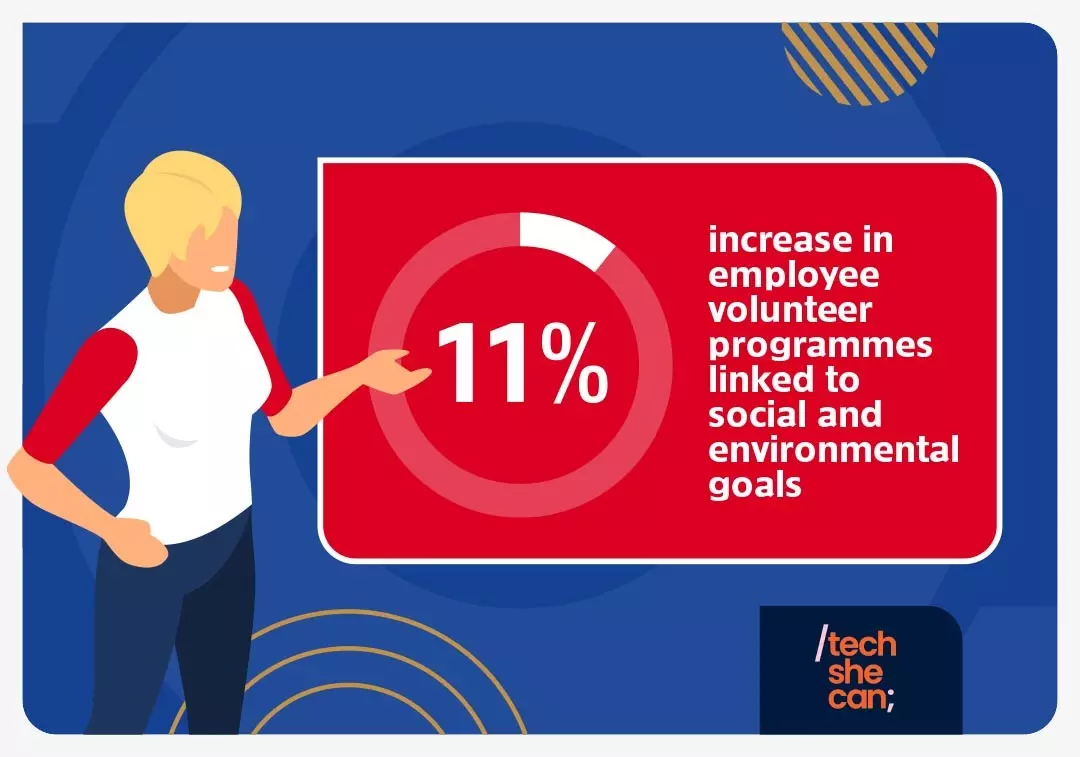
During Top Employers Inspire 2023, UST recently shared details of their partnership with Tech She Can. Tech She Can is a charity committed to changing the ratio of women in technology; they do this by providing free resources to help inspire young women to study technology subjects and inevitably choose a career in a technology field. While they focus on young women, they also work with all kinds of young people to feel inspired to choose a tech career. They do this by connecting them to relatable role models working in the jobs they may consider for themselves.
Certified Top Employer, UST, has partnered with Tech She Can as they want to play a role in having more representation for young women in tech. During UST’s session in Top Employers Inspire, Seena Mohan noted that ‘It is important to inspire women and girls to get into tech careers so they can become equals in creating and developing new technology businesses to shape our future.’
Final Thoughts
On this year’s World Youth Skills Day, we encourage businesses to commit proactively to skilling the youth of today and the young who will follow them. They need to do this by addressing their challenges and supporting or creating programmes and initiatives that seek to upskill young people for the changing world of work. Whether through their own initiative or if organisations need to leave a positive impact on the world beyond their offices’ walls.
Businesses prioritising improving the world will see wins for themselves and their community. We can shape a better future together and create a future that doesn’t leave anyone behind. Find out to day what it means to be an employer of choice!
Best Practice | How NTT DATA Colombia are Reassessing the Employee Value Proposition
By: Top Employers Institute
NTT DATA Colombia has created a human-centric value proposition explaining what working at the organisation is like. Advocated by a clear Employee Value Proposition (EVP) that employees and potential candidates can understand the working experience and company brand. The EVP includes their corporate values and the company’s purpose and reflects professional benefits from the development model and personal benefits for the employees and their primary team.
This is just a snapshot of NTT Colombia’s innovative best practice; you can find the entire practice on our HR Best Practices database, which is exclusively available to Top Employers. Get inspiration and insight into the approach, challenges and learnings experienced by certified Top Employers. Access it now or learn more about it here!
Why was the practice needed?
NTT DATA Colombia carried out an exercise to redefine its value proposition during the Covid-19 pandemic as it understood that employees deserved personalised and agile solutions. The organisation realised the market, habits, expectations, and lives of their current and prospective employees had changed. The company needed to better reflect their value to everyone encountering their organisation.
For NTT DATA Colombia, this EVP helped define and communicate their framework of action, corporate culture, and values, plus delivered on their company purpose and leadership principles. They wanted to guarantee consistency between what they did and what they said.
How the practice was implemented
Through exercises such as focus groups, surveys, workshops and social listening, NTT DATA Colombia redefined their value proposition by finding convergent points based on their employees’ needs and personal purposes. The company then generated offers personalised according to the multiple archetypes they found.
Some highlights of the new EVP:
One of the challenges was maintaining their employees’ closeness, contact and trust during the pandemic.
Perception studies, surveys, focus groups and social listening were used.
Results
A new EVP adjusted to the needs of the employee and the market, which is flexible, personalised and diverse.
There has been a 23% increase in their staff, and the EVP has also helped develop both new talent and existing employees.
In 2023 we published the World of Work Trends Report 2023, which identified how the employee experience would become more personalised. In the post-pandemic world, employees have had a chance to reflect on what truly matters to them. And their employers have had to become increasingly inventive to get, grow and keep their very best people.
Only businesses that work hard to provide a genuine and heartfelt commitment to a personalised experience will generate the emotional reaction necessary to create a high-performance culture, align purpose, vision and values and develop new leadership capabilities.
Becoming LGBTQ+ Allies: Going Beyond DEI Initiatives for Pride Month
By Sinakho Dhlamini, HR Content Specialist, Top Employers Institute
Over the past several years, organisations have used Pride month to begin, reinvent or sharpen up their DEI efforts for members of the LGBTQ+. But it only happens once a year; for many people, more is needed beyond this concentration of action once a year. Instead, organisations will need to become active allies for the LGBTIQ+ community throughout the year by creating an inclusive environment at work. The work of becoming an active ally to support co-workers of the LGBTQ community involves more than just celebration, and this article will examine some of the ways businesses can show their commitment to not only raising awareness for the rights of the community but also to prioritise equal rights.
What is an ally?
In a few words, we can understand that being an LGBTQ+ ally means actively supporting and advocating for the rights, dignity, and wellbeing of lesbian, gay, bisexual, transgender, and queer individuals. In the workplace, being an ally involves creating an inclusive and accepting environment where LGBTQ+ colleagues can feel safe, valued, and respected.
5 Ways organisations empower their employees to be allies for the LGBTQ+ Community.
Develop and Enforce Inclusive Policies and Practices: Policies protecting LGBTQ+ employees from discrimination and harassment are essential for organisations, including and supporting community employees. That can be done by ensuring inclusive language in company communications and having policies that ensure that LGBTQ+ individuals have equal opportunities for career advancement, promotion, and leadership roles. Organisations must set the tone for their employees, which requires action and intention.
Provide Education and Training: Organisations must provide comprehensive education and training on LGBTQ+ issues, terminology, and experiences. That can be done by offering workshops, seminars, or online resources to increase employee awareness and understanding. The education should cover topics such as LGBTQ+ history, intersectionality, and the challenges faced by the community. Educating employees on issues like this will teach them to listen, respect and look at their prejudices – helping them become better allies to their co-workers.
Create Employee Resource Groups (ERGs): Establishing LGBTQ+ employee resource groups or affinity networks within the organisation to help create a safe space for discussion. These groups provide a safe and supportive space for LGBTQ+ employees and their allies to connect, share experiences, and collaborate on initiatives that promote inclusion. Organisations can support these groups by allocating resources, budget, and executive sponsorship.
Leadership Support: Leaders and managers should openly support LGBTQ+ employees and allyship efforts. They should set the tone by demonstrating inclusive behaviours, including using inclusive language and addressing any discrimination or bias in the organisation. Leadership support helps create a culture of acceptance and sets expectations for the entire organisation.
Establish Feedback and Listening Channels: Establish feedback mechanisms where employees can provide suggestions, voice concerns, or share their experiences related to LGBTQ+ inclusion. Actively listen to employee feedback and make necessary improvements based on their input; this demonstrates that the organisation values employee perspectives and is dedicated to continuous improvement.
Why is it important for Organisations to Support the LGBTQ+ Community?
Supporting the LGBTQ+ community promotes a culture of inclusivity and diversity within the organisation. Embracing and celebrating differences, including sexual orientation and gender identity, fosters a sense of belonging among all employees. In addition, when employees feel valued for who they are, regardless of their sexual orientation or gender identity, it increases employee morale, engagement, and productivity.
It also has additional benefits, including:
Attracting and Retaining Talent: Creating a supportive environment for the LGBTQ+ community helps attract and retain diverse talent, especially in the current competitive job market, where many candidates actively seek organisations prioritising inclusivity and equality.
Employee Wellbeing and Mental Health: Supporting the LGBTQ+ community directly contributes to the wellbeing and mental health of LGBTQ+ employees. Employees who feel supported, accepted, and respected experience reduced stress and anxiety levels.
Brand Image and Reputation: Organisations that champion LGBTQ+ rights and inclusivity contribute to building a positive brand image and reputation. Consumers, clients, and stakeholders increasingly expect businesses to prioritise diversity and social responsibility.
Social Impact and Corporate Social Responsibility: Organisations can make a positive social impact by supporting the LGBTQ+ community. By actively engaging in initiatives, sponsorships, and partnerships that promote LGBTQ+ rights and equality, companies can contribute to broader social progress.
Final Thoughts
June is a time for celebration, but, more importantly, it is a time to raise awareness for LGBTQ+ people and educate people to become effective allies in the community. It is only one month, but the issues are significant throughout the year. Organisations should use June to be more active in communicating their policies and initiatives, but it should have already been a part of their people practices strategy. It is also critical to allow LGBTQ+ people the space to become powerful voices while their friends and coworkers support them by taking action to become an ally.
Make inclusion a part of your organization, get in touch for free to become an employer of choice!
Balancing AI and Human Expertise in HR: Insights from SABIC India and Top Employers Institute
Artificial Intelligence (AI) is rapidly growing in various industries, including HR. While AI technology offers numerous benefits, such as increased efficiency and reduced bias, it raises concerns about the lack of personal touch. In a recent LinkedIn Live event, Preet Boparai, Head of HR for India, at SABIC and Billy Elliott, Regional Director for APAC at Top Employers Institute, discussed the emerging use of AI in HR and the importance of maintaining a balance between AI and human expertise. The webinar explored examples of how AI has proven beneficial and the potential downsides of relying solely on technology. The session also provided insights into how SABIC India leverages AI while retaining the human element in HR operations. Here are some key learnings from the session:
Read ahead to get a snapshot of some of the session’s highlights; fill in the form to get the recording of the webinar to watch whenever you have a moment.
Balancing the Benefits and Concerns of AI in Human Resources: The Need for Human Oversight and Intervention
Using AI tools in HR has proven successful in saving time and effort. For example, AI tools have proven successful in recruitment by saving time and effort for recruiters and offering personalised feedback to candidates. These tools employ natural language processing and facial analysis technology to evaluate the fit of candidates for job positions. However, a critical issue with AI tools in recruitment is the potential for bias and discrimination. In a notable case, a recruitment tool demonstrated a preference for male candidates over female candidates. Therefore, it is necessary to have human oversight and intervention to ensure that algorithms are not giving biased results.
SABIC Shows How AI Tools Can Help HR in Employee Engagement and Retention
SABIC, a global leader in diversified chemicals, has harnessed the power of AI to enhance employee engagement and retention. Here are some ways they’ve implemented it:
Development of a chatbot for employee experience: SABIC developed an advanced chatbot called Amber, which has proved invaluable during the pandemic. It acted as a seamless two-way communication tool, promoting connection and dialogue by regularly seeking feedback from SABIC employees about their experiences working in an evolving, flexible environment. The chatbot is used to identify disengaged employees and those who are at risk of leaving. By proactively identifying these employees, SABIC has been able to retain them, thereby reducing its attrition rate. However, SABIC also emphasised the importance of informing employees about the tool and ensuring that conversations between employees and HR are confidential.
Gathering feedback from employees: SABIC has also used AI tools to gather employee feedback during the COVID-19 pandemic. This feedback was used to launch SABIC Care, a flexible employee health benefits plan.
Personalised learning journeys: SABIC also uses Percipio, a platform that offers a range of courses and content for employees to upskill and reskill themselves. This platform uses AI to personalise the learning experience and improve the efficiency and effectiveness of the learning process.
Balancing AI and Human Intelligence
While AI tools can provide valuable insights and baseline information, SABIC emphasised the importance of involving human intelligence in decision-making. The solutions SABIC created were well thought through and catered to the entire organisation. SABIC also recognised that AI tools are not infallible and that there may be instances where the predictions made by these tools need to be corrected. Therefore, the company has created a feedback loop where human intelligence can correct and improve the accuracy of AI tools.
Fostering Collaboration Between AI and Humans in the Workplace: HR’s Vital Role
In today’s fast-paced, technologically driven world, it’s easy to get caught up in the idea that machines and algorithms can do everything better than humans. However, as we rely increasingly on artificial intelligence (AI) in the workplace, it’s essential to remember the value of the human touch. Recent studies have shown that many employees negatively perceive their HR departments. Some don’t even know who their HR representative is, while others don’t trust that any action will be taken if they report a concern, such as harassment or discrimination. With the increasing use of digital tools, this gap between HR and employees could widen further.
However, the solution isn’t to eliminate AI and go back to the days of paper forms and in-person meetings. Instead, HR departments need to remember that technology should be used to enhance and support human interaction, not replace it entirely. The key is to maintain honest and meaningful conversations with employees. This means closing the loop and letting employees know what actions are being taken in response to their concerns, even if the news isn’t always positive. No amount of technological advancement or process improvement can replace regular communication and connection between HR and employees.
Ultimately, the best approach is to view AI and humans as a united team working together to empower the future of the workplace. It’s up to us to take responsibility for making positive changes and not depend solely on technology to solve all our problems.
Suscríbete
No te pierdas nada relacionado con las últimas tendencias, Best Practices y noticias del mundo de los RRHH.
We use cookies to improve your experience.
Learn more >