Best Practice | Virtusa’s Talent Digital Transformation
Certified Top Employer, Virtusa, committed to an 18-month-long HR digital transformation to dramatically change the digital experience for their employees, covering everything from recruiting and onboarding to learning and development, inclusion, and rewards. The organisation did not simply make small incremental changes; they reimagined all their processes and radically transformed them into a single, fully integrated, hyper-personalised employee platform.
Why the practice was needed:
Although technology is at the core of their business, Virtusa struggled to make technology work correctly for their employees. They had too many disjointed systems that were not creating a seamless employee experience. The systems were not driving engagement or speaking to one another. Eranga Pathirage, VP & Head of HR for the UK, Europe, and the Middle East + the Global Head of HR Tech Transformation, helped the organisation dramatically improve its talent understanding and engagement through a digital HR transformation.
Pathirage recalls that they already had all this valuable data about their 35 000 employees across 25 countries. As a provider of technical services, they respected and knew the power of technology. They saw a solution in centring the relationship between technology and their employees to drive adoption and employee loyalty.
Read More: Best Practice | Momentum Metropolitan’s Offboarding Practice
How they implemented the practice:
Pathirage recalls that the most challenging part of their HR digital transformation was the beginning, as he and his team wanted to be bold and did not know exactly how to start; they wanted to involve everyone in the business and obtain their buy-ins as well. Pathirage and his team took on the enormous task of reviewing all their processes to truly reimagine a digital solution offering their people an optimal employee experience. As he explained, they were not making incremental changes to some of their HR systems but instead re-hauling the entire process. In thinking through the right solution then, they followed some important grounding principles:
- There would be one single source of truth.
- Their HR digital solution would be fully integrated within Virtusa’s IT system.
- The technology they picked would also give the company the ability to evolve. The technology selected and implemented should allow Virtusa to stay agile and guide the business accordingly.
- As a technology services organisation, Virtusa also wanted to put technology first.
With these grounding principles, the organisation set out to pick a Software as a Service (SaaS) solution for each element of the employee experience. The solution as a whole was born in the cloud.
Download Now: World of Work Trends 2024
The results of implementing the practice
The results of this HR digital transformation can already be seen. The company now has an AI chatbot to assist in a personalised candidate experience, providing a consistent company story for prospective employees. SkillPrism, powered by AI, can create an employee profile from multiple data points to fully understand competencies within the business. The company can now also offer a personalised learning journey for their employees and, through Edge, can offer their own internal «LinkedIn,» giving each employee one to three personalised job openings across customers, domains, and countries.
Once this digital solution was offered, Virtusa employees adopted it quickly, with an 85% adoption rate in the first two weeks.
Learn more about the Top Employers Certification here.
Navigating a Dynamic Workforce
Top Employers Institute’s Navigating a Dynamic Workforce analyses the latest trends in the changing nature of the workforce and how employers can navigate and adapt to a dynamic workforce while maintaining employee engagement and success.
In the report, our analysis offers organisations a look at how they can unlock business success by leveraging and empowering their contracted, non-traditional talent with four recommendations. Those recommendations are:
- Include contingent workers: Successful organisations value and respect every contributor, including contingent workers. They should be included in opportunities that normal employees would experience, such as access to various HR processes, practices, and deliverables.
- Support employees with directing their own career evolution: Organisations should empower employees to chart their career paths and provide resources for self-directed learning. This can be done through online self-service resources, interactive career portals, internal digital career marketplaces, and mentoring/coaching for career development.
- Provide resources that promote self-directed learning to all employees: The speed at which skills and skill demands are evolving requires ongoing reskilling. Organisations should offer online training programs, personalised learning portals, and micro-learning content integrated into everyday activities and facilitate opportunities for employees to learn from one another through online learning communities.
- Facilitate a smooth transition into and out of the organisation for all employees: With a dynamic workforce, onboarding and offboarding become important ways to leave a lasting impression on employees. Organisations should optimise the onboarding experience and implement meaningful offboarding practices, including a fit-for-purpose offboarding experience and gathering feedback from departing employees.
You can read more about each recommendation and gain a better understanding of the trends affecting the world of work by completing the form on the left and downloading the analysis for free.
How UST Fosters Positive Change Through DEI & Social Impact Initiatives
Many of us are deeply invested in social causes that we support in various ways, whether it’s volunteering, donating money, or a combination of efforts. Purpose-driven people bring high levels of determination and heart to the causes they care about. Awareness of social issues is extending to organisations more than ever before. Increasingly, companies drive social impact through internal and external diversity, equity, and inclusion (DEI) initiatives in their communities and markets.
During the 2023 Top Employers Inspire event, Seena Mohan, Senior HR Business Partner at UST, and I discussed some of UST’s DEI programmes that support social causes related to the organisation’s mission. She shared how research informs their efforts and what they do to impact both short-term and long-term change. With over a decade of experience creating DEI and social change initiatives, UST has a wealth of information to offer other organisations.
Benefits of Combining DEI & Social Impact Initiatives
Traditionally, organisations view DEI initiatives as internal programmes and social responsibility initiatives as external community outreach. That corporate norm is shifting as more and more organisations adopt an integrated approach. Combining DEI and social impact programmes enables companies to put their values into action using one unified strategy.
This intentional pairing can be immensely valuable for an organisation and its employees. Finding an employer with similar values is a critical component of professional fulfilment. Both candidates and employees pay attention to these initiatives and expect organisations to deliver on their claims that DEI and social impact programmes are important. When employee and employer values are aligned, the results are better retention and higher engagement.
Furthermore, social impact programmes are most effective with diverse and inclusive leadership and participation. Involving a variety of perspectives enhances the breadth and reach of these initiatives. Logically, the benefits DEI programmes create internally, such as improved productivity, better problem-solving, and creating a larger talent pool are also present when the programmes are incorporated into external initiatives. =
UST DEI and Social Impact Initiatives
Seena highlighted the three UST DEI and social impact programmes that are closest to her heart during our discussion. She shared the details, impact, and impetus for each and her motivations for supporting them.
Impact India
“This is a courageous programme where UST has committed to train and employ 10,000 differently abled associates in India in tech jobs. The programme was designed with the vision of educating and empowering people so that they can realise their dreams,” she explained.
A comprehensive framework to source candidates was developed through various partnerships with charities and non-profit organisations. Individuals are trained both in soft employability skills and technical skills. Participating offices are given resources to continuously work towards building and enhancing an inclusive culture. “We want these associates to be able to bring their best to work and enjoy the whole process of corporate life,” Seena said while explaining the programme goals.
Step It Up
This unique and extremely effective programme was designed to train and employ women of colour, minorities, and army veterans in STEM fields. Established in 2013, this initiative provides talent from local communities and inner cities to help address talent shortages.
The sourcing process offers a new way for UST to partner with their customers. Seena elaborated on how this works, “Many of our customers help drive a successful, inclusive sourcing programme by recommending candidates.” The curriculum is tailored to specific skill sets and takes four to seven months. The results are impressive, with a 90% graduation rate and 87% of graduates hired by UST customers.
“It’s a win-win-win programme. Corporations get an opportunity to hire a diverse workforce, at an industry level the talent shortage is addressed, and candidates are able not only to get trained but find employment,” Seena said while praising the programme and describing why it’s one of the three she chose to highlight.
Tech She Can
The current job market requires technological skills and the demand for those skills will only increase. Seena referenced some staggering statistics, “80% of all jobs in the UK require digital skills. An estimated 65% of children today will do jobs that don’t yet exist.” She also mentioned that only 3% of women rank a career in tech as their first choice versus 61% of men.
To help address this disparity, UST partners with Tech She Can, a charity committed to changing the ratio of women in technology and providing free educational career resources to children. The charity’s three focal areas include:
- Enriching Education – Inspirational and inclusive cross-curricular free school resources for boys and girls.
- Making Pathways Visible – Opportunities to participate in insight days for students ages 11 – 18 and apprenticeships.
- Influencing Change – Taking action to influence change in the workplace, schools and universities, and government policies.
The ultimate goal of this organisation, and why UST chose to collaborate with them, is to introduce children to careers in tech and start changing some long-held perceptions about the industry. Seena shared a powerful example from one of the school sessions, “The children were asked to draw a picture of a tech worker at the start and end of the session. One girl’s first drawing was a man in formal clothes. After the lesson, she drew herself.”
Key Considerations Before Designing a Programme
After hearing all of Seena’s insights and experience, I asked what advice she had for organisations that would like to follow UST’s example and combine their DEI and social impact programmes. She suggested three key considerations.
First, assess DEI targets and social impact objectives to identify areas where they intersect. Recognising shared goals will make it much easier to combine efforts while maintaining the integrity of each programme.
Second, consider what your organisation is good at and what resources are available. Playing to your strengths will create better, more impactful programmes. This approach protects against straining your resources or incurring high, unnecessary costs.
Third, learn what programmes will trigger joy and participation from employees. “It can’t just be management driving these programmes. Employee participation in the design phase really gives a wider perspective and also attracts a lot of engagement,” Seena said to emphasise this point.
Combining DEI and social impact efforts is a great strategy for amplifying your organisation’s overall impact. Watch our full conversation to hear more details about each of UST’s programmes and what it’s meant to Seena to support them throughout her career.
The Journey to Become a Top Employer
Tell us about yourself and your role at Top Employers Institute
Greetings, I’m Sebastiaan ter Horst, stationed at the headquarters in Amsterdam, where I have been the face of the Certification team since 2021 for Top Employers Institute. Leading a dedicated team spread across the globe. I take pride in steering the Certification process and ensuring optimal service delivery for our Participants.
As the Certification Director, my primary commitment lies in upholding the quality of our Certification program. Collaborating with diverse teams worldwide, I continuously strive to enhance our services and support our teams and individual members in their journey towards success. It’s not just about maintaining standards but also about empowering every team and team member to achieve excellence.
Can you give us an overview of the Certification Process?
The Certification Process consists of four stages: Service kick-off, Survey, Validation and Certification. It is designed to help the Participant benefit from our programme.
The first stage is the Service kick-off, as the words suggest, the start of the programme. The purpose is to set the right conditions for our participants to complete the Survey and be prepared for the validation process. Participants are provided with an overview of the upcoming Certification Process and what is required, receive a high-level look at the HR Best Practices Survey and any updates, plus be introduced and updated to the Top Employers Portal and supporting tools and materials.
The following stage is the Survey. Here, the Participants will answer the HR Best Practices Survey questions. Participants who are new to the program have the opportunity to answer all questions. Participants who have completed a Survey in the previous year have the chance to update their answers from last year and answer all the new HR Best Practices questions. When ready, the Participant submits the HR Best Practices Survey answers for Validation.
The Validation stage is the third stage in the process. The Validation stage aims to ensure the answers submitted in the survey reflect the HR practices and conditions provided to the employees within the company. By checking the consistency of interpretation and proactively correcting potential errors or ambiguities, Top Employers Institute ensures that all submitted data provided for certification is correct and reliable.
The Participant is contacted to schedule a Validation session. An overview of questions within the survey to be discussed will be provided before the session so you can prepare for your session with the HR Auditor. Additional clarification and/or evidence to illustrate that a practice has been implemented according to our definitions and requirements may be requested before or based on the Validation outcome. Typical examples of such requests for further evidence are employee handbooks, technology screenshots, policy documents, etc.
The Certification stage is the fourth and final stage after the Validation stage is completed. Certified Participants are invited to attend a Certification Activation session where Top Employers Institute will take them through all the communication tools available to leverage your employer branding activities as a certified Top Employer. In this session, Top Employers will also be taken through the structure and navigation within the Results Dashboard, including Benchmark data from other Participants of the Certification Program.
What makes the Top Employers Certification Methodology unique?
The Certification Methodology applied is unique in many ways.
The Certification methodology is a holistic and fact-based validation approach to the people practices available for the employees of Certified Top Employers and is not based on opinions or perceptions. It is a single methodology applicable to all participants in the program, ensuring that all Top Employers are held to the same standard, thus providing a global benchmark.
The quality of the validation process is ensured by a team of highly qualified auditors who went through a rigorous qualification process and are subject to ongoing learning and calibration. In addition, our quality process, including system, quality checks and monitoring, ensures that the highest level of quality for our Certification Program is ensured.
Lastly, our Certification program, including our processes and Certification Results, is subject to an annual external audit.
How often are the HR Best Practices Survey questions updated, and what drives those updates?
The HR Best Practice survey is updated yearly to ensure it syncs with the ever-evolving HR landscape. On average, 10 percent of the questions will be updated every year. A survey update is informed by (external) research into HR trends and developments as well as reviewing client data (trends in practice adoption) and input and feedback received by our clients during the various stages of the certification process (survey, Validation, results, ad-hoc feedback). Changes to the survey can be incremental, e.g. small tweaks to the description of a practice, or more significant (e.g. adding a completely new practice or even a topic). We always aim to find a good balance between stability and staying up to date.
How does Top Employers Institute decide how to weigh the importance of the different questions in the survey?
The centre of gravity in our HR Best Practices survey is the employee experience.
60% of the overall scoring points are in the domains Attract, Develop and Engage, as these domains represent the end-to-end employee journey. In addition, you will see that individual practices that directly impact the employee experience have a higher weight than practices that are supporting or conditional.
About 20% of the survey consists of benchmark questions, which are included for contextual purposes and benchmarking and are not scored. The weighing of the different questions in the survey aims to be effective in setting a meaningful threshold for certification.
Several standard and fundamental practices have a relatively high weight. These practices are seen as essential for any Top Employer. In contrast, ‘advanced practices’, which refer to practices commonly seen in organisations with slightly more mature HR practices, could have varying relevance depending on the organisation’s size, industry, or region. Although these practices might be inspirational to most, their weight and impact on scoring are relatively limited.
As the year-over-year adoption of practices is changing, the weight of individual practices is reviewed on a yearly basis, too. When needed, the weights are adjusted to reflect changed importance. Commonly, a new practice, when just added to the survey, will be given a low weight (or even introduced as a benchmark question), and when we see the adoption levels of these practices rising, we increase the weight.
How does your team validate the answers given by organisations in the survey?
First of all, with a lot of passion and motivation! For the validation moment itself, established criteria and standards apply to each practice and assess the level of maturity of a participant’s processes and procedures against these requirements, including looking at the supporting documentation. After initial review through the Top Employers Institute portal, the HR Auditor has a validation session with the Participant to discuss a selection of practices in more detail and clarification.
What upcoming topics and questions are Top Employers Institute looking at for future surveys?
Allow me to mention the latest World of Work Trends report based on the responses from our Participants in the 2024 program. The trends mentioned in the World of Work Trends report illustrate the expected future changes in our HR Best Practices Survey. I want to mention some other perspectives as well:
- Human Centricity (already captured in the WoW trends report, but also as a more general theme)
- Continuous focus on (Digital) Employee Experience, including leveraging AI in a human/responsible way,
- Employability
- GenZ
- Contingent / Flexible Workforce
What one piece of advice would you give an organisation taking part in the Top Employers Certification Programme for the first time?
Reach out to us when you have a question or if something needs to be clarified. Our team is committed to enabling our participants to have a successful Certification experience and will support them when appropriate. They will provide tips and guidance for efficient completion of the Survey that is appropriate to the needs of each Participant. For instance, how to organise the internal team to answer the HR Best Practices Survey in a timely manner, clarify Survey questions and what sort of supporting evidence is needed, how to use the tools provided in the Portal, etc.
Key Takeaways | World of Work Trends 2024
Top Employers Institute’s World of Work Trends 2024 analyses the latest trends in people strategies and practices from leading organisations globally. The report, which came out recently, is available to download now. The report showed the five most significant global workplace trends in 2024. Those trends are:
- Empower through AI
- The Future Defined with Purpose
- Dialogue for Transformation
- Evolution of Wellbeing Effectiveness
- Broaden the Horizon of DEI
The release of our annual World of Work Trends 2024 was followed by an online live briefing on the 7th of December 2023, with Quinten van Es and Emily Cook delving deeper into the trends. In their discussion, they touched on real-life examples of the trends and broke down the tactics organisations will need to take in 2024 to succeed.
If you missed out on the session, you can watch it now by filling in the form on the side of the page.
Make sure to unlock the core HR trends affecting organisations across the globe. Watch the session now.
World of Work Trends 2024
Top Employers Institute’s World of Work Trends 2024 analyses the latest trends in people strategies and practices from leading organisations globally. In the report, our analysis showed five significant trends affecting workplaces in 2024. Those trends are:
- Empower through AI
- The Future Defined with Purpose
- Dialogue for Transformation
- Evolution of Wellbeing Effectiveness
- Broaden the Horizon of DEI
Read more about each trend in our article below or get in-depth insights by completing the form on the left and downloading the report for free.
The speed of innovation in AI has opened doors to a revolution in how we work. The shifting cultural landscape has enabled leaders and employees to drive meaningful societal impact. And the growing awareness of different identities and wellbeing needs has made inclusion non-negotiable. The organisations that will be most successful in this new world of work capture these opportunities purposely, thoughtfully, and ethically.
The sweeping global financial, technological, and political changes that have been happening worldwide will bring attention to people’s complexities and unique value. The year 2024 will see people firmly recentred at the heart of the workplace – and the five key trends of the coming year reflect the growing realisation that whilst AI will support and optimise, the real competitive advantage is found in the creativity, passion, and partnership between employees.
Trend 1: Empower through AI
The release of ChatGPT in November 2022 prompted a wave of excitement about the potential of generative AI and considerable concerns about its impact on employment. As we enter 2024, the conversation will become more grounded. Organisations will look to implement more ethical stewardship of their potential in the year ahead and start with a clear vision for human-AI synergies.
Many organisations are still in the exploratory stages with AI, and in 2024, the discussion will shift from what you can do with AI to what you should do with AI. An ethical framework for AI adoption will, therefore, become central to HR Digital strategies – and we see this happening in three ways:
- Organisations take a responsible approach to how data is used to track employee behaviour or sentiment. HR leaders must prioritise AI’s ethical, explainable, and transparent roll-out.
- HR will see how technology can be used and deployed around the employee experience. When poorly implemented, AI could cause employees to lose a sense of meaning in their work.
- HR will look to see how AI can support, rather than challenge, the interaction between humans. Humans want to work with humans. And whilst AI offers HR innovative new routes to tracking and personalising offerings, face-to-face contact will become a greater imperative.
How will organisations begin to do this? The answer starts with leaders, the subject of our next trend. You can find more details on this trend by downloading the full report now.
Trend 2: The Future Defined with Purpose
Last year, in the World of Work Trends Report 2023, we predicted the growing importance of a «lived» purpose – one that comes straight from the heart of all those who work. This sense of purpose will remain a constant in their everyday decisions. More recent research conducted by Top Employers Institute shows that organisations will only see the benefits of a solid organisational purpose if they have the right leaders to bring it to life.
Purpose-driven leadership is critical to success. So, what do employees want from their leaders in 2024?
- On big-picture issues, they want leaders to be situated in the real world, speaking about real-world problems, just as their employees would. They should think beyond immediate business concerns to offer more to their employees.
- Empathy is also at the heart of purpose-driven leadership. Leaders will need this trait as much as their business acumen in the coming year.
Empathy requires a genuine two-way dialogue. Leaders must listen more – employees expect an authentic voice in important decisions.
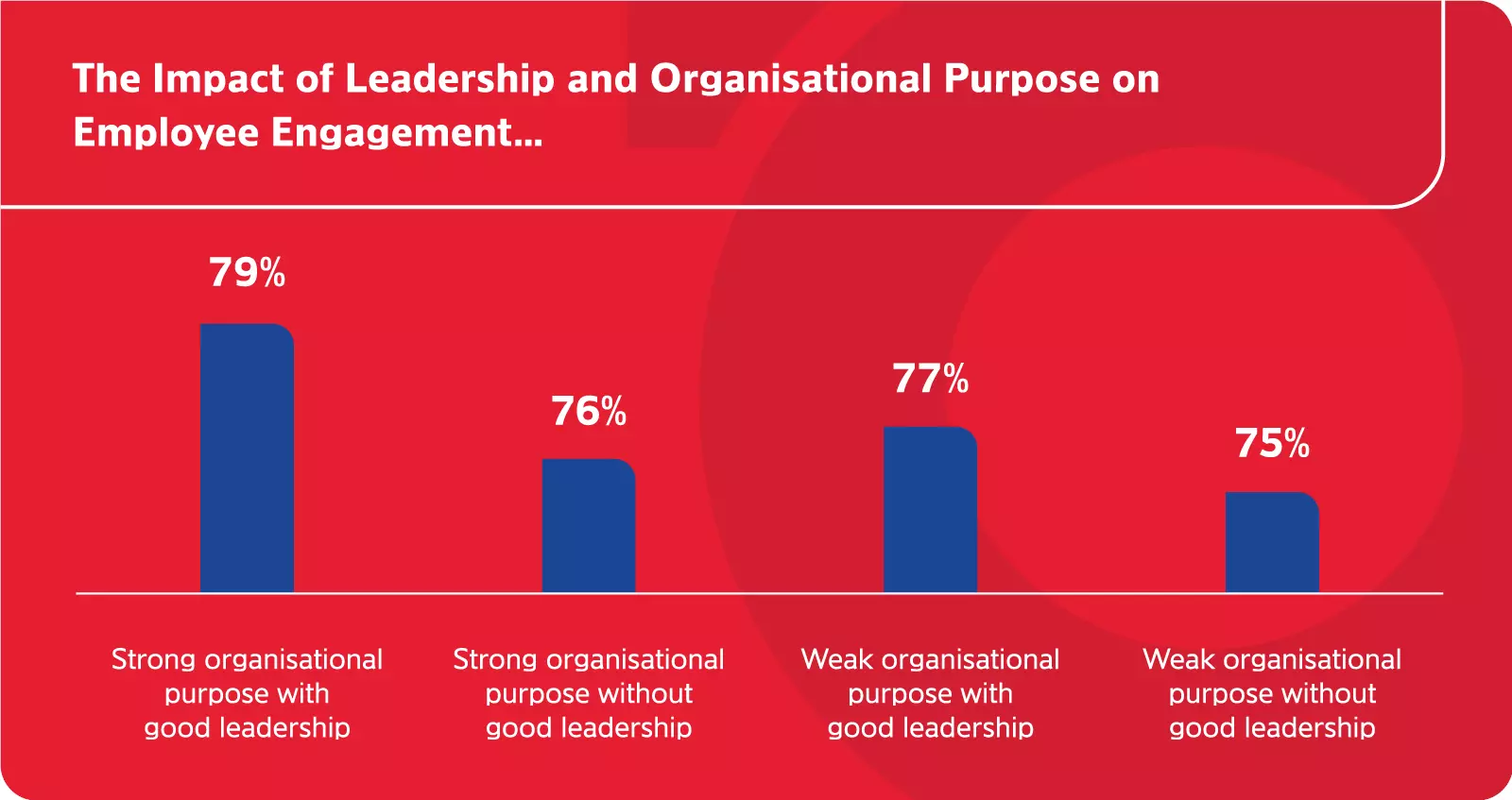
Organisational purpose is an evolving and collaborative process that demands the commitment of every employee. That leads us to our third trend. You can find all the details about this trend and more in the complete report. Download it now!
Trend 3: Dialogue for Transformation
Employees who feel genuinely listened to by the organisation are more likely to be engaged, and organisations orchestrating meaningful employee dialogues are reaping the benefits. Our latest Top Employers data shows that almost every HR practice encouraging employee involvement in strategic decisions helps to drive business success metrics.
A Dialogue for Transformation has two elements:
- On an individual level, employees need to see their input applied practically in business decisions – those who feel empowered to influence how their work gets done experience far higher performance levels and job satisfaction.
- Beyond the individual, collective intelligence describes the alchemy that happens when diverse perspectives meet collaboratively. It represents the sum of individual intelligence and the additional innovation sparked through their combination.
Empowerment plus collective intelligence has helped to drive new ideas for organisations, often above and beyond the scope of regular day-to-day business.
Moving the needle on what matters will demand ever closer and more constant conversation with employees. Transformational dialogue will be foundational for the last two trends. Download the full report to find out more.
Trend 4: Evolution of Wellbeing Effectiveness
Many organisations struggle to balance their HR budgets while still trying to enhance employee wellbeing. In 2024, therefore, wellbeing will be about getting the most suitable offerings, not the most. Research carried out by Top Employers Institute last year demonstrated that additional wellbeing programmes provided little or no additional benefit to employees beyond a saturation point.
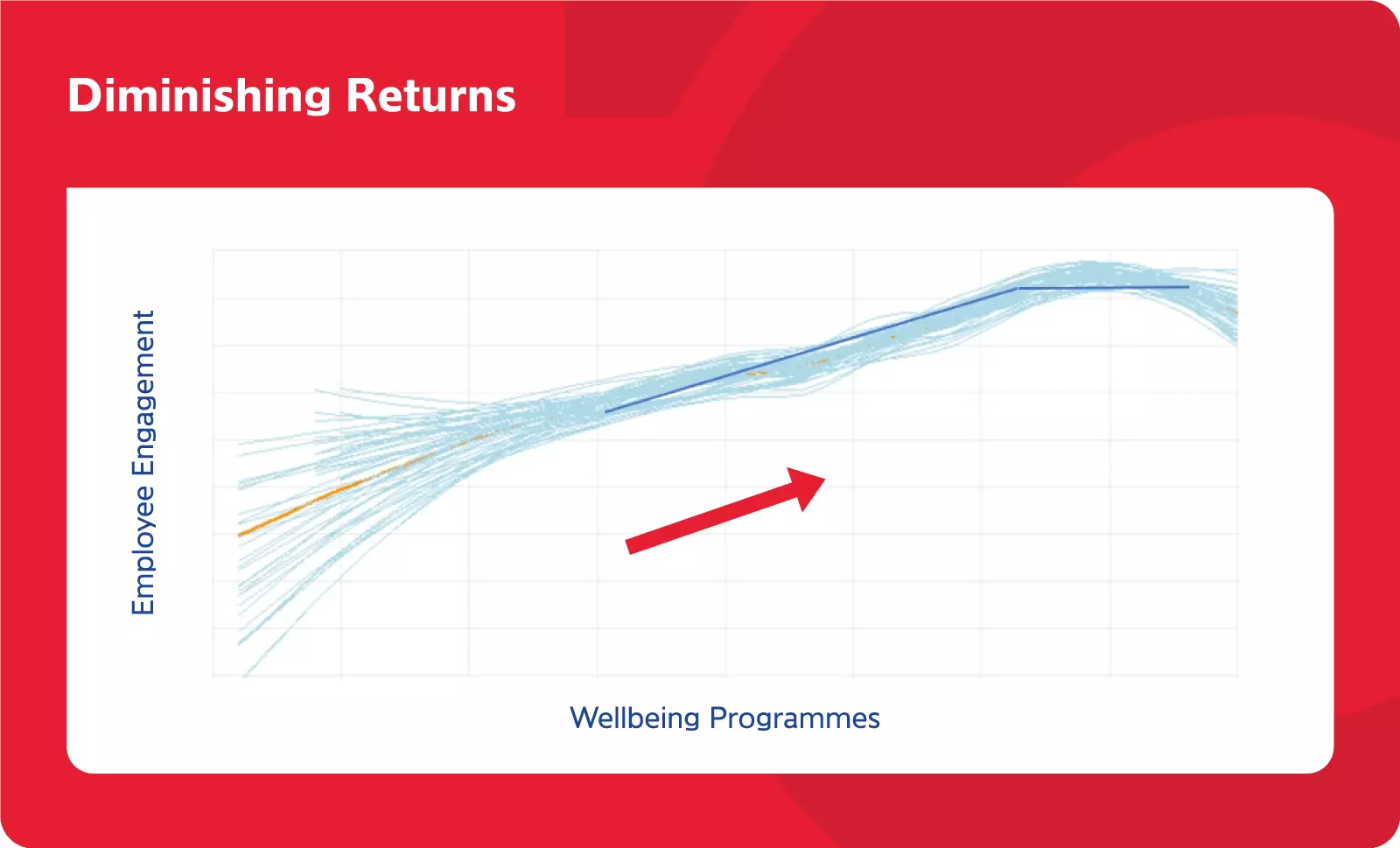
Most Top Employers actively promote their wellbeing programmes through organisation-wide strategy, assessment and metrics.
- Organisation-wide total wellbeing strategy. Nearly four in five (79%) organisations have a coherent overarching approach to all dimensions of wellbeing (up four percentage points since our last survey).
- Wellbeing programme assessment. Nearly three in four (72%) organisations regularly conduct an ‘employee wellbeing needs assessment’ to identify employee needs, interests, likes and dislikes and adjust their offerings where appropriate (up five percentage points).
- Wellbeing metrics. We have also seen a significant increase in the use of metrics, with over two-thirds of our Top Employers consistently using them (68%, up eight percentage points), along with the accountability of over half (54%) of leaders to meet wellbeing targets (up seven percentage points).
With this, there may be specific wellbeing challenges for new demographics, which takes us to our final trend.
Trend 5: Broaden the Horizon of DEI
In the last year, diversity, equity, and inclusion (DEI) have also come under budgetary pressure, so organisations are looking for these initiatives to impact their workforce positively. In 2024, the tight talent market will grow as employers become more open to «non-traditional» candidates.
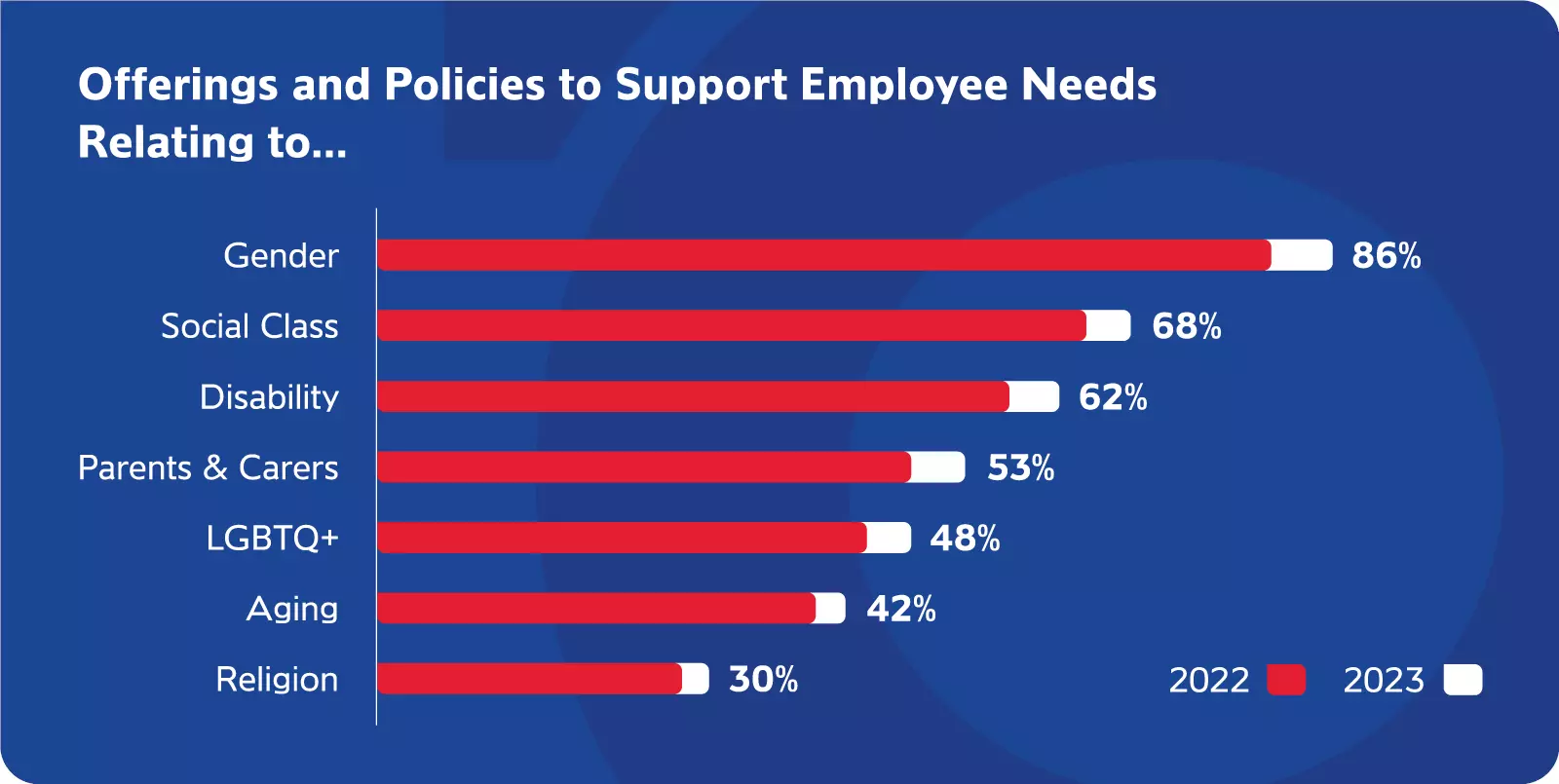
We think DEI approaches will change in three ways:
- The consideration of diversity will expand far beyond demographic segmentation. Whilst groupings, such as gender and race, will continue to be areas of focus, 2024 will see a shift towards a more nuanced approach to DEI. For example, expect the importance of neurodivergent talent (and its link to higher levels of creativity and innovation) to grow.
- DEI analytics and the metrics used will become more sophisticated. Not all demographics are straightforward to capture. However, we have learned from progress in gender representation that data is critical to improvement.
- The «majority» will be actively included in DEI strategies at some point in their career journey, with different experiences increasingly acknowledged. A more holistic inclusion strategy will likely be adopted to complement the ongoing targeted initiatives for under-represented groups.
Download a copy of The World of Work 2024 by filling out the form now.