For years, retention has been one of the most reassuring numbers on the HR dashboard. When people stay, leaders tend to assume something is working: employees are engaged, committed and confident in their future with the organisation.

That assumption is becoming harder to make.

Economic uncertainty, geopolitical instability and technological disruption are changing how employees think about their careers. In a less predictable labour market, staying can feel safer than moving. The result is an uncomfortable possibility for employers: retention can improve even as engagement weakens.

This is the Stability Paradox, one of the trends identified in the Top Employers Institute World of Work Trends Report 2026. Employees are seeking greater security and clarity at precisely the moment organisations need their workforces to become more adaptable, mobile and open to change.

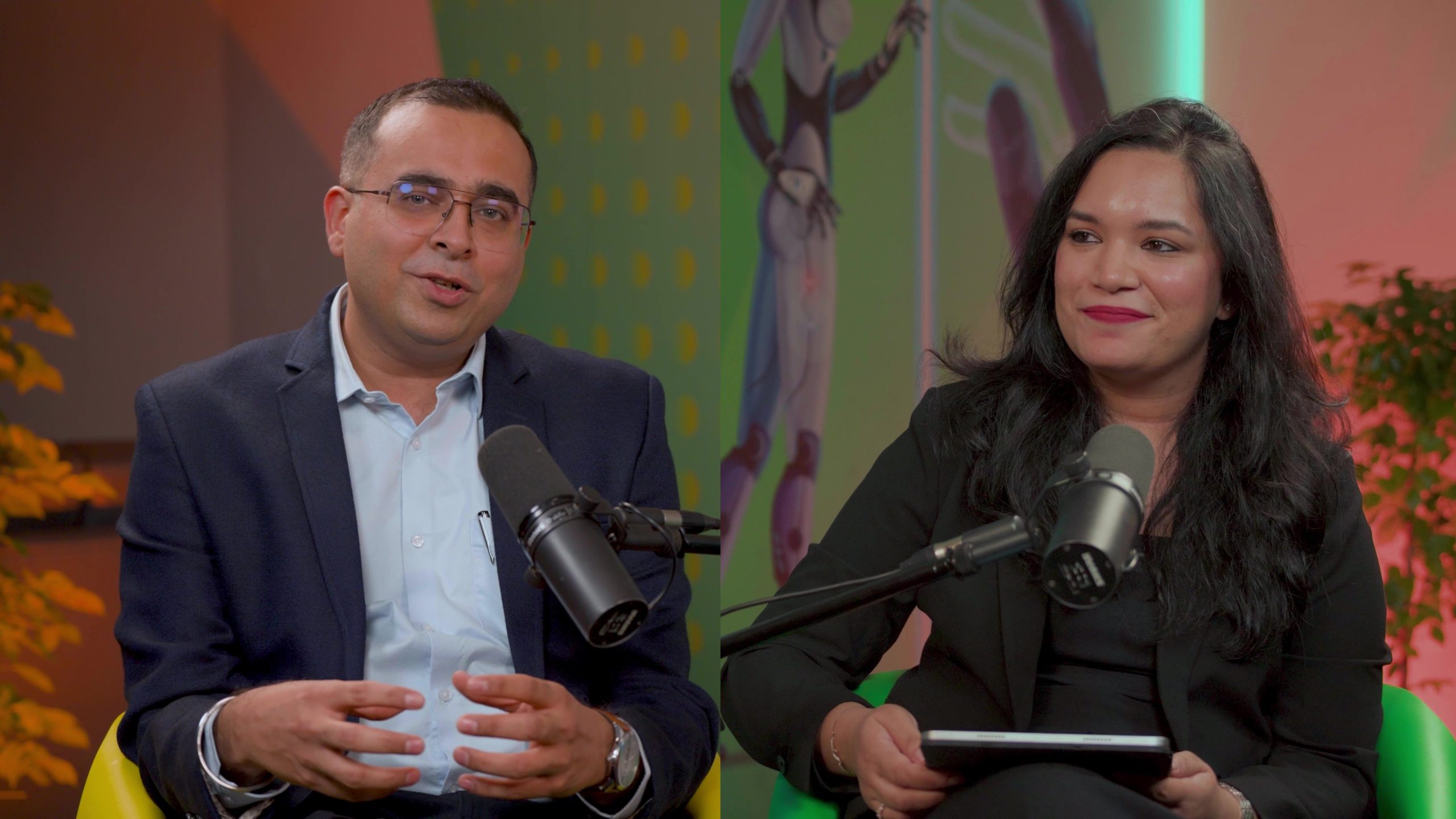
A recent conversation between Sachin Khurana, Chief People Officer at Happiest Minds Technologies, a Certified Top Employer, and Manavi Baraya of Top Employers Institute brought this tension into sharper focus. Operating in a sector being rapidly reshaped by technology, Happiest Minds faces a question that is increasingly relevant across industries: what does workforce stability actually mean when the skills an organisation needs are changing so quickly?

Khurana’s answer offers a useful way to reframe the problem. Rather than thinking about stability primarily in terms of continuity or tenure, organisations should pay more attention to relevance — whether people continue to have the skills, curiosity and capacity to create value as the business changes.

That distinction matters because a workforce can be stable and still be falling behind.

Retention can conceal as much as it reveals

There is nothing inherently wrong with high retention. Losing valuable people is expensive and disruptive, and continuity matters. The problem arises when retention becomes shorthand for workforce health.

Consider two employees who have both decided to stay with their employer. One sees opportunities to develop, is doing interesting work and believes the organisation can offer a meaningful next step. The other is disengaged but has watched layoffs spread across the market and concluded that changing jobs carries too much risk.

A retention metric records precisely the same outcome for both employees.

Their relationship with the organisation, however, could hardly be more different.

The World of Work Trends Report 2026 points to evidence of this more defensive form of retention. Employees have been opting out of cross-organisational moves, while research among UK employees found that 55% prioritise job security over ambition, rising to approximately 65% among those aged 18 to 34. The term “job hugging” has emerged to describe employees holding tightly to existing roles amid uncertainty.

The phenomenon is not entirely new. Recessions and previous waves of technological disruption have produced similar behaviour. But the current environment combines several sources of uncertainty at once. Economic pressure sits alongside geopolitical instability, changing business models and widespread questions about how technology will reshape jobs.

The practical implication is that leaders should be cautious about treating falling attrition as evidence that the employee proposition is strengthening.

Retention is an outcome. Increasingly, it also requires a diagnosis.

Stability without movement creates a different kind of risk

The traditional logic of retention assumes that keeping talent preserves capability. That is true only when the capability being preserved remains valuable.

In a slowly changing environment, the distinction may not matter much. In a rapidly changing one, it becomes critical. An organisation can successfully retain its workforce while accumulating a skills gap. Employees can build long tenure while their expertise becomes progressively less aligned with emerging customer needs. Low attrition can coexist with low mobility, limited experimentation and declining relevance.

This is why the distinction between stability and relevance is useful.

At Happiest Minds, the shift is visible in how workforce questions are being framed. Attrition remains important, but the more consequential question is whether employees’ skills remain relevant to changing technologies, domains and customer needs.

This logic extends well beyond the technology sector. Organisations across industries are reconsidering processes and business models as technology changes what can be automated, accelerated or redesigned.

The workforce challenge is therefore not simply to retain knowledge. It is to ensure that knowledge continues to evolve.

A better question for leaders may be: Are we retaining people, or are we retaining and renewing capability at the same time?

Stability should give employees somewhere to go

The data on Employee Value Propositions reveals an important dimension of this problem.

According to Top Employers Institute data, 17% of Top Employers rank stability and job security among their top three EVP priorities. These organisations generally experience lower voluntary turnover. Yet stability alone does not appear to encourage internal movement.

By contrast, 67% of Top Employers rank opportunities for career advancement and personal growth among their top three EVP priorities — the most widely prioritised element in the data.

This points to a more productive interpretation of stability. Employees do not necessarily need an assurance that their role will remain unchanged. They need confidence that there will be opportunities for them as it changes.

That distinction alters the role of the EVP. A strong employee proposition should give people compelling reasons to stay, but it should also give them somewhere to go — into a different role, towards a new capability, across organisational boundaries or into work that did not previously exist.

Stability and mobility are therefore not competing objectives. Internal mobility can itself become a source of stability because employees can imagine a future inside the organisation even when their current role is changing.

The organisations that manage the Stability Paradox well will not eliminate movement. They will make movement feel safer.

Relevance depends on learning — and unlearning

This is one reason learning and development is moving higher up the organisational agenda.

Top Employers Institute data shows that the proportion of Top Employers ranking learning and development among their top three people-strategy priorities rose from 15% in 2024 to 27% in 2025.

Employees appear to recognise the connection between development and staying as well. Research highlighted in the World of Work Trends Report 2026 found learning opportunities to be an important reason employees remain with an organisation across multiple markets: 92% of respondents in Brazil, 87% in India, 78% in the United States and 74% in the United Kingdom.

But learning is only part of the challenge.

In his discussion with Top Employers Institute, Khurana made an equally important point about unlearning. As the pace of change increases, leaders and employees must become faster not only at acquiring new knowledge but at letting go of assumptions that have stopped being useful.

This is harder than conventional upskilling.

Learning adds something to an existing mental model. Unlearning requires questioning the model itself.

Experience, after all, is valuable because it gives people patterns: an understanding of what has worked before, which risks to avoid and how problems are usually solved. But when an environment changes fundamentally, those same patterns can constrain adaptation.

The challenge is not simply to know more. It is to recognise when what you already know is preventing you from seeing the problem differently.

Hear the conversation behind the insights

This article draws on a conversation between Sachin Khurana, Chief People Officer at Happiest Minds Technologies, and Manavi Baraya of Top Employers Institute on the Top Employers Podcast. They explore the Stability Paradox, why relevance is becoming as important as retention, and what it takes to keep people learning, engaged and adaptable through change.

The questions employees ask may reveal more than we think

If retention is becoming a less reliable proxy for engagement, leaders need to pay attention to other signals.

One of the most interesting observations from Happiest Minds concerns something organisations rarely measure systematically: the nature of the questions employees ask.

In a workforce that is engaged with the future of the business, questions tend to be exploratory. People want to know what comes next, what could be done differently and whether existing ways of working still make sense. They challenge assumptions and propose alternatives.

When the relationship with work becomes more transactional, the questions change. Attention shifts towards policies, individual tasks, deadlines and the boundaries of responsibility.

Neither category of question is inherently good or bad. Employees need clarity about policies and responsibilities. But when transactional questions begin to dominate, they can reveal something that an annual engagement score may struggle to capture.

Curiosity is itself a form of organisational engagement.

At Happiest Minds, pulse surveys, check-ins and manager conversations are used alongside these more informal signals to understand how employees are engaging with the organisation. The willingness to question the status quo — and to do so without feeling threatened — is viewed as evidence of an environment in which people can contribute rather than simply comply.

This suggests a useful addition to the way leaders interpret employee listening. Beyond asking whether people are satisfied, organisations should examine whether employees feel sufficiently invested in the business to challenge it.

A workforce that never questions anything may appear stable. It is unlikely to remain adaptable for long.

Adaptability cannot be a one-way expectation

There is a further problem with much of the current discussion about workforce agility. It places the burden of adaptation overwhelmingly on employees.

Employees are told to acquire new skills, adopt new technology, become more agile and develop a growth mindset. These expectations may be reasonable, but they raise a corresponding question: How much is the organisation itself changing?

Long-standing processes often survive transformation programmes. Policies designed for an earlier workforce remain in place. Learning programmes teach new capabilities while performance systems continue to reward old behaviours. Leaders encourage experimentation but maintain approval structures that make experimentation difficult.

This creates an organisational contradiction: people are asked to reinvent themselves inside systems that have not been reinvented.

One alternative is to make organisational adaptation itself more visible. Khurana suggests looking at how many things an organisation has started doing differently over recent quarters. Have programmes been redesigned? Have processes been challenged? Have teams been given room to experiment and fail?

This is a more demanding interpretation of agility because it makes adaptation reciprocal.

Employees must evolve, but the environment around them must evolve as well.

What an adaptive organisation looks like in practice

The experience of Happiest Minds illustrates how this can work when development, innovation and employee experience are treated as parts of the same system rather than separate HR initiatives.

Its Bliss 2026 technology festival generated 38 tangible innovations rather than conceptual presentations, with some already progressing towards customer-facing platforms. An AI-first builder programme creates another route for employees to develop domain-led solutions. And its Mentor Up reverse-mentoring programme reverses the conventional direction of organisational learning by enabling Gen Z employees to share knowledge and experiences with more senior colleagues.

The individual programmes are less important than the management principle connecting them.

Learning creates greater capacity to experiment. Experimentation creates opportunities to contribute. Contribution deepens engagement. And greater engagement encourages people to continue learning and questioning.

Seen this way, adaptability is not a programme that HR delivers. It is a system of reinforcing behaviours.

That is particularly important when organisations are trying to create stability. Stability cannot become synonymous with preserving existing roles and structures. It needs to provide employees with enough confidence to participate in changing them.

The real paradox: stability is what makes movement possible

The Stability Paradox can sound like an argument that organisations need less stability.

The opposite may be true.

During periods of uncertainty, employees need clarity about where the organisation is heading. They need confidence in leadership, trust in the culture and a reasonable degree of psychological safety. Without these things, asking people to experiment, move internally or rethink their roles becomes considerably harder.

What needs to change is the source of that stability.

Organisations cannot promise that jobs will remain unchanged. They cannot guarantee that today’s skills will retain the same value indefinitely. Nor can they preserve every process simply to create a sense of continuity.

They can, however, create stability around purpose, trust, culture and direction.

That kind of stability does not prevent movement. It enables it.

This is ultimately why relevance offers a useful complement to retention as a measure of workforce strength. The question is not simply whether an organisation can persuade people to remain. It is whether people continue to develop, move, question and contribute while they are there.

Retention still matters. Engagement still matters. But neither should be interpreted without considering what is happening to the capabilities underneath them.

A low attrition rate can hide stagnation. A highly tenured workforce can still face a relevance problem. And an organisation can appear stable while becoming progressively less prepared for what comes next.

The organisations that navigate the Stability Paradox successfully will not be those that eliminate change in order to make people feel secure.

They will be those that create enough security for people to keep changing.

Table of Contents