Gen Z: Redefining the Future of Work
This year, the oldest member of Gen Z will turn 27. They already outnumber Boomers in most organisations. By 2025, Gen Z will comprise 27% of the workforce in OECD countries. America already has more than 6,000 Gen Z Chief Executives. McKinsey data shows that 38% of this generation want to be a CEO—more than any other generation—so we expect to see many more Gen Z bosses shortly.
There is no doubt that these new workers will make big waves in the world of work. But, beyond the headlines, what kind of future are they defining for themselves and the organisations they are joining?
At Top Employers Institute, we set out to answer this question. Through a large-scale survey of 1,700 people aged 18–27 across nine countries and four continents, we learned about Gen Z in their own words. We combined these insights with our learnings from 2,366 global Top Employers to understand whether businesses are ready for an influx of new Gen Z talent in the future.
Want to explore the research? Download it now for free! Just fill in the form for instant access to this exciting research!
If you aren’t convinced yet, get a sneak peek at some of the trends we explore in the white paper by reading the rest of this article. Here is your sneak peek:
Steady Steps, Stronger Success. Building a secure foundation for sustainable growth, one thoughtful step at a time.
Gen Z favours stability, sustainability, and safety. They want employers that support them in building their careers while enabling a healthy life outside of work. When we asked them what kind of organisation they would like to work for, the top three priorities were:
- Provides me with development opportunities
- Making the workplace safer and healthier for employees
- Is a financially stable organisation
Your Wellness, Your Way. Personalising the wellness journey, prioritising what matters most to each employee.
When Gen Z talks about wellbeing, they discuss much more than avoiding physical and psychological illness. Of course, they expect organisations to have these offerings in place, but this is only the first step to them. When asked if they would accept a lower salary if it meant a better work-life balance, 62% said yes.
Connect & Thrive. Cultivating deeper bonds within your community to foster shared growth and belonging.
Gen Z is sometimes thought of as a lonely generation. Previous research shows that 19% of this generation feel lonely sometimes, a higher percentage than any other age bracket. The workplace is an opportunity to enjoy human contact. For 78% of our respondents, it was a place to build community, social connections, and belonging. 75% said it is important to them to have fun at work.
Leading with Empathy. Championing leadership that listens, understands, and inspires from a place of empathy.
Until Gen Z is ready to take on leadership roles, they are actively looking for the right leaders to follow in this changing work environment. When asked what kind of leader they want to work for, they chose emotional intelligence as the most important quality. For Gen Z, the critical part of being a leader is motivating and inspiring others. 81% said they expect senior leaders to listen to them.
Ethical AI. Ensuring technology developments that remain focused on enhancing human interactions and experiences.
This generation recognises that AI is here to stay and has some short-term benefits. However, we also saw anxiety about how it would impact the lives of the respondents and other employees in the long term. Only 60% agreed that it would positively impact their career.
Discover all the insights by downloading the report via our form.
Whitepaper | A Step-by-Step Process to Driving ROI and Growth through Effective Wellbeing Practices
Employee wellbeing is not just a trendy buzzword but a critical factor that directly impacts organisational success.
Employee wellbeing is not just a trendy buzzword but a critical factor that directly impacts organisational success. Over 95% of Certified Top Employers understand wellbeing’s importance as a strategic priority.
While many organisations are working to embrace effective wellbeing practices, they are still weighing up the return-on-investment on these initiatives.
In our latest whitepaper, A Step-by-Step Process to Driving ROI and Growth through Effective Wellbeing Practices, we are diving into the data around wellbeing with practical actions that businesses can put into practice to get the best out of their people.
Download the whitepaper for free to discover:
- How employee wellbeing is critical for the success of an organisation.
- A data-driven approach to making wellbeing decisions that involves three pillars: a holistic strategy that covers the health of body, mind, and spirit; predefined metrics to measure and track wellbeing trends; and regular evaluation of the utilization and satisfaction of wellbeing programs.
- How to effectively evaluate wellbeing programs with information about how organisations should define objectives, identify root causes of problems and challenges.
Navigating a Dynamic Workforce
Top Employers Institute’s Navigating a Dynamic Workforce analyses the latest trends in the changing nature of the workforce and how employers can navigate and adapt to a dynamic workforce while maintaining employee engagement and success.
In the report, our analysis offers organisations a look at how they can unlock business success by leveraging and empowering their contracted, non-traditional talent with four recommendations. Those recommendations are:
- Include contingent workers: Successful organisations value and respect every contributor, including contingent workers. They should be included in opportunities that normal employees would experience, such as access to various HR processes, practices, and deliverables.
- Support employees with directing their own career evolution: Organisations should empower employees to chart their career paths and provide resources for self-directed learning. This can be done through online self-service resources, interactive career portals, internal digital career marketplaces, and mentoring/coaching for career development.
- Provide resources that promote self-directed learning to all employees: The speed at which skills and skill demands are evolving requires ongoing reskilling. Organisations should offer online training programs, personalised learning portals, and micro-learning content integrated into everyday activities and facilitate opportunities for employees to learn from one another through online learning communities.
- Facilitate a smooth transition into and out of the organisation for all employees: With a dynamic workforce, onboarding and offboarding become important ways to leave a lasting impression on employees. Organisations should optimise the onboarding experience and implement meaningful offboarding practices, including a fit-for-purpose offboarding experience and gathering feedback from departing employees.
You can read more about each recommendation and gain a better understanding of the trends affecting the world of work by completing the form on the left and downloading the analysis for free.
Best Practice | Momentum Metropolitan’s Offboarding Practice
The offboarding process occurs no matter what kind of contractual relationship an organisation has with the person who is leaving. The desired experience that Certified Top Employer, Momentum Metropolitan, wants for any person who has worked there is one where the individual intends to return to work for them or refer others to seek employment there. Momentum Metropolitan has, therefore, created a holistic exit experience covering activities across contractual obligations, business continuity, relationship management, and workforce engagement.
Certified Top Employer, Momentum Metropolitan, wanted to create a lasting positive impression with their employees with the final touchpoint acting within a collection of streamlined, supportive, and efficient experiences.
This is just a snapshot of Momentum Metropolotian’s innovative best practice; you can find the entire practice on our HR Best Practices database, which is exclusively available to Top Employers. Get inspiration and insight into the approach, challenges and learnings experienced by certified Top Employers. Access it now via the Top Employers Programme if you are certified, or learn more about it here!
Why the practice was needed:
The offboarding process can be stressful for individuals, as it involves an internal change management experience. It is also worth noting that it is only sometimes, or very often, that an individual undergoes offboarding, which means that this is also a time of ambiguity and reliance on others for guidance in the overall process. As it stands, offboarding relies on back-and-forth emails between various parties, and often, the individual needs to know who to turn to for information and what information should be looked at to support a smooth transition.
With the increased focus on employee experience and the competitive talent landscape, the offboarding stage is fundamental to ensuring a positive, lasting impact. When an individual leaves the company, this is an opportunity to create brand ambassadors, alumni talent, and a growing referral network for future talent pools.
During offboarding, the business also goes through the stress of capacity management, handover requirements, equipment and access controls. It may need more time to give the attention necessary for an individual to feel cared for and looked after.
Read More: Why Developing an Effective (Remote) Offboarding Process is Important
How the practice was implemented:
Momentum created the following process to meet the needs of their offboarding practice:
Created an Offboarding Platform
Momentum Metropolitan ensured that all the relevant employees had access to the offboarding platform via our employee self-service HumanHub. Additionally, they ensured that the platform was digitally enabled for smartphones and desktops. The platform allowed managers and relevant admins easy access to the platform. They ensured a digital-first approach with tailored tracks for different employees and exit types.
Exit Questionnaire & Interview
- Momentum Metropolitan had an integrated and streamlined digital solution for their exit surveys and interviews.
-
- That became a one-stop shop for both the questionnaire and interview experience.
-
- It was competency-driven for holistic feedback and data-driven insights.
Automated Processes
- Reminders will be sent through push notifications on the HumanHub App, and emails will be sent at relevant steps in the process to keep HC and line managers in the loop throughout the offboarding process.
- Automatic push to Documents of Record to ensure relevant docs are stored and accessible on the system.
Offboarding Metrics Dashboard
- The HR team at Momentum Metropolitan were able to view available turnover and exit-specific insights.
- Those metrics created visibility of offboarding journey trends and fall-off points.
Practice Guide
- Momentum Metropolitan created an offboarding framework and principles of consideration to assist managers in the offboarding process.
Highlights:
- A design-thinking approach was applied in unpacking the specific needs of employees, HR, and line managers during the offboarding experience.
- The focus is on the entire journey, from pre-exit, during exit, and post-exit experiences.
- Key touchpoints were identified up-front and positioned within the solution in such a way that we could gather data for significant insights through dashboard metrics.
- Short iterative deliverables have been prioritised, allowing testing, feedback, and pivotal shifts that answer the real needs of their employees.
Download Now: World of Work Trends 2024
Results:
- A digitally enabled offboarding platform where employees are guided through the process with easy-to-follow steps.
- An integrated solution for both questionnaire and interview experience.
- An offboarding dashboard with turnover stats, journey insights, and exit insights.
World of Work Trends 2024
Top Employers Institute’s World of Work Trends 2024 analyses the latest trends in people strategies and practices from leading organisations globally. In the report, our analysis showed five significant trends affecting workplaces in 2024. Those trends are:
- Empower through AI
- The Future Defined with Purpose
- Dialogue for Transformation
- Evolution of Wellbeing Effectiveness
- Broaden the Horizon of DEI
Read more about each trend in our article below or get in-depth insights by completing the form on the left and downloading the report for free.
The speed of innovation in AI has opened doors to a revolution in how we work. The shifting cultural landscape has enabled leaders and employees to drive meaningful societal impact. And the growing awareness of different identities and wellbeing needs has made inclusion non-negotiable. The organisations that will be most successful in this new world of work capture these opportunities purposely, thoughtfully, and ethically.
The sweeping global financial, technological, and political changes that have been happening worldwide will bring attention to people’s complexities and unique value. The year 2024 will see people firmly recentred at the heart of the workplace – and the five key trends of the coming year reflect the growing realisation that whilst AI will support and optimise, the real competitive advantage is found in the creativity, passion, and partnership between employees.
Trend 1: Empower through AI
The release of ChatGPT in November 2022 prompted a wave of excitement about the potential of generative AI and considerable concerns about its impact on employment. As we enter 2024, the conversation will become more grounded. Organisations will look to implement more ethical stewardship of their potential in the year ahead and start with a clear vision for human-AI synergies.
Many organisations are still in the exploratory stages with AI, and in 2024, the discussion will shift from what you can do with AI to what you should do with AI. An ethical framework for AI adoption will, therefore, become central to HR Digital strategies – and we see this happening in three ways:
- Organisations take a responsible approach to how data is used to track employee behaviour or sentiment. HR leaders must prioritise AI’s ethical, explainable, and transparent roll-out.
- HR will see how technology can be used and deployed around the employee experience. When poorly implemented, AI could cause employees to lose a sense of meaning in their work.
- HR will look to see how AI can support, rather than challenge, the interaction between humans. Humans want to work with humans. And whilst AI offers HR innovative new routes to tracking and personalising offerings, face-to-face contact will become a greater imperative.
How will organisations begin to do this? The answer starts with leaders, the subject of our next trend. You can find more details on this trend by downloading the full report now.
Trend 2: The Future Defined with Purpose
Last year, in the World of Work Trends Report 2023, we predicted the growing importance of a “lived” purpose – one that comes straight from the heart of all those who work. This sense of purpose will remain a constant in their everyday decisions. More recent research conducted by Top Employers Institute shows that organisations will only see the benefits of a solid organisational purpose if they have the right leaders to bring it to life.
Purpose-driven leadership is critical to success. So, what do employees want from their leaders in 2024?
- On big-picture issues, they want leaders to be situated in the real world, speaking about real-world problems, just as their employees would. They should think beyond immediate business concerns to offer more to their employees.
- Empathy is also at the heart of purpose-driven leadership. Leaders will need this trait as much as their business acumen in the coming year.
Empathy requires a genuine two-way dialogue. Leaders must listen more – employees expect an authentic voice in important decisions.
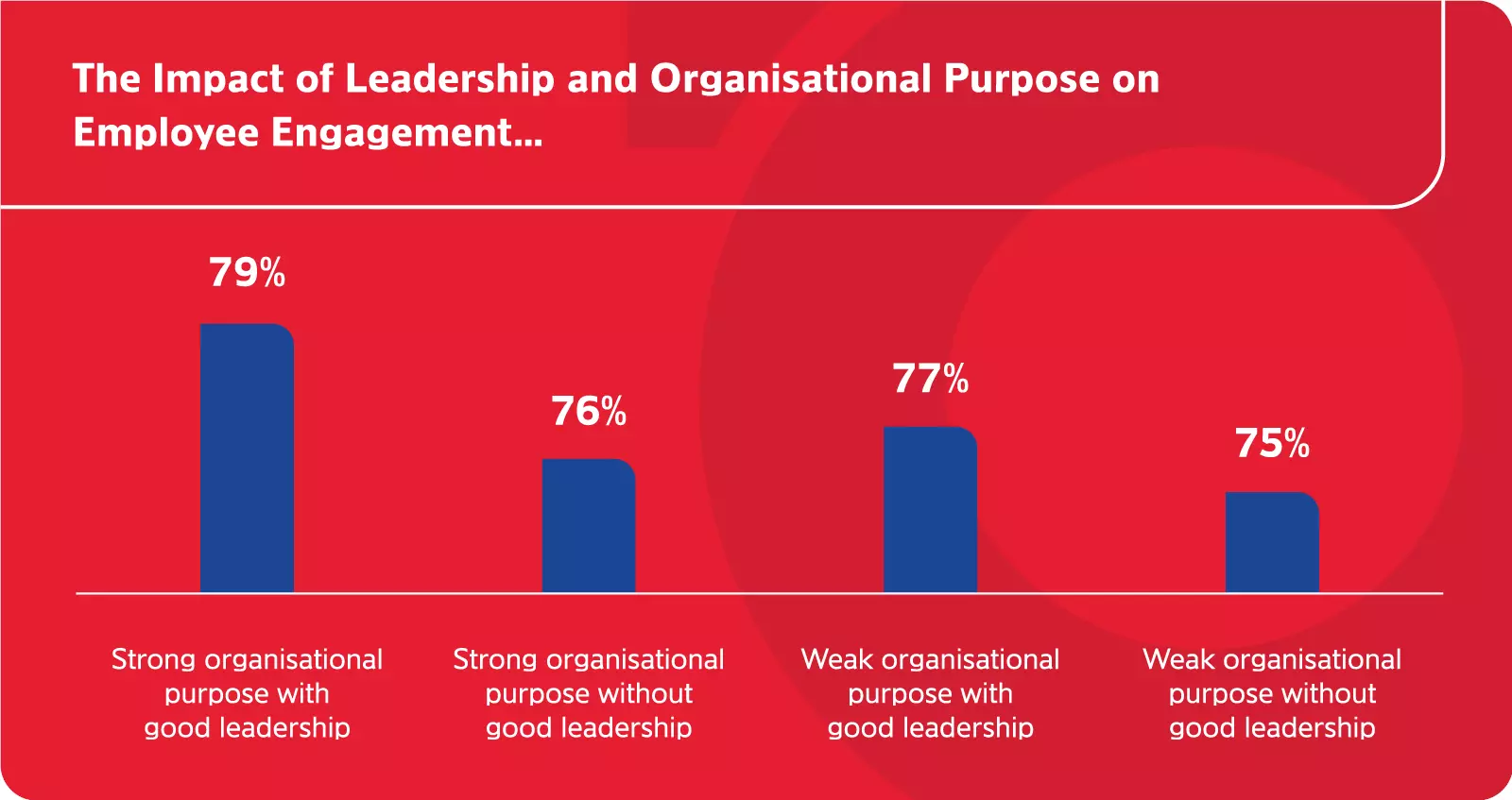
Organisational purpose is an evolving and collaborative process that demands the commitment of every employee. That leads us to our third trend. You can find all the details about this trend and more in the complete report. Download it now!
Trend 3: Dialogue for Transformation
Employees who feel genuinely listened to by the organisation are more likely to be engaged, and organisations orchestrating meaningful employee dialogues are reaping the benefits. Our latest Top Employers data shows that almost every HR practice encouraging employee involvement in strategic decisions helps to drive business success metrics.
A Dialogue for Transformation has two elements:
- On an individual level, employees need to see their input applied practically in business decisions – those who feel empowered to influence how their work gets done experience far higher performance levels and job satisfaction.
- Beyond the individual, collective intelligence describes the alchemy that happens when diverse perspectives meet collaboratively. It represents the sum of individual intelligence and the additional innovation sparked through their combination.
Empowerment plus collective intelligence has helped to drive new ideas for organisations, often above and beyond the scope of regular day-to-day business.
Moving the needle on what matters will demand ever closer and more constant conversation with employees. Transformational dialogue will be foundational for the last two trends. Download the full report to find out more.
Trend 4: Evolution of Wellbeing Effectiveness
Many organisations struggle to balance their HR budgets while still trying to enhance employee wellbeing. In 2024, therefore, wellbeing will be about getting the most suitable offerings, not the most. Research carried out by Top Employers Institute last year demonstrated that additional wellbeing programmes provided little or no additional benefit to employees beyond a saturation point.
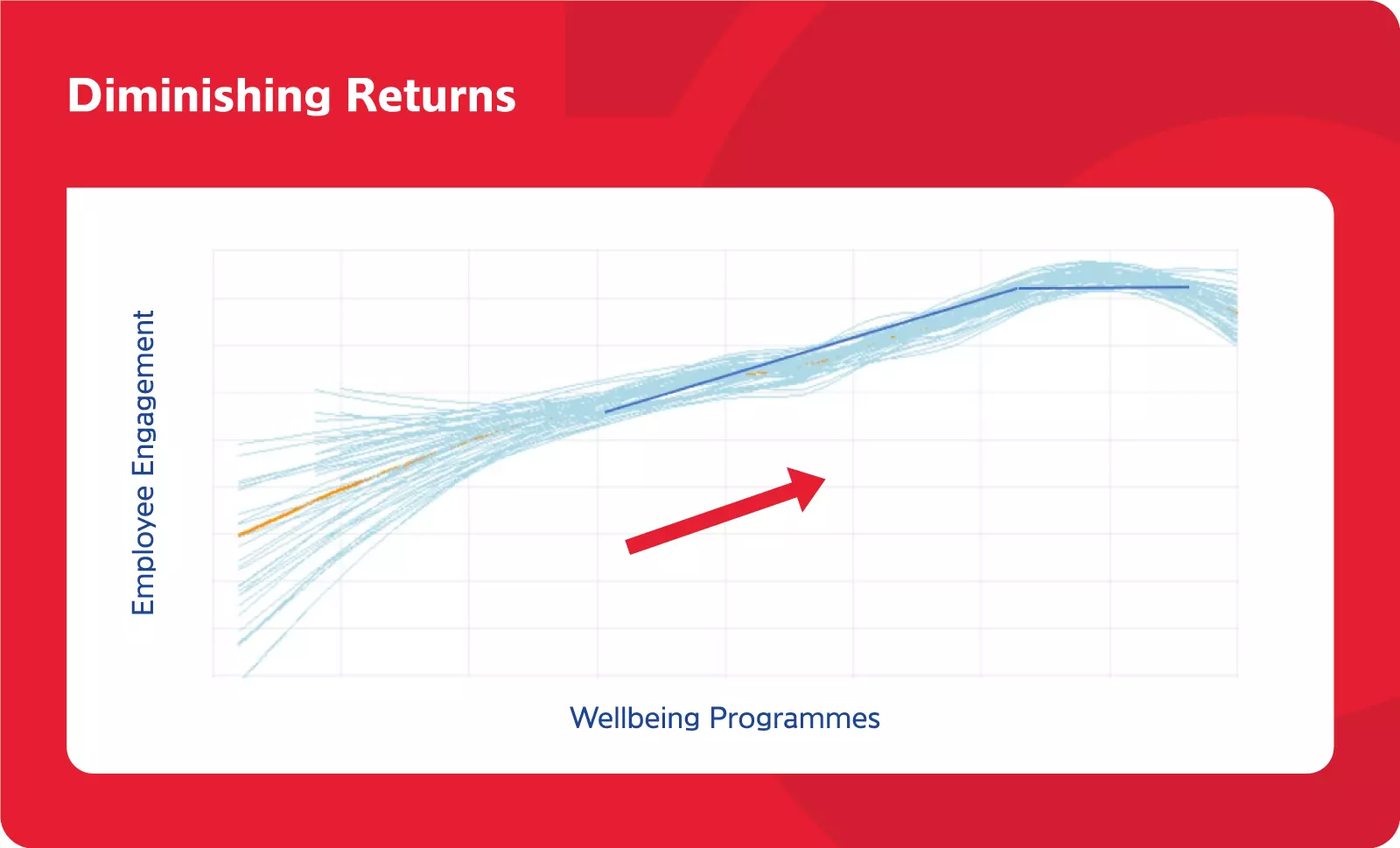
Most Top Employers actively promote their wellbeing programmes through organisation-wide strategy, assessment and metrics.
- Organisation-wide total wellbeing strategy. Nearly four in five (79%) organisations have a coherent overarching approach to all dimensions of wellbeing (up four percentage points since our last survey).
- Wellbeing programme assessment. Nearly three in four (72%) organisations regularly conduct an ’employee wellbeing needs assessment’ to identify employee needs, interests, likes and dislikes and adjust their offerings where appropriate (up five percentage points).
- Wellbeing metrics. We have also seen a significant increase in the use of metrics, with over two-thirds of our Top Employers consistently using them (68%, up eight percentage points), along with the accountability of over half (54%) of leaders to meet wellbeing targets (up seven percentage points).
With this, there may be specific wellbeing challenges for new demographics, which takes us to our final trend.
Trend 5: Broaden the Horizon of DEI
In the last year, diversity, equity, and inclusion (DEI) have also come under budgetary pressure, so organisations are looking for these initiatives to impact their workforce positively. In 2024, the tight talent market will grow as employers become more open to “non-traditional” candidates.
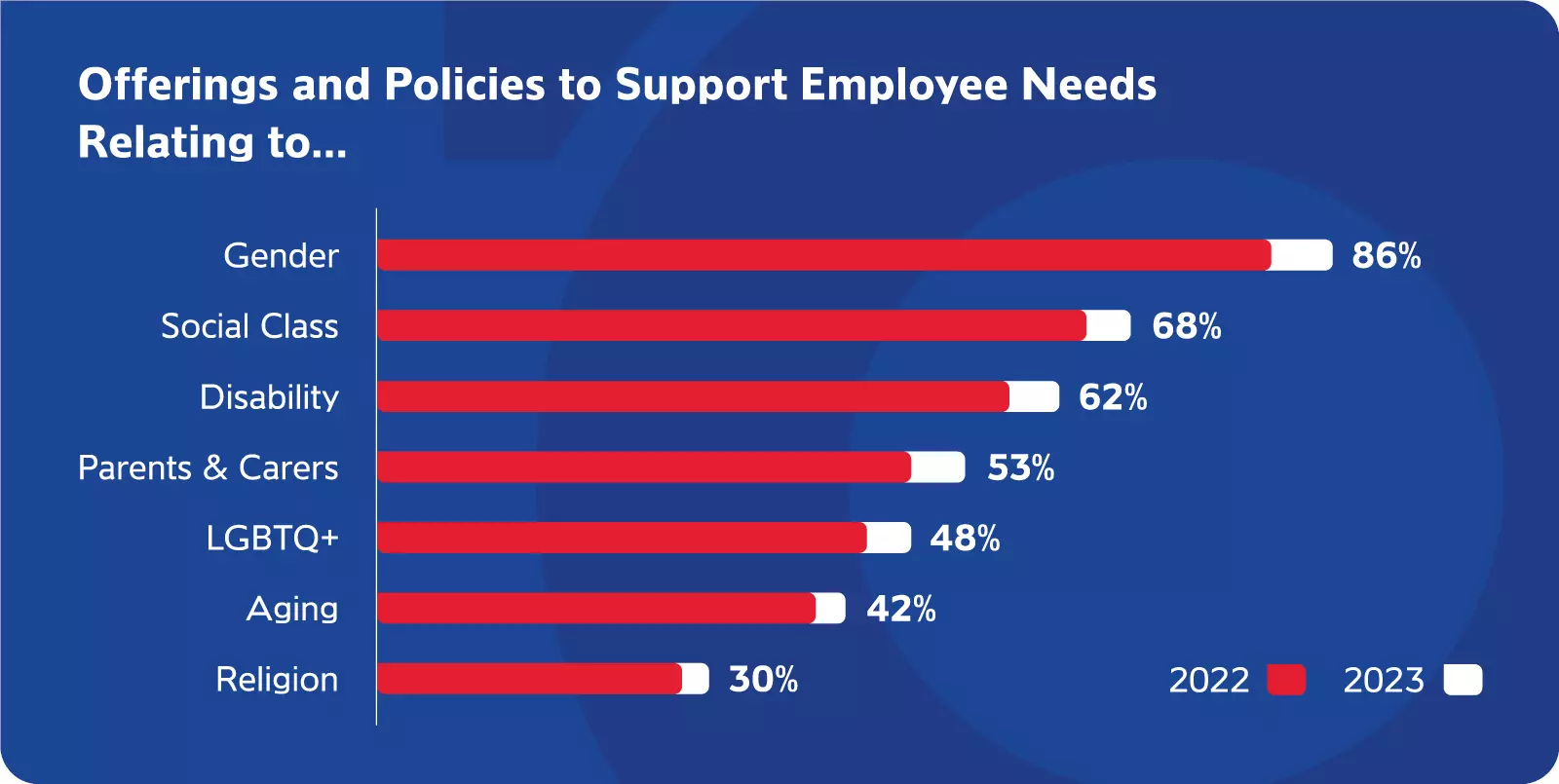
We think DEI approaches will change in three ways:
- The consideration of diversity will expand far beyond demographic segmentation. Whilst groupings, such as gender and race, will continue to be areas of focus, 2024 will see a shift towards a more nuanced approach to DEI. For example, expect the importance of neurodivergent talent (and its link to higher levels of creativity and innovation) to grow.
- DEI analytics and the metrics used will become more sophisticated. Not all demographics are straightforward to capture. However, we have learned from progress in gender representation that data is critical to improvement.
- The “majority” will be actively included in DEI strategies at some point in their career journey, with different experiences increasingly acknowledged. A more holistic inclusion strategy will likely be adopted to complement the ongoing targeted initiatives for under-represented groups.
Download a copy of The World of Work 2024 by filling out the form now.
Best Practice | How NTT DATA Colombia are Reassessing the Employee Value Proposition
By: Top Employers Institute
NTT DATA Colombia has created a human-centric value proposition explaining what working at the organisation is like. Advocated by a clear Employee Value Proposition (EVP) that employees and potential candidates can understand the working experience and company brand. The EVP includes their corporate values and the company’s purpose and reflects professional benefits from the development model and personal benefits for the employees and their primary team.
Read More: Purpose and Employee Experience Take Center Stage at the APAC Top Employers 2023 Certification Celebration in Singapore
This is just a snapshot of NTT Colombia’s innovative best practice; you can find the entire practice on our HR Best Practices database, which is exclusively available to Top Employers. Get inspiration and insight into the approach, challenges and learnings experienced by certified Top Employers. Access it now or learn more about it here!
Why was the practice needed?
NTT DATA Colombia carried out an exercise to redefine its value proposition during the Covid-19 pandemic as it understood that employees deserved personalised and agile solutions. The organisation realised the market, habits, expectations, and lives of their current and prospective employees had changed. The company needed to better reflect their value to everyone encountering their organisation.
For NTT DATA Colombia, this EVP helped define and communicate their framework of action, corporate culture, and values, plus delivered on their company purpose and leadership principles. They wanted to guarantee consistency between what they did and what they said.
How the practice was implemented
Through exercises such as focus groups, surveys, workshops and social listening, NTT DATA Colombia redefined their value proposition by finding convergent points based on their employees’ needs and personal purposes. The company then generated offers personalised according to the multiple archetypes they found.
Some highlights of the new EVP:
- One of the challenges was maintaining their employees’ closeness, contact and trust during the pandemic.
- Perception studies, surveys, focus groups and social listening were used.
Results
- A new EVP adjusted to the needs of the employee and the market, which is flexible, personalised and diverse.
- There has been a 23% increase in their staff, and the EVP has also helped develop both new talent and existing employees.
Read More: Winning the Battle for Talent
In 2023 we published the World of Work Trends Report 2023, which identified how the employee experience would become more personalised. In the post-pandemic world, employees have had a chance to reflect on what truly matters to them. And their employers have had to become increasingly inventive to get, grow and keep their very best people.
Only businesses that work hard to provide a genuine and heartfelt commitment to a personalised experience will generate the emotional reaction necessary to create a high-performance culture, align purpose, vision and values and develop new leadership capabilities.
Learn more about the impact of this personalisation by downloading the World of Work Trends 2021 Report now for free.