How to Manage and Succeed with a Multigenerational Workforce
By Sinakho Dhlamini, HR Content Specialist, Top Employers Institute
Across today’s modern workforce, many organisations are witnessing a unique blend of generations working side by side. From Baby Boomers and Gen Xers to Millennials and Gen Zs, the workplace has become a melting pot of diverse experiences, perspectives, and work styles.
As leaders and managers seek to create a productive, inclusive and welcoming environment for all these different groups, it is essential to understand and effectively manage this multigenerational dynamic to foster collaboration, innovation, and overall team success. Cultivating this understanding will help to better utilise everyone’s talents from an individual and a generational level.
Read More: How Saint-Gobain, Capgemini and Biomerieux are Engaging Employees from a Human-Centric Perspective
What Generations are Currently in the Workforce?
In 2023, there are currently five generations working side-by-side. Those generations are:
- The Silent Generation: This generation was born between 1928 and 1945, making them some of the oldest in the workplace. Many have already retired, but many still choose to participate in the labour force. It is estimated that they still make up 3% of the workforce in the USA. It can be easy to underestimate the number of older people still active in the workplace, especially when you consider that according to the United States Bureau of Labor Statistics, in 2030, 11.1% of those 75 and older will still be active participants in the workforce in 2030.
- Baby Boomers: This generation was born between 1946 and 1964 and currently makes up around a quarter of the working population in the United States. The youngest members of this generation will start retiring in the upcoming years. Still, some of this generation have already begun retiring, this many because they are further along in their careers and often hold higher positions of power at work.
- Gen X: Born between 1965 and 1980, this is one of the smaller generations compared to the ones that came before it and the ones that are coming after it and many in this generation.
- Millennials (also known as Gen Y): Millennials are often quite technologically adept because they have lived through some of the most significant technological advancements. They were born between 1981 and 1996, and they make up the biggest group in the workforce in the USA, making them around 35% of the working population.
- Gen Z: The youngest generation to enter the workforce were born between 1997 and 2012, and they are remarked to be the first actual tech generation as they have never known a world without the internet. While many are still in university, the first groups are becoming active participants in the workforce. As such, organisations need to learn how to support them.
Read More: Nurturing Talent: Retention Strategy Insights from BAT
What are the Benefits of a Multigenerational Workforce?
In many places, we hear about the difficulties of generational differences affecting people’s ability to relate to each other, but there are many benefits for organisations. Those include:
- Skill Diversity: Different generations tend to have distinct skill sets. For example, older employees might excel in interpersonal skills and relationship-building, while younger employees might be adept at leveraging technology and digital tools. This mix of skills can enhance the team’s overall capabilities.
- Knowledge Sharing: Older generations often possess valuable industry experience and institutional knowledge, which they can share with younger team members. This knowledge transfer helps bridge the generation gap and ensures that essential insights are passed down to the next generation. Equally, the younger generation can share knowledge that older generations may have previously ignored, making the sharked knowledge sharing a fruitful opportunity.
- Diverse Perspectives and Ideas: Each generation brings unique life experiences, perspectives, and approaches to problem-solving. This diversity can lead to a broader range of ideas and solutions, fostering innovation and creativity within the team.
- Adaptability: A multigenerational team is often more adaptable to changes in the business landscape. Younger members might embrace new technologies and trends, while older members can provide stability and a long-term perspective during times of transition.
- Reduced Bias and Stereotyping: Working closely with colleagues of various generations challenges stereotypes and biases. Team members learn to appreciate each generation’s strengths and qualities, breaking down preconceived notions.
- Effective Communication: Interacting with colleagues from different generations can improve communication skills. Team members learn to adapt their communication styles to accommodate diverse preferences, leading to more precise and effective information exchanges.
- Enhanced Problem Solving: Multigenerational teams can bring diverse problem-solving approaches to the table. This diversity allows the team to tackle challenges from multiple angles, increasing the likelihood of finding effective solutions.
- Market Insights: Different generations have varying consumer behaviours and preferences. A diverse team can help the organisation better understand and connect with a broader range of target demographics.
- Mentorship Opportunities: Multigenerational teams provide natural mentorship opportunities. Older employees can mentor younger ones, offering guidance and wisdom, while younger employees can offer insights into new technologies and trends.
- Increased Employee Engagement: Recognising and leveraging the strengths of each generation can boost employee engagement. When team members feel valued for their unique contributions, they are more likely to be motivated and committed to their work.
Read More: Inspiring HR Practices from Asia-Pacific’s Top Employers
How Organisations Can Get the Best Out of Their Multigenerational Workforce
The benefits of having a multigenerational workforce show that having a work environment that is diverse in age range creates a positive impact on organisations and their employees; it is still important to figure out how organisations can foster that environment. Some of the ways that HR professionals can learn how to manage their workforce to foster collaboration and innovation effectively include:
- Embracing Diversity and Inclusion: A multigenerational team offers diverse skills and perspectives. By fostering an inclusive environment, HR professionals and leaders can help team members feel valued and respected regardless of age. Encourage open dialogue that celebrates the unique strengths and experiences each generation brings to the table. They can organise cross-generational mentorship programs to facilitate knowledge sharing and skill development.
- Flexibility in Work Arrangements: Different generations often have different expectations regarding work-life balance and remote work options. By offering flexible work arrangements, organisations can accommodate the diverse needs of their multigenerational team. Allowing for flexibility in where employees work, flexible hours, and job-sharing opportunities ensures everyone can maintain a healthy work-life balance.
- Continuous Learning and Development: Promoting a culture of constant learning to keep all team members engaged and up to date. Provide opportunities for professional development, training, and upskilling. Encourage cross-generational learning by pairing experienced employees with newer ones to facilitate knowledge exchange.
- Flexibility in Leadership Styles: Different generations may respond to different leadership styles. Some may appreciate a hands-on approach, while others prefer a more autonomous working environment. HR professionals should understand these preferences and adapt leadership strategies to manage and motivate their multigenerational teams effectively.
- Conflict Resolution and Mediation: Generational differences can sometimes lead to misunderstandings and conflicts. HR professionals and leaders should be equipped with effective conflict resolution and mediation skills to address any issues that may arise. A proactive approach to resolving disputes can prevent them from escalating and disrupting the team’s harmony.
Read More: How Organisations Improve Employee Engagement with Emotionally Engaged Leaders
Final Thoughts
Managing a multigenerational team requires a thoughtful and inclusive approach. By embracing diversity, fostering open communication, offering flexibility, recognising individual contributions, promoting continuous learning, and adapting leadership styles, organisations wanting to get the best out of their people can work to create an environment where everyone thrives. Suppose they successfully create this environment by navigating the complexities of a multigenerational team. In that case, they will not only be able to enhance team performance, but they will also be able to cultivate a workplace where everyone feels valued.
How Saint-Gobain, Capgemini and bioMérieux are Engaging Employees from a Human-Centric Perspective
Engaging employees has always been a priority for organisations wanting to get the best out of their people. Over the years, there have been many strategies to engage employees, and more recently, organisations have begun to use a human-centric approach. An organisation does not necessarily need to be human-centric to engage its employees but organisations that are human-centric are seeing better engagement levels than those that aren’t.
That was the topic in mind in a recent roundtable we hosted with HR experts from bioMérieux, Capgemini and Saint-Gobain. These experts included: Regis Blugeon, Director of Social Affairs and HRD for France at Saint-Gobain; Franck Baillet, the EVP of Learning and Development at Capgemini; Pretheshini Moodley, Regional Head of Human Resources for Africa at BioMérieux, and Paola Bottaro, People Director at Top Employers Institute.
These certified Top Employers are embracing a human-centric approach and utilising it to engage their employees. Throughout the article, we will explore how these organisations are making a more holistic approach to employee engagement without ignoring the challenges faced by organisations making this change.
How Does an Organisation Become Human-Centric?
A human-centric organisation, also known as a people-centric or employee-centric organisation, strongly emphasises its employees’ wellbeing, development, and satisfaction. In this type of organisation, employees are considered the most valuable asset, and the entire organisational structure and culture are designed to prioritise their needs, growth, and overall experience.
Some characteristics of a human-centric organisation include:
- Prioritising employee wellbeing.
- A healthy work-life balance for employees.
- Creating a diverse and inclusive culture.
- Maintaining open communication across the organisation.
- Ensuring that employees feel empowered and have a sense of autonomy.
- Allowing employees to have flexible work arrangements.
- Cultivating a collaborative environment at work.
- Investing in professional development for every employee.
The concept of a human-centric organisation recognises that when employees are valued, supported, and engaged, they are more likely to be motivated, productive, and committed to the organisation’s success.
During Top Employers Inspire 2023, we got an insider’s view of how Top Employers Institute is becoming a human-centric organisation. Paola Bottaro, People Director at Top Employers Institute, talked to Wouter van Ewijk about how the business has adapted to support its employees better while learning to be mindful, empathetic, and purposeful. You can watch that session here.
Assumptions About a Human-Centric Organisation.
The concept of a human-centric organisation is still very new, and as such, many incorrect assumptions come with the term. Some of these assumptions are around how it is easier to implement a human-centric approach depending on some factors like:
- The organisation’s industry: there are doubts that some sectors, like investment banking and manufacturing, can become human-centric.
- The size of the organisation: there are assumptions that it is easier for smaller organisations to be human-centric than other larger organisations.
- Geographical location: it is assumed that organisations that operate where there is a national legal framework find it easier to be human-centric.
- Type of employee: there may be an assumption that having a human-centric approach for an organisation with white-collar workers is more effortless.
However, many of these assumptions are incorrect. Organisations that want to become human-centric differ in many ways, yet they can all engage with this approach.
How Top Employers like Saint-Gobain, Capgemini and BioMérieux Understand Human-Centric Organisations
Pretheshini Moodley, Regional Head of Human Resources for Africa at BioMérieux, started this discussion by sharing how BioMérieux sees a human-centric perspective as engaging their people by “considering the individual needs”. This fits into their way of working because, as an organisation, one of their values is centred around belonging – where people can be themselves while feeling like they belong at BioMérieux.
As an organisation, they have prioritised listening to their employees and allowing them to share their genuine feelings and thoughts. In many ways, they are highlighting the diversity of their employees. While BioMérieux engages with their employees in a human-centric approach, they prefer to call it employee-centric as they feel that it allows their employees to feel better represented by the approach that they are taking.
At Capgemini, Franck Baillet, the EVP of Learning and Development, shared how the organisation recognises that one of its significant assets is its people. As such, they see the topic of engagement and human-centric work as “absolutely key”. As a human-centric organisation, one of the things they try to do at all times is to “put the individual at the centre at all times.”
While they see a human-centric approach as the best, Franck notes how it can be challenging at all times, primarily due to their size, but it is still something they enact across their organisation. Similarly to BioMérieux, Capgemini prioritises regularly listening to their employees to understand what is best for them. It helps them test the “temperature” of their employees’ feelings.
As the conversation continued, Regis Blugeon, Director of Social Affairs and HRD for France at Saint-Gobain, shared how Saint-Gobain see themselves first as customer-centric and people-oriented. For them, everything starts with the customer. The engagement of their people is significant for them, and they engage them by prioritising what their customers and their people need.
One of the ways that they keep themselves accountable for their employees’ feelings around engagement is by measuring their engagement levels regularly. Their regular check-ins with their employees are why they see themselves as people-oriented because this approach to their employees impacts many other aspects of their day-to-day work environment; it is just balanced with the needs of their customers. For Saint-Gobain, this regular assessment is also essential because their organisation is not a monolith, but rather, they have a remarkably diverse set of workers – from blue-collar to white-collar.
Read More: Case Study: The Saint-Gobain HR Mirror
How Top Employers Institute is Becoming a Human-Centric Organisation
As the discussion around Top Employers Institute’s shift into becoming a human-centric organisation, Paola Bottaro explained that the company did not decide to become human-centric overnight. Instead, their leadership board undertook the decision, understanding that this approach is complex, especially as there is no such thing as a “typical human experience”.
At first, when the organisation began to think around this issue, they considered calling it an action- or activity-driven approach. Still, they settled on the human-centric approach because it encapsulated their desire to give everyone a fair and equal experience while understanding the differences that make us human.
In a similar vein as the Top Employers in the conversation, Paola stressed the importance of listening to employees, especially as working in a human-centric way is explicitly not a one size fits all approach, and even she recognises that you can never know everything about working in a human-centric way. That is why listening is essential and embracing that you may not always understand, but you should always be open to listening.
What About Engagement?
Franck shifted the conversation to understanding what engagement means. In some ways, the word is quite generic as it can apply to many situations because an employee can be engaged in many different ways. And for each employee, their way of being engaged at work may be completely different.
He thinks organisations must consider “how they can create the best conditions for people to feel engaged?” He sees that engaging employees is in so many different people’s hands, which is part of why engaging employees is more of a complex task than it appears to be on the surface.
Franck sees that employees understanding the “why” of their job is playing a critical role in improving the engagement of employees as it helps to guide the organisation to develop the conditions to support employees – making them feel more engaged.
Adding to Franck’s, Pretheshini explained how at BioMérieux, they launched a project to gauge their employees’ sense of purpose before they even critically thought about engagement. They did this by investigating employee insights, and asking each person how they viewed purpose and “why they were here [at BioMérieux]”. They used this as the start of their engagement journey to create a sense of purpose and better understand each person’s motivations. It made it a lot easier for them to understand the voice of their employees because of this project.
Once they had done this part of the project, they ensured they created a safe environment for their employees to share their thoughts. The environment needed to be a place that empowered employees in a ‘space’ they could trust because, without these safe spaces, they would be unable to have satisfying and enlightening discussions.
Beyond having a survey or a measurement for their employee engagement, BioMérieux has created a game that leans into their desire for honest conversations. In the game, they encourage employees to be courageous and utilise the trust they’ve built with their colleagues. In the game, when an employee wants to be courageous, they show the car to their manager and then say how they would like to share something important. Pretheshini shared that they see “every failure as an opportunity to become better”, and that can only happen when you’re brave enough to try something that may lead to failure. It allows employees to feel engaged because they are given the space to truly try their best, even when it doesn’t work out.
How Does Leadership Fit In?
Leaders in an organisation are often the guides that make initiatives work, but that still needs to be completed in a boardroom. Instead, modern organisations require empathetic, emotionally intelligent leaders, good listeners and communicators. These are often considered soft skills and have been undervalued for many years. Still, when it comes to engagement, these skills are crucial to having an authentic connection between leadership and employees.
Here are some key roles that leaders play in promoting employee engagement:
- Effective communication: Leaders should foster open and transparent communication with employees.
- Recognition and Appreciation: Leaders should recognise and appreciate employees’ contributions and achievements regularly.
- Creating a Positive Work Environment: Leaders should foster a positive and inclusive workplace where employees feel safe, respected, and valued.
- Aligning with Organisational Values: Leaders should ensure that their actions and decisions align with the organisation’s values and mission to help create a sense of purpose and shared direction.
- Leading by Example: Engaged leaders model the behaviours they want to see in their employees.
- Empowerment: Empowering employees by giving them autonomy and decision-making authority can increase their sense of ownership and engagement.
- Professional Development: Leaders should support employees’ growth and development by providing training, skill-building, and career advancement opportunities.
- Conflict Resolution: Addressing conflicts and issues promptly and fairly is essential for maintaining a positive work environment that engages employees.
Read More: How Organisations Improve Employee Engagement with Emotionally Engaged Leaders
Final Thoughts on Employee Engagement
Employee engagement is a critical factor to many organisations’ success, and a human-centric approach recognises that engaged employees are motivated not only by financial incentives but also by a holistic experience that fulfils their emotional, psychological, and professional needs.
Engagement is also not a topic that rests solely in the hands of HR professionals; instead, it is a companywide task, and when an organisation is human-centric, it can better allow everyone to achieve these engagement goals. When employees are engaged, they become more committed, innovative, and motivated to contribute their best efforts to the organisation’s success.
While this is only a snippet of their conversation, it highlights some of the challenges and successes Top Employers are making in creating the conditions to support employee engagement.
To find out more, get in touch today for free and find out how to engage employee by becoming an employers of choice!
Case Study | JTI’s Candidate Survey
Do your candidates value your status as a Top Employer?
By Top Employers Institute
JTI is a certified global Top Employer with 46 000 employees present in more than 130 countries. Since achieving their certification, they have consistently included their certification status in job adverts, career pages and other recruitment channels.
After nine years of implementing best practices, the company sought recruitment data to answer a question related to employer branding. Their question was: How important is it for our candidates that we’re a certified Top Employer?
Read More: Case Study: Deutsche Post DHL
In 2019 JTI selected Talenthub, a technology platform that integrates with existing HR systems, to collect real-time candidate feedback during the recruitment process. With their technical help, JTI captured accurate feedback from candidates while allowing them to reach out directly to follow up on provided feedback and improve the process where needed.
- They set up a digital survey on their career page and Applicant Tracking Software (ATS) system for candidates who applied at JTI.
- JTI verified the impact of the candidate’s journey at all stages and found trends that enabled them to understand the behaviour of their applicants.
- JTI implemented a new initiative to track and benchmark their candidate’s application process against other companies to optimise their process.
Nurturing Talent: Retention Strategy Insights from BAT
By Sandra Botha, Global HR Auditor, Top Employers Institute
As a certified Top Employer, BAT recognises that talent retention is critical in a rapidly changing and volatile labour market. Limited growth opportunities and a lack of skill development often motivate employees to seek new opportunities elsewhere. To help ensure top talent joins and remains at the company, BAT implemented a Career Conversation series.
Lucy Evara, Head of Human Resources (HR) for BAT East African Markets and I had the opportunity to discuss this new Career Conversation series and other talent retention strategies during the 2022 Top Employers Institute Best Practices Week. Any organisation seeking to improve its talent retention strategies continuously will find value in our engaging conversation.
Here are some of the highlights:
Building an Empowered Organization
During our discussion Lucy shared insightful perspectives on BAT’s mission to cultivate an empowered organisation. This mission, which serves as the foundation of HR programmes, is to create, “an engaged, agile and high performing organisation with winning capabilities & culture delivering an enterprise of the future.” BAT has identified four key levers to realise this mission:
- Build talent with winning capabilities,
- Culture and leadership behaviour,
- Diversity and inclusion, and
- Fit for purpose organisation design.
The company regularly seeks input from employees to shape its initiatives. BAT conducts the “Your Voice” employee survey every two years, which gathers valuable feedback on company culture and initiatives. In 2021, employee feedback played a pivotal role in shaping the Career Conversations series, which directly responded to the wants and needs expressed by participants.
Watch Here: 2023 Global Top Employer BAT Certification Celebration Announcement
Career Conversations
Engaging in meaningful career conversations is essential for fostering professional development and growth within organisations. At BAT these discussions, between leaders and their employees, revolve around identifying strengths, areas for improvement, and interests, all within the framework of present and future career performance and aspirations. By empowering employees to take ownership of their career paths and explore the vast array of opportunities, leaders play a pivotal role in inspiring and maximising the potential of their team members.
There are two critical aspects of career conversations: that they are separate from a performance evaluation and that employees think of themselves as the driver of their careers. While a performance evaluation and career conversation may complement one another, the evaluation provides feedback on past performance and the career conversation aims to explore future potential. Although leaders assist employees with thinking about their futures, the employee is accountable for following through on identified action items.
BAT’s approach to their Career Conversations series is to give examples relevant to their workplace to make learning practical, transparent, and meaningful. “It’s key to note that these were conversations and not death by PowerPoint. The intent was to make them as engaging and impactful as possible,” Lucy explained. The conversations generally focus on the “four Ws and one H,” – what, why, when, where, and how – to give specificity and clarity during discussions.
Within BAT’s career conversations, there is a focus on helping people understand the company’s career principles:
- Sustained high performance,
- Strength of your functional and leadership capabilities,
- Critical experiences that you have gained in the course of your working life, an
- Ownership of your career development plan.
Most importantly, the conversations end with a call to action, which Lucy described as employees “knowing that their manager will speak to them about their readiness for specific roles and considering the questions: Do I understand my development actions? How ready am I for some of these roles? Really just creating a greater awareness so that people can take ownership of their development plan.”
Demystifying Talent Standard Operating Procedures (SOPs)
At BAT, biannual “talent checking” sessions are conducted to assess progress on the company’s people development and align on the next steps. “The key elements or outputs that come from these sessions,” Lucy explained, “are talent pooling, which we traditionally call succession planning in HR, and talent supply and demand.” A team’s functional leadership cluster is responsible for these sessions.
BAT utilises talent pools to identify individuals who are “ready now” for specific roles, aiming to facilitate their move within the next 12 months. Additionally, they identify individuals as “ready soon” if they are prepared to transition in 12-24 months and “emerging talent readiness” if they show potential to move in the next 3-5 years. Categorising employees based on their readiness guides career conversations and helps tailor development plans.
Talent demand refers to roles that need new people and talent supply refers to those who need new roles. By staying aware of these needs, leadership expedites the process of matching talent with internal opportunities. Lucy highlighted that BAT, with offices in multiple countries, takes a broad view and considers relocating individuals if a suitable match is found. This approach enables the company to leverage talent and maximise employee career opportunities.
Our discussion concluded with the important observation that, ultimately, for career conversations and other talent retention strategies to be successful, they must be supported at three different levels: the individual employee, the manager, and the organisation.
Read More: Prioritising Skilling and Upskilling Young People on World Youth Skills Day
Prioritising Skilling and Upskilling Young People on World Youth Skills Day
By: Sinakho Dhlamini, HR Content Specialist, Top Employers Institute
Our current work landscape is changing more than ever with technological advancements, labour market shifts and more – the world of work has never been a more complex place to enter. A recent study by McKinsey showed that 90% of employers will require significantly different skill sets in 2030 than before. And while young people are more able to access information from across the internet and the world, the skills gap has never been wider.
World Youth Skills Day was initiated by the United Nations in 2014 when they saw a growing need to support young people to be prepared for a world of work as they grow into a changing employment landscape. By doing this work, enlightened organisations will be able to positively impact the youth of today and the youth that are still to come.
In this article, we will explore what organisations can do to support young people as they prepare to enter the world of work? And how can they show their commitment to skilling the youth of the future, and what are Top Employers doing?
World Youth Skills Day and Positive Impact
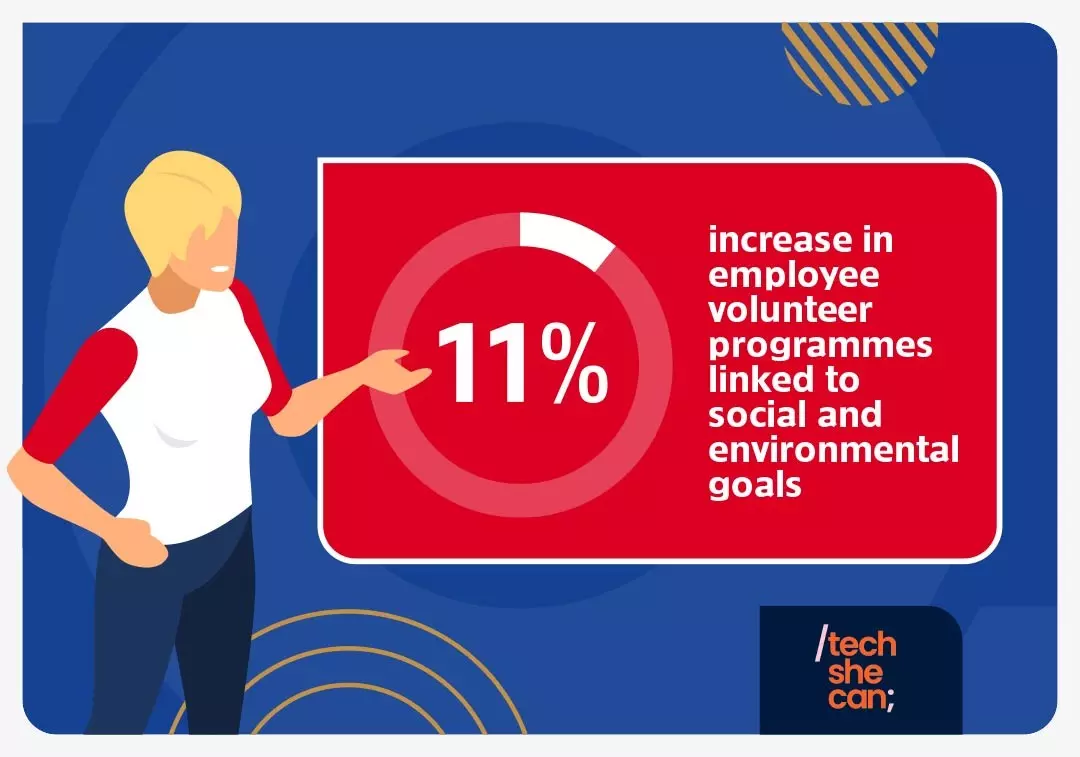
One of the trends we identified in the World of Work Trends Report 2023 was that organisations were finally making a clear commitment to ‘positive impact’ as it became the -new North Star for everything that enlightened businesses to do in 2023. In the report, which is available for download now, we broke down this trend into three parts:
- A “a ‘lived” purpose works best when it comes straight from the heart of all those who work there – and remains a constant in their everyday decisions.
- Secondly, the purpose of any organisation can only ever be as good as the views it allows itself to hear. So enlightened attitudes to diversity and inclusion are not only imperative for the positive impact and momentum they create in all organisations.
- Finally, sustainability is critical in how an organisation ensures its continuity through a positive broader impact and in how it behaves as a good employer.
On World Youth Skills Day, we can see how this trend aligns with the importance of businesses in skilling today’s youth, especially as the barrier to entry for work only gets more difficult for young people.
The UN encourages us to unite in recognising the potential of young people as catalysts for change by committing to providing them with the skills needed to build a sustainable and prosperous future for all as we celebrate this World Youth Skills Day and for organisations, it is vital to understand the role that they can play in creating this future.
How Organisations Can Work to Skill Young People
While many organisations have begun committing themselves to creating a better world, many still need to learn precisely what they can do to have the positive impact they would like. Still, large and small businesses have the unique opportunity to contribute to improving the workspace for young people. Some of the ways that they can do that include:
- Establishing training programmes, like boot camps or in-school programmes.
- Partnering with charities and other organisations that are committed to educating young people.
- Forming Coaching, training and mentor programmes aimed at young people who have yet to enter the workforce.
- Establishing apprenticeship programmes.
- Funding scholarships at universities and schools.
- Create project-based learning opportunities and programmes for young people.
UST’s Partnership with Tech She Can
During Top Employers Inspire 2023, UST recently shared details of their partnership with Tech She Can. Tech She Can is a charity committed to changing the ratio of women in technology; they do this by providing free resources to help inspire young women to study technology subjects and inevitably choose a career in a technology field. While they focus on young women, they also work with all kinds of young people to feel inspired to choose a tech career. They do this by connecting them to relatable role models working in the jobs they may consider for themselves.
Certified Top Employer, UST, has partnered with Tech She Can as they want to play a role in having more representation for young women in tech. During UST’s session in Top Employers Inspire, Seena Mohan noted that ‘It is important to inspire women and girls to get into tech careers so they can become equals in creating and developing new technology businesses to shape our future.’
Final Thoughts
On this year’s World Youth Skills Day, we encourage businesses to commit proactively to skilling the youth of today and the young who will follow them. They need to do this by addressing their challenges and supporting or creating programmes and initiatives that seek to upskill young people for the changing world of work. Whether through their own initiative or if organisations need to leave a positive impact on the world beyond their offices’ walls.
Businesses prioritising improving the world will see wins for themselves and their community. We can shape a better future together and create a future that doesn’t leave anyone behind. Find out to day what it means to be an employer of choice!
Making an Impact: GroupM’s DEI Sponsorship Programme
By Androna Benadé, Senior Account Manager, Top Employers Institute
How GroupM’s diversity, equity, and inclusion (DEI) sponsorship programme creates a career support network for people from traditionally marginalised groups
During the 2022 Top Employers Institute’s Best Practices Week, I had the opportunity to speak with Amy Walker, Inclusion and Diversity Manager for GroupM, a UK-based media investment company and certified Top Employer, about the company’s new DEI sponsorship initiative.
GroupM’s desire to radically change the industry and facilitate a new generation of leadership was the catalyst for the programme. They chose to focus on sponsorship because it’s an effective way to disrupt systemic barriers that prevent underrepresented groups from accessing top leadership positions. The pilot programme lasted for 18 months, involved 35 sponsees, and saw half of the participants promoted, with all of them moving forward in their development.
Here are some of the highlights from our discussion. You can also find a link to our full discussion here.
How Sponsorship Is Different from Mentorship
To begin our discussion, Amy explained how sponsorship programmes impacted her personally. “I’m on the autistic spectrum and I also have other conditions – physical, mental health conditions. I can attest that the sponsorship I’ve received from leaders in our business and the inclusion and adjustments that I’ve had as a disabled person have allowed me to have a really accessible environment that works for my needs.” Amy recognises the opportunities she received as a result of the sponsorship programme have helped her get to where she is today and make her passionate about creating similar opportunities for others.
Understanding the differences between sponsorship and mentorship is essential when considering a programme like this for your organisation. A mentor can be anyone within or outside the organisation, who possesses a particular set of skills and experience. They generally offer guidance and support and take a broad view of their mentee’s career growth. The relationship can be formal or informal, and it is usually not measured with any kind of performance or impact metrics.
In a sponsorship programme, having a formal structure with support and guidance is key to achieving measurable results. Sponsors are senior members of a company invested in supporting talented junior staff. They promote the sponsee directly, actively open doors to new experiences, leverage their network, and build industry connections to help the sponsee gain access to opportunities. Really, it’s about taking a very active role in supporting the sponsee’s career advancement. Success is measured not only by promotions but also by lateral moves within the company or network, which provide valuable experience for future leadership positions.
Read More: Best Practice| Count Me In: Diversity and Inclusion at Mitie
Roles & Responsibilities
In GroupM’s programme, the sponsee manages the administration of the relationship – making sure that they follow up on action items, reaching out to new contacts, and keeping their sponsor in the loop about their progress. Both parties must prioritise the relationship and meetings to achieve results.
Open and honest communication is a key element of a successful sponsorship relationship. To foster this dynamic, a sponsor needs to create a safe space so that their sponsee doesn’t feel defensive or criticised when discussing their experiences. They can work through the sponsee’s self-limiting beliefs from that foundation and develop a clear picture of the desired career path.
During the programme, GroupM identified several key responsibilities for sponsees:
- Manage the relationship with their sponsor.
- Be open and honest.
- Identify barriers, including self-limiting beliefs.
- Develop a career vision and goals.
- Work hard on identified action items.
Key responsibilities for sponsors were also identified:
- Create a space safe for conversations.
- Leverage their network.
- Provide guidance on navigating company politics.
- Actively open doors to experiences and opportunities for advancement.
- Champion their sponsee repeatedly and visibly.
Read More: Diversity, Equity and Inclusion – Not Just a Numbers Game
Results & Insights
By the end of the pilot programme, half of the participants were promoted, and all of them made significant progress in their career development so that they are ready to advance when an opportunity arises.
One of the most exciting insights we discussed was that many sponsors noticed that their sponsees work incredibly hard – twice as hard as their peers. Helping them unlearn that behaviour and devote more energy to developing their personal brand and networking became part of the sponsor’s role. “I can think of specific people and see the journey they’ve been on and how they’ve changed and the kind of gravitas and confidence they have in themselves,” Amy shared, “And the way they can kind of promote themselves and make that influence felt through the company is really inspiring. It’s been brilliant to watch that happening.” Seeing individuals experience these kinds of changes after participating in the programme and subsequent positive ripple effects in the company is one of Amy’s favourite parts of her work.
GroupM will continue developing the sponsorship programme. Their next steps are to:
- Make the programme permanent,
- Include senior leaders in the pool of sponsors by default,
- Have more targeted sponsor/sponsee pairings,
- Build a training framework,
- Partner with a wider agency group, and
- Bring sponsors/sponsees together across the whole group regularly.
Read More: Going Beyond Diversity: The Importance of Inclusion in the Workplace
Advice for Companies Interested in Starting a DEI Sponsorship Program
To wrap up our conversation, I asked Amy what advice she would give to other companies interested in starting a sponsorship program. First, she said, it’s important to establish clear roles and responsibilities before the programme begins. Doing so will prevent confusion and ensure that everyone involved is on the same page. The programme needs to be actively managed, with ongoing feedback and regular check-ins to make sure that everything is progressing smoothly.
Next, it’s essential to consider how people are selected for the programme. Choosing participants solely for the sake of diversity will do more harm than good. Instead, Amy says, “It’s crucial to focus on high-potential talent. There’s no point running a programme like this with people who aren’t ready or don’t want to move up.” Search beyond traditional sources of talent and consider individuals who may have been overlooked in the past.
Training and support are vital to help participants confront their biases and step out of their comfort zones. Cultivating a safe and supportive environment is key. Managing expectations is also important. Make it clear that there are no guarantees of promotion or advancement.
Finally, there are numerous resources available to help companies get started. Amy described one that particularly stands out to her, “There’s this organisation called BRiM that’s made up of industry partners and they’ve just created the most brilliant guide. It’s got everything you need in there – so much rich, thought-provoking information about what might go wrong, how to make it a safe space, and how to be aware of cultural differences.” Part of the reason it caught Amy’s attention is that it was created by Black individuals who have participated in sponsorship programmes themselves. Guides like this one can help organisations ensure that their programmes are inclusive, effective, and impactful.
Update to Group M’s DEI Sponsorship Programme
Since my conversation with Amy during Best Practices Week 2023, several exciting updates have been made to Group M’s Sponsorship Programme. After seeing positive results from their first Sponsorship Programme with improvements in the representation of high-performing talent from minority ethnic groups, Group M began to see significant moves from these employees through promotions.
Amy noted, “Overcoming years of bias that have kept minorities from equal representation in top leadership positions requires intentional intervention. One tool that has proven to be highly effective when implemented well is sponsorship.
“A sponsor is a person who has power and influence, who can talk about you in the rooms you’re not in, put you forward for opportunities, introduce you to key decision-makers, and help you navigate your company.”
The first cohort of sponsees completed their 18-month programme in 2022. Of the 37 sponsees, half of whom were women, 57% of sponsees were promoted during the 18-month programme, with a further 10% moving into a new role or gaining greater responsibility – all the while building contacts, skills, confidence, and a career path towards promotion
GroupM’s second Sponsorship programme will launch later this year, targeting a wider group of underrepresented talent and explicitly targeting the areas of improvement identified from our Gender Pay Gap analysis.